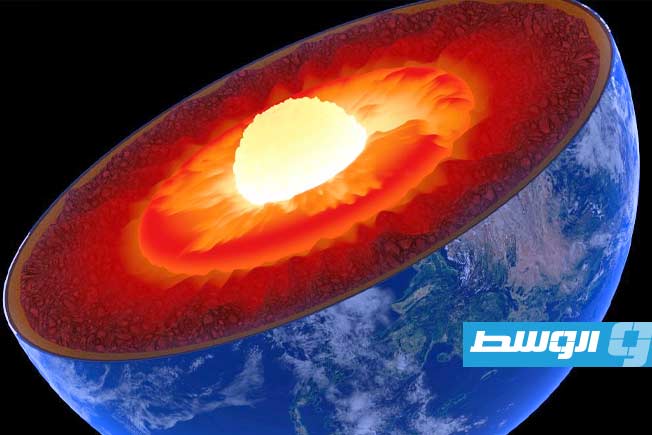
A recent scientific study has revealed exciting and unexpected geological details concerning the ‘Mendocino Triple Junction’ off the coast of Northern California, confirming that the subsurface structure of the Earth in that region is far more complex than current models indicated.
Researchers conducted a new analysis of small, low-frequency earthquakes recorded by seismometers in the Pacific Northwest region, leading to the discovery of previously hidden faults, according to the study published in the journal.
The results showed that this junction does not consist of only three major plates as was believed, but is actually composed of ‘five moving pieces’.
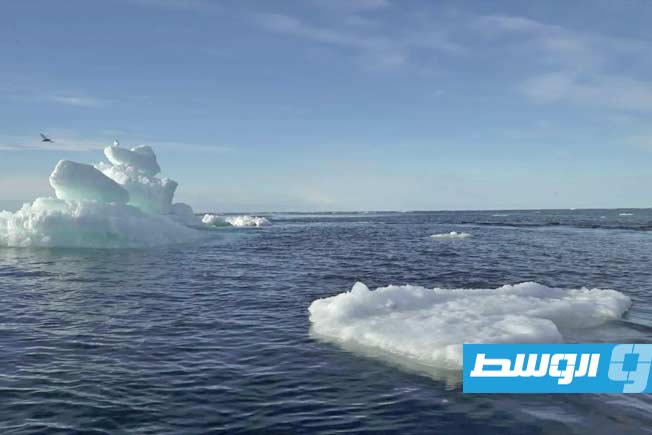
Researchers see this discovery as akin to analyzing the submerged part of an iceberg; as one seismologist noted: “You can see a little on the surface, but you have to discover the nature of the formation below.”
Advanced Monitoring Techniques
The team’s study relied on data from seismometers that record minute ground vibrations from very small earthquakes not felt by humans on the surface. To verify the accuracy of the field recordings, researchers used ‘tidal sensitivity’ models; the daily push and pull of tides cause slight stresses on the bedrock, allowing scientists to validate their interpretation of the low-frequency earthquakes.
This research changes the likely location of plate boundaries, which is supported by a magnitude 7.2 earthquake that occurred in California in 1992, whose starting point was at a much shallower depth than contemporary models predicted at the time.
In this context, a tectonic geodesy expert stated: “It was assumed that the faults follow the leading edge of the subducting plate, but this example deviates from that… It seems the plate boundaries are not where we thought they were.”
“If we do not understand the underlying tectonic processes, it is difficult to predict seismic hazards.”
Mendocino Triple Junction
The Mendocino Triple Junction is a geologic point off the coast of Northern California where three tectonic plates—the Pacific, North American, and Gorda plates—meet. This complex convergence, formed by the northward migration of the junction over millions of years, is responsible for significant seismic activity, including powerful earthquakes in the region.
Northern California
Northern California is a diverse region of the United States, historically shaped by Indigenous cultures, the 1849 Gold Rush, and the rise of the technology industry in Silicon Valley. It is known for its varied geography, including coastal redwood forests, the Sierra Nevada mountains, and major cities like San Francisco.
Pacific Northwest
The Pacific Northwest is a region in North America known for its lush forests, rugged coastline, and volcanic mountains. Its history is deeply tied to numerous Indigenous cultures, such as the Coast Salish peoples, and later saw European exploration and settlement, notably through the fur trade and the Oregon Trail.
California
California is a state on the West Coast of the United States, originally inhabited by numerous Native American tribes before becoming a Spanish colony and later part of Mexico. It was annexed by the U.S. in 1848 after the Mexican-American War, with the subsequent Gold Rush rapidly accelerating its population growth and development. Today, it is known globally for its diverse culture, major cities like Los Angeles and San Francisco, and its leading roles in technology and entertainment.
Bermuda
Bermuda is a British Overseas Territory in the North Atlantic, first settled in 1609 following the shipwreck of the English Sea Venture. Its history is deeply tied to maritime trade and its strategic location, with notable historical sites including the town of St. George’s, a UNESCO World Heritage site founded in 1612. Today, the island is renowned for its distinctive pink-sand beaches, subtropical climate, and blend of British and Caribbean cultural influences.
Mars
Mars is the fourth planet from the Sun and is often called the “Red Planet” due to its iron oxide-rich surface. It has been a subject of human fascination and scientific study for centuries, with early telescopic observations by astronomers like Galileo and modern exploration by robotic rovers seeking evidence of past water and potential for ancient life.