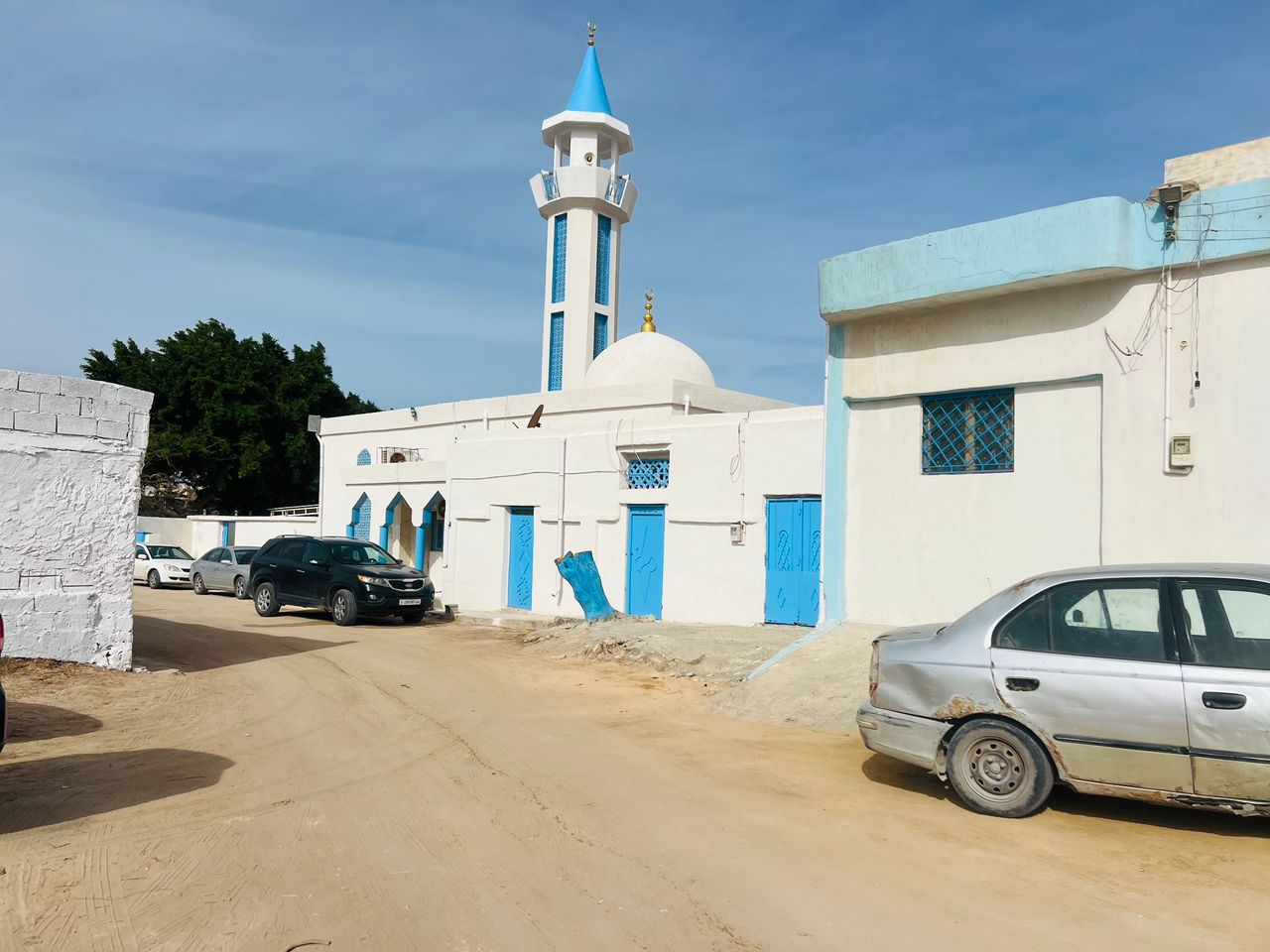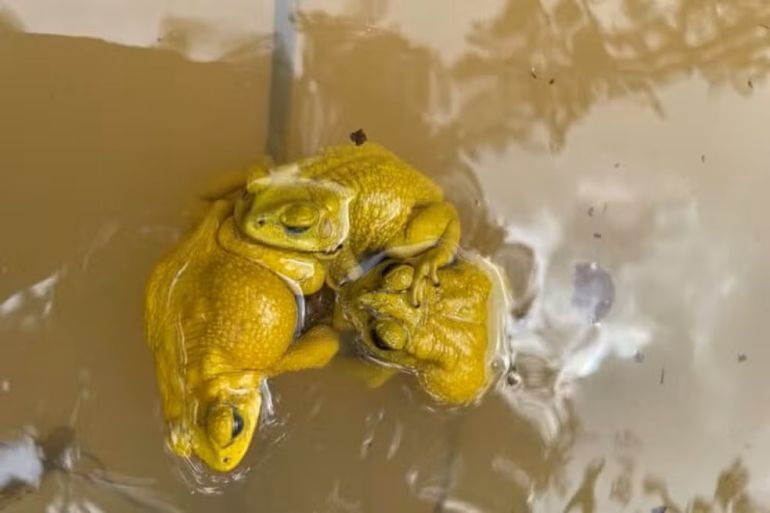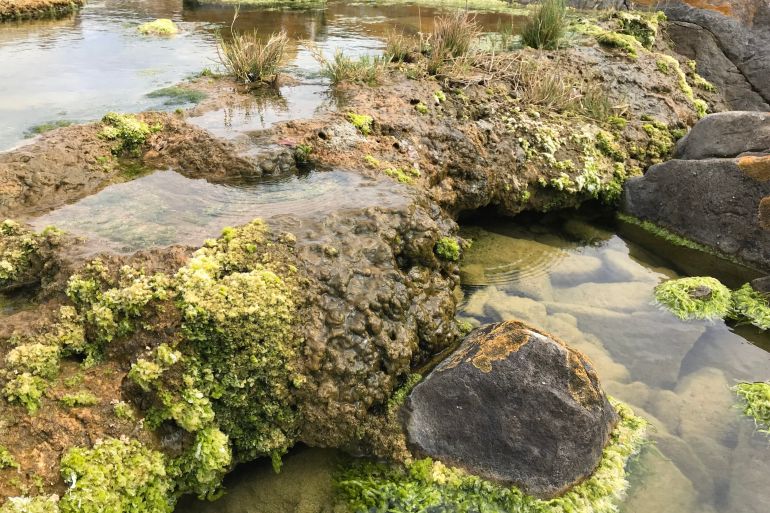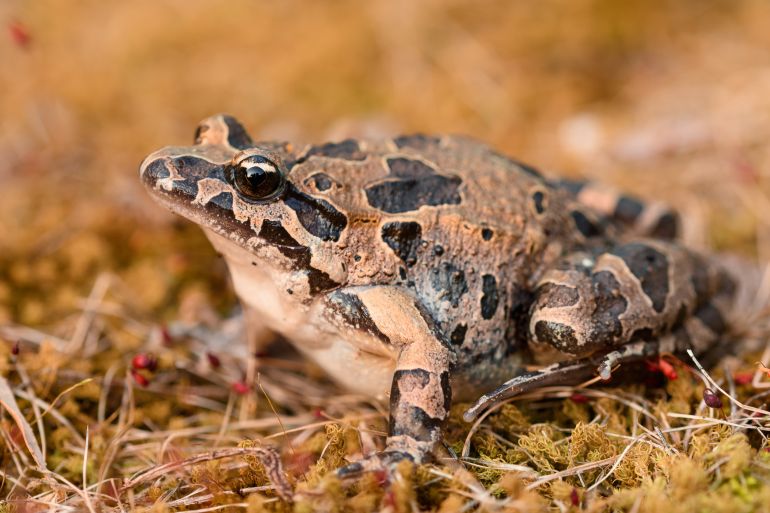
While the arid desert environment does not provide suitable living conditions for organisms, the surprise that amazed scientists was that the colorful frog inhabiting the oases of the southeastern Tunisian desert, “Discoglossus pictus,” attracts a group of visitors with different identities. Some belong to microscopic parasites and others to small worms, turning its slender body into a luxurious and crowded hotel for these guests.
As in the human world, some guests were comfortable, concerned only with obtaining suitable accommodation in this harsh climate. However, others were bothersome, refusing to leave the place without leaving the marks of their presence, affecting the health and vitality of their host, who endured them with admirable patience.
The fact that such guests obtain residence in the body of the colorful frog is not strange in itself, as many studies have documented this parasitic relationship, where the parasitic organism benefits in every way by obtaining food, a suitable place for shelter, and reproduction inside the host’s body.
However, most of these studies were conducted in temperate or relatively favorable environments, and the available information about parasites residing inside amphibians like frogs in desert areas was very scarce.
Therefore, a study sought to address this informational gap by focusing on a specific case: the colorful frog that inhabits the desert oases in southeastern Tunisia.
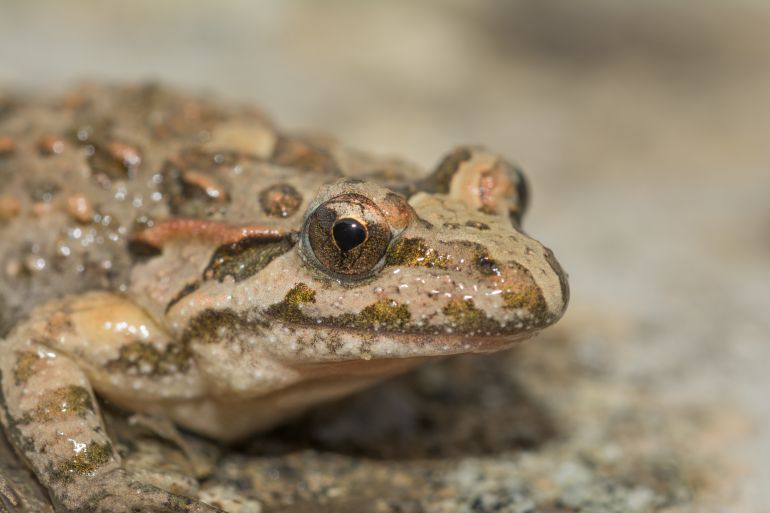
6 Types of Parasites
During the study published in the journal “Parasitology International,” researchers examined 120 frogs to detect the parasites living inside their bodies (internal parasites).
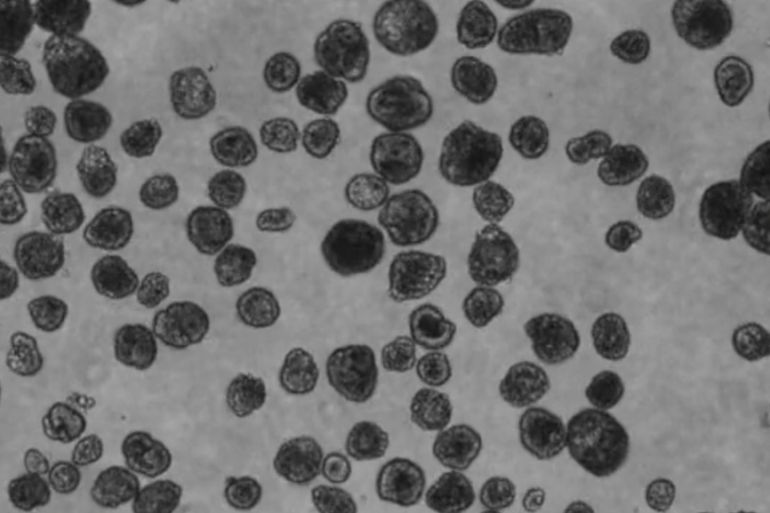
Using morphological identification (via microscope) and genetic analysis by comparing gene sequences with global databases, they successfully recorded 6 types of parasites. Three of these types were protozoa, microscopic single-celled organisms that typically obtain comfortable residence inside the host without causing disturbance, while the other three bothersome types were two types of nematodes and one type of trematode.
97.5% of the frogs were infected with at least one parasite, a very high rate. The most widespread parasite was the nematode “Cosmocercidae,” which infected about 88% of the frogs.
Infection rates with non-bothersome protozoan parasites were higher in males than in females. Infection with worms (multicellular parasites) was associated with a deterioration in the frog’s physical condition. The frog’s actual age, determined precisely through bone analysis, was not a factor influencing the likelihood of infection.
An Observation with an Explanation
Contrary to what might seem at first glance—that recording a mix of six parasites in the colorful frog of the southeastern Tunisian desert seems like a large number—the surprise was a statement: “We were not very surprised to find this mix of parasite groups, as protozoa, nematodes, and trematodes are typically known as internal parasites of amphibians and have been previously described in painted frogs and other anurans.”
It was added: “However, the more interesting aspect was not the type of parasites discovered, but the relatively low diversity of parasite species, despite the very high overall prevalence of infection.”
Furthermore, “In fact, compared to studies conducted in more temperate or humid environments, the parasite diversity we observed was modest.”
The observation was not left unexplained: “Despite its modesty, this diversity is considered large for the desert environment in which the frog lives. This aligns with the idea that desert oases represent harsh and limited ecosystems, where harsh climatic conditions and limited availability of intermediate hosts may restrict the emergence of more diverse parasitic communities. At the same time, the wide spread of some parasites indicates that those species are capable of surviving and thriving in such environments.”
Natural Behavior
The observation of the wide spread of parasite infection (97.5%) was also