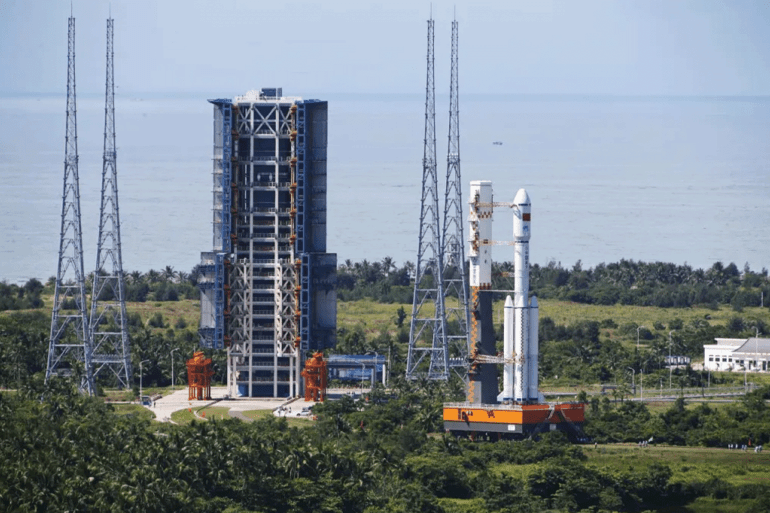
After achieving significant leaps in its space program in recent years, China has announced a surprising freeze on planned launch operations for February 2026 from the Wenchang Space Centre on Hainan Island. This unexpected move has raised concerns among observers about the future of its ambitious space program.
In recent years, China has managed to deploy and operate over 300 commercial satellites in orbit in 2025, recording more than 50 successful commercial launches. This is in addition to the success of the “Chang’e-6” mission in collecting the first-ever samples from the far side of the Moon and winning international scientific awards, as well as Beijing’s continued progress in building the “Tiangong” space station and conducting scientific experiments on it.
Why is the focus on the “Long March 10A”?
The cancelled dates were part of a busy schedule that was expected to see multiple launches, including space tourism flights and satellites, but an official explanation is still absent.
Indicators and speculation suggest the reason may be linked to technical issues that emerged in previous missions, leading to a reassessment of the feasibility of some planned launches or their postponement.
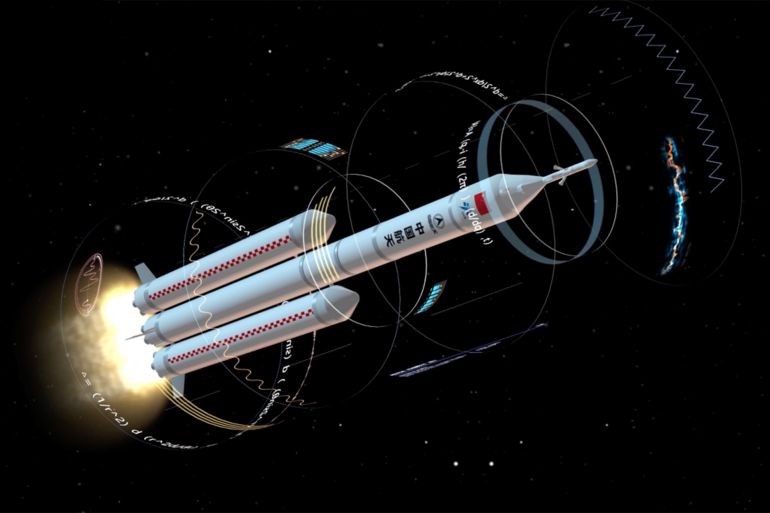
However, there is one exception: a potential test of the next-generation “Long March-10A” rocket scheduled for February 11, 2026. This indicates that Beijing may be placing its full focus on this crucial test rather than executing the full launch schedule.
The importance of the test lies in the fact that the “Long March 10A” is not just an ordinary rocket; it is viewed as the cornerstone of China’s roadmap towards a crewed Moon landing and supporting larger, heavier missions in the future.
If this test succeeds, it could restore some momentum to the program and demonstrate high technical capability in the face of international competition. If it fails, however, it could raise further questions about China’s readiness for upcoming major missions.
China has frozen rocket launches scheduled for February 2026.
Implications of the Decision
The sudden decision to cancel the launches has sparked reactions on three levels:
Space Tourism: The Wenchang site was an attraction for visitors who planned to watch the launches, leaving tourism companies and customers in a state of uncertainty.
Trust and Communication: Some have criticized the lack of transparency from Chinese authorities, which has sparked widespread speculation on social media platforms and within scientific communities.
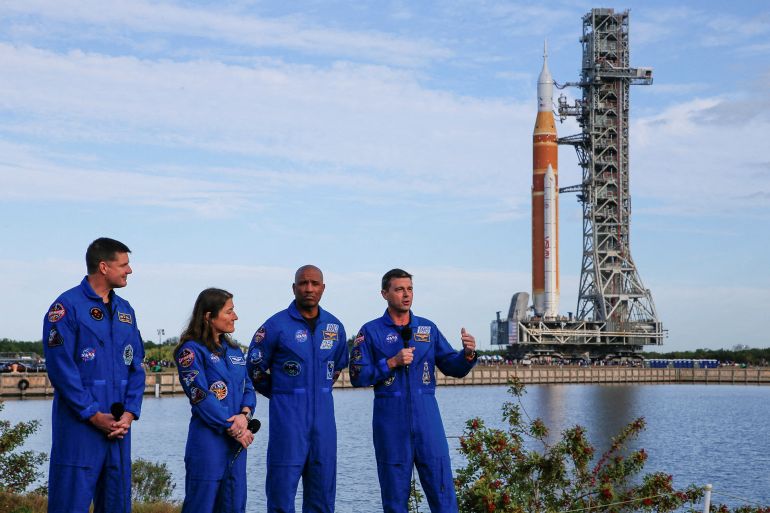
The Global Space Race: This event comes at a time when competition between major powers is accelerating, with projects like NASA’s Artemis and SpaceX’s Starship rocket, increasing pressure on China to maintain its competitive edge.
In short, what is happening is a temporary freeze of China’s space schedule amid signals of a focus on resources for a critical new rocket test. This step could either be a qualitative leap towards the future or a reminder of the technical hurdles facing modern space programs.
Launch Complex 201
Launch Complex 201 is a historic launch site at Cape Canaveral Space Force Station in Florida, originally constructed in the late 1950s for the Titan I intercontinental ballistic missile program. It was later used for test launches of the Titan II missile and was the launch site for the Gemini crewed spaceflight program in the 1960s.
Wenchang Space Launch Centre
The Wenchang Space Launch Centre is a modern Chinese spaceport located on Hainan Island, operational since 2016. It is strategically important for launching heavy-lift rockets like the Long March 5, benefiting from its low-latitude coastal location. The site has been central to major Chinese spaceflight missions, including lunar exploration and the construction of the Tiangong space station.
China
China is one of the world’s oldest continuous civilizations, with a recorded history spanning over four millennia. It is home to numerous UNESCO World Heritage sites, such as the Great Wall and the Forbidden City, which reflect its long imperial past and profound cultural achievements.
Hainan Island
Hainan Island is China’s southernmost province, located in the South China Sea. Historically, it was often used as a place of exile during imperial dynasties, but it has transformed into a major tourist destination and free-trade port in the modern era.
Chang’e-6
Chang’e-6 is a Chinese lunar exploration mission designed to land on the far side of the Moon and collect the first-ever samples from that region. It successfully launched in May 2024, building upon the historic achievements of its predecessor, Chang’e-4, which was the first mission to achieve a soft landing on the lunar far side.
Moon
The Moon is Earth’s only natural satellite, formed approximately 4.5 billion years ago from debris after a massive collision between Earth and a Mars-sized body. It has been a central object in human mythology, science, and exploration, most notably with the first crewed landing by Apollo 11 in 1969.
Beijing
Beijing is the capital of China, with a history spanning over 3,000 years. It served as the seat of power for several dynasties, most notably the Ming and Qing, and is home to iconic cultural sites like the Forbidden City and the Great Wall. Today, it is a major global metropolis and political center.
Tiangong
Tiangong is a series of Chinese space stations, with Tiangong-1 launched in 2011 as China’s first prototype space laboratory. The program represents a major step in China’s manned spaceflight ambitions, leading to the larger, modular Tiangong space station currently in orbit.
Long March 10A
The Long March 10A is a planned Chinese crewed launch vehicle, part of the next-generation Long March rocket family. It is being developed primarily to support China’s lunar exploration ambitions, including missions to land astronauts on the Moon. Its design and development are a key component of the Chinese space program’s history of advancing its independent crewed spaceflight capabilities.
NASA
NASA, or the National Aeronautics and Space Administration, is the United States government agency responsible for the civilian space program, established in 1958 in response to the Soviet Union’s early space achievements. It is renowned for landmark projects like the Apollo moon landings, the Space Shuttle program, and ongoing exploration of the solar system through robotic missions and the International Space Station.
Artemis
The Temple of Artemis, located in Ephesus (modern-day Turkey), was a massive Greek temple dedicated to the goddess Artemis. Built around 550 BCE, it was one of the Seven Wonders of the Ancient World, renowned for its grand size and magnificent artistry before being destroyed by arson in 356 BCE.
SpaceX
SpaceX, founded by Elon Musk in 2002, is a private American aerospace manufacturer and space transportation services company. Its history is defined by pioneering reusable rocket technology, with the goal of reducing space access costs and enabling the colonization of Mars.
Starship
Starship is a fully reusable super heavy-lift launch vehicle developed by SpaceX, designed for missions to the Moon, Mars, and beyond. Its development history began with earlier concepts like the Interplanetary Transport System, with the current stainless-steel vehicle undergoing iterative testing since 2019 to achieve orbital flight.