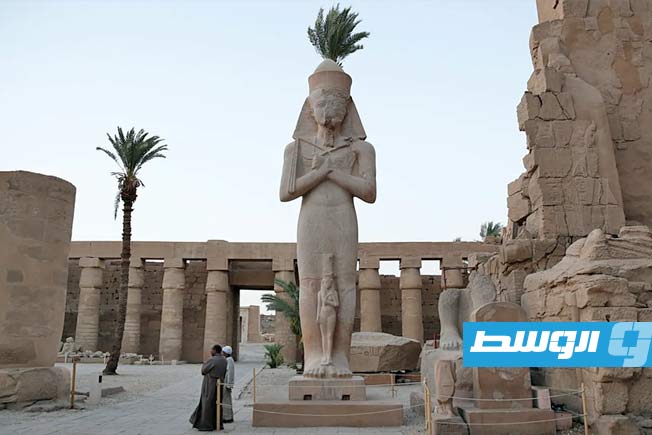
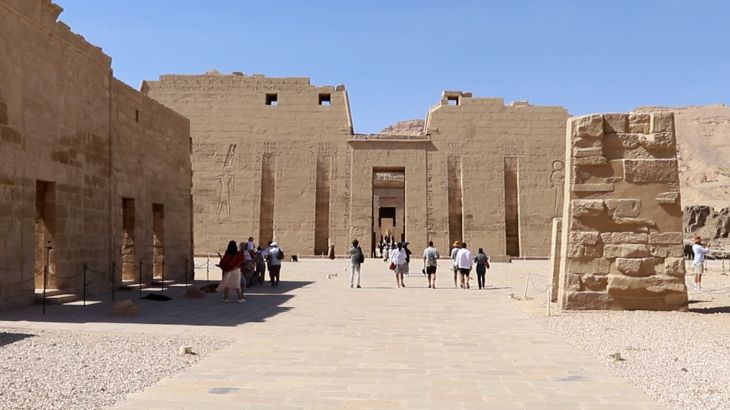
A joint Egyptian-Chinese archaeological mission has announced the discovery of a new lake within the precincts of the Montu Temple at the Karnak complex in the north of Luxor city, southern Egypt.
The new sacred lake, which the team has named the ‘Southern Sacred Lake’, is located west of the Temple of Maat, the goddess of truth, justice, and harmony.
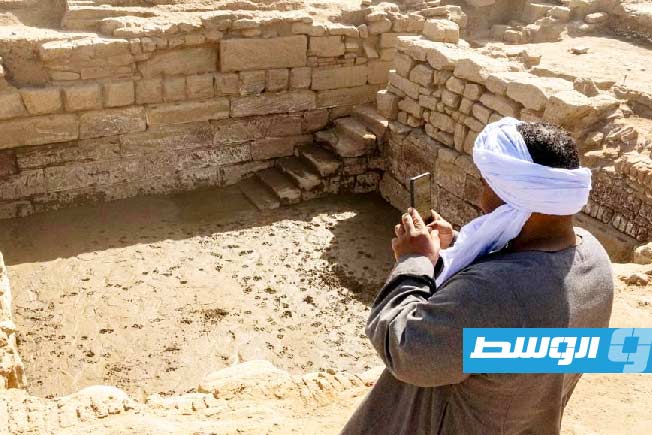
The lake covers an area of more than 50 square meters and dates back to ancient times. It was manually created as a water reservoir dedicated to religious rituals and temple ceremonies.
It was noted that the new lake, together with the previously known sacred lake inside the Montu Temple, forms a distinctive design of two parallel lakes extending from north to south within the complex’s walls.
These lakes were fundamental elements in ancient Egyptian temples, used as sources of sacred water separate from daily use and reserved solely for religious rituals and official ceremonies.
The discovery was described as the culmination of eight years of hard and collaborative work between the Egyptian and Chinese teams. The team succeeded in developing a joint methodology and applying advanced techniques that led to the discovery of this rare site in an excellent state of preservation, despite challenges.
The excavation process began with a dense accumulation of sand and debris, but today the sacred lake can be seen in its complete form. This will provide significant opportunities for new research into the religious architecture of ancient Egyptian temples.
History of Thebes
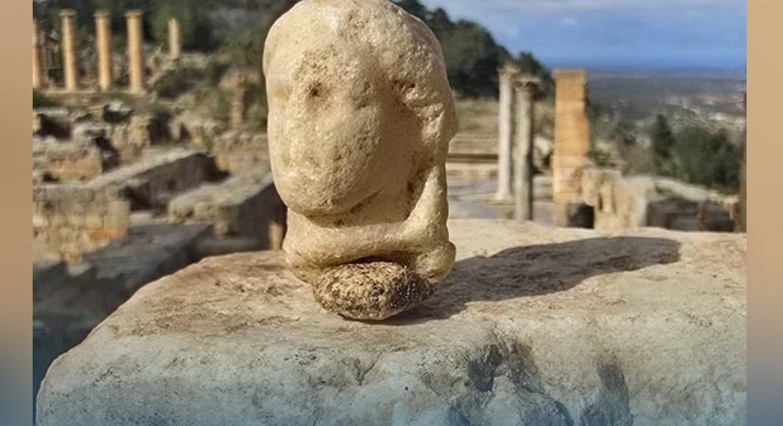
The excavations also resulted in the discovery of three small chapels dedicated to the god Osiris, along with dozens of small statues made from various materials, as well as remains of cattle jaws and reused stones dating back to the Late Period (747–332 BC).
These discoveries provide new evidence that helps reconstruct the history of Thebes during the period of power and influence of religious temples in the 25th and 26th Dynasties.
The Montu Temple covers approximately 106,000 square meters, with about 24,000 square meters located inside its walls.
An Egyptian worker in front of the discovered lake at the Karnak complex in Luxor, southern Egypt.
Egypt
Egypt is home to one of the world’s oldest civilizations, with a recorded history spanning over 5,000 years and iconic monuments like the Pyramids of Giza and the Sphinx from the Old Kingdom era. Its rich cultural heritage was further shaped by successive influences, including Ptolemaic, Roman, and Islamic periods, with Cairo later emerging as a major center of the Arab world.
Karnak complex
The Karnak Temple Complex in Luxor, Egypt, is a vast open-air museum and the largest ancient religious site in the world. Its construction began in the Middle Kingdom (c. 2000–1700 BCE) and continued for over 1,500 years, with successive pharaohs like Hatshepsut and Ramesses II adding temples, pylons, and obelisks dedicated primarily to the god Amun-Ra.
Montu Temple
The Montu Temple is an ancient Egyptian temple complex located in Karnak, near Luxor, dedicated to Montu, the falcon-headed god of war. Its construction began during the Middle Kingdom, with significant expansions and renovations added by pharaohs of the New Kingdom, including Amenhotep III. Today, its ruins, though less preserved than the nearby main Karnak Temple, provide important insight into the cult of Montu and Theban religious architecture.
Luxor
Luxor is a city in southern Egypt built on the site of the ancient city of Thebes, the capital of the New Kingdom pharaohs. It is renowned for its vast open-air museum of ancient monuments, including the Karnak Temple Complex and the Valley of the Kings, where many pharaohs, such as Tutankhamun, were buried.
Temple of Maat
The Temple of Maat was a significant religious structure in ancient Egypt, dedicated to the goddess Maat who personified truth, justice, and cosmic order. It was primarily located within the Karnak temple complex at Thebes, serving as a site for important rituals and offerings to uphold these principles.
Southern Sacred Lake
The Southern Sacred Lake, also known as the “Lac Sacré du Sud,” is a revered body of water in southern Madagascar, historically considered a dwelling place for ancestral spirits by local communities. Its history is deeply intertwined with indigenous spiritual beliefs and royal traditions, where it served as a site for rituals and royal baptisms for the Antandroy and other ethnic groups.
Thebes
Thebes was a major ancient Egyptian city and the capital during parts of the Middle and New Kingdoms, flourishing around 1550–1070 BCE. It is renowned for its monumental temples at Karnak and Luxor, the royal burial sites in the Valley of the Kings and Valley of the Queens, and its role as a powerful religious and political center dedicated to the god Amun.
Osiris
Osiris is an ancient Egyptian god of the afterlife, resurrection, and fertility, central to Egyptian mythology. According to myth, he was a wise king murdered by his brother Set, then resurrected by his wife Isis, becoming the ruler of the underworld and a symbol of rebirth. His worship was widespread, and his story was central to Egyptian funerary practices and the concept of eternal life.
Grand Egyptian Museum
The Grand Egyptian Museum, located near the Giza pyramids, is a modern museum designed to house the world’s most extensive collection of ancient Egyptian artifacts. Its construction, which began in the early 2000s, aims to alleviate overcrowding at the older Egyptian Museum in Cairo and provide a state-of-the-art home for treasures like the complete collection of Tutankhamun. Once fully opened, it will serve as a major cultural and archaeological hub for Egypt.
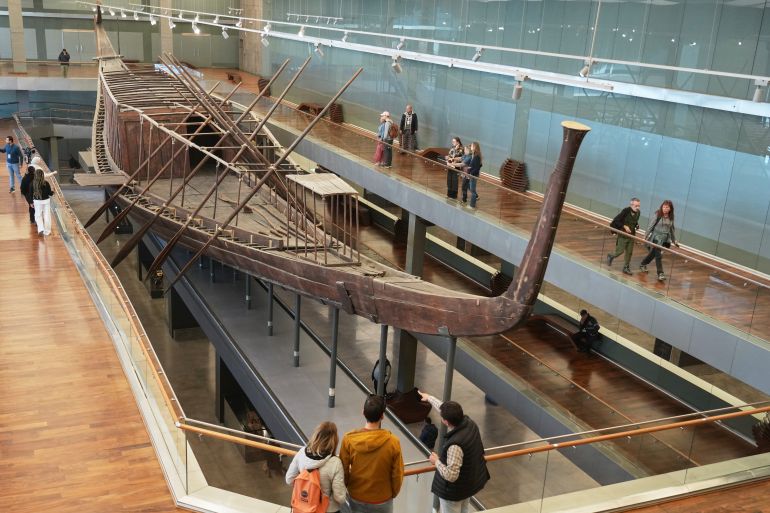
King Khufu’s boat
King Khufu’s boat is an intact full-size vessel from ancient Egypt, discovered buried in a pit at the foot of the Great Pyramid of Giza around 2500 BCE. It is a solar barque, likely built for the pharaoh Khufu to use in his afterlife journey, and it provides remarkable insight into ancient Egyptian shipbuilding and religious practices.