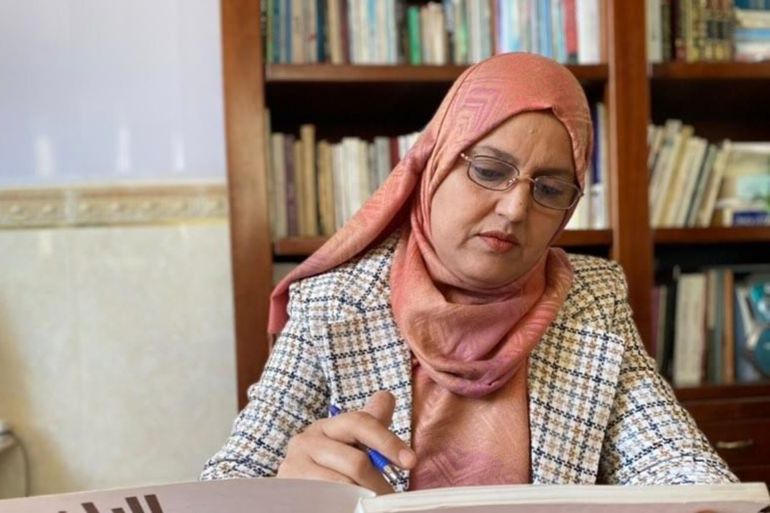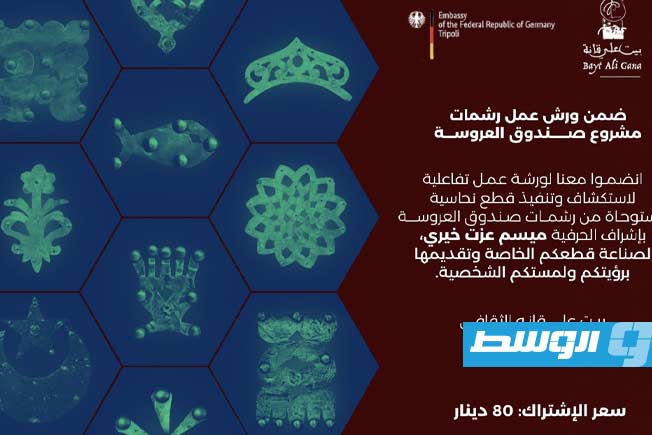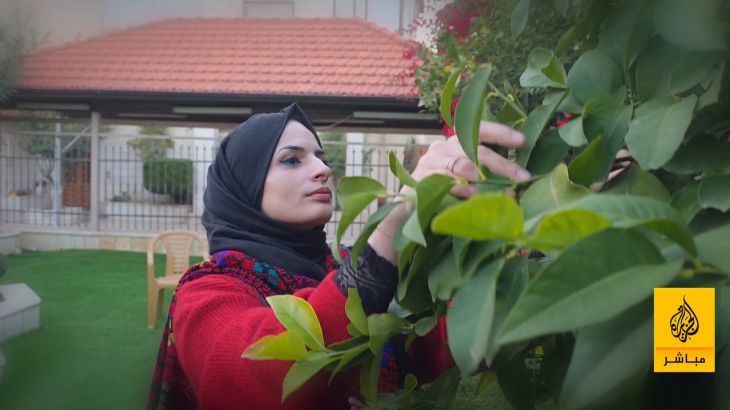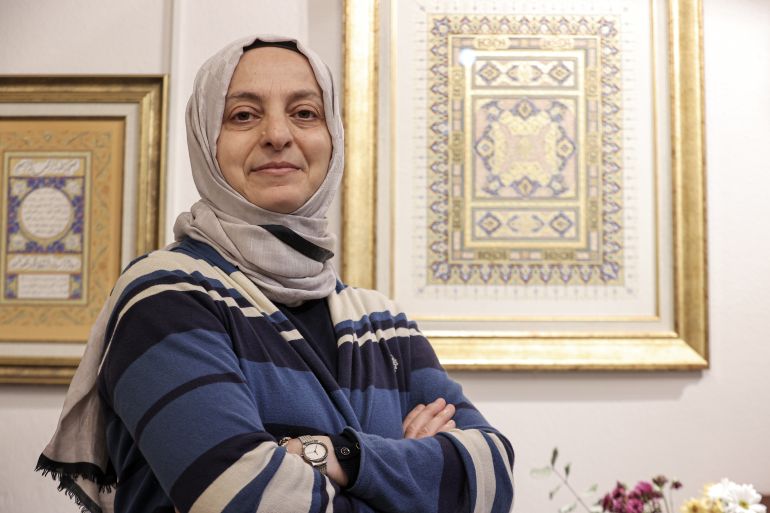
The story of an artist’s journey does not always begin in a studio or an institute; sometimes it can start from a moment of fleeting curiosity.
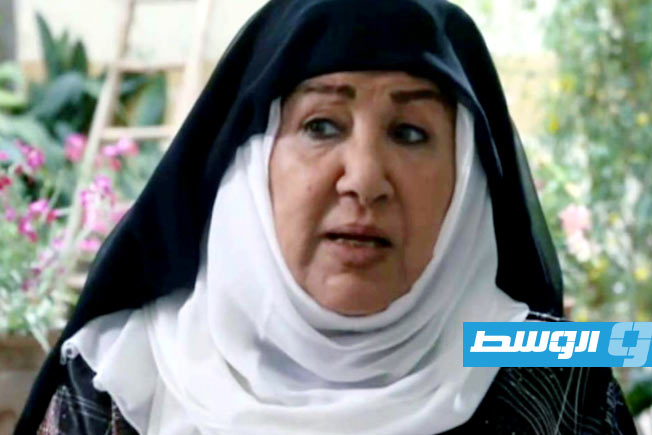
This was the beginning for the Turkish artist and her journey with the art of illumination (tezhip), when a small news article she read in a newspaper during her university years led her to a world that would later become the center of her artistic and educational life.
Now 51 years old, she did not settle for merely mastering one of the oldest decorative arts in Islamic civilization. Instead, she dedicated herself to preserving it and passing it on to new generations through teaching and artistic production, following a long journey of learning, patience, and self-directed work.
A New World
The roots of this journey go back to her university years, where she had been searching since childhood for a space to express her inner need for art. She studied in the handicrafts department in high school, but what she learned at the time did not satisfy her passion, as she describes it.
In 1995, she enrolled in the handicrafts education department at Gazi University in Ankara. There, a small newspaper article caught her attention with a simple headline announcing the opening of the “Turkuaz Fine Arts” studio (Dar al-Naqsh) in Ankara.
Driven by curiosity, she decided to visit the place, finding herself in an environment where arts like ebru (marbling), calligraphy, miniature painting, and illumination were taught.
In that studio, she received lessons in the art of illumination during 1996 and 1997. This period, she says, represented for her “the opening of the door to art,” but she soon realized that this art could not be fully grasped in just two years, as it requires a long path of continuous learning and practice.
Facing Challenges
After graduating in 1999, she was appointed as a handicrafts teacher in the province of Sivas in central Turkey, which forced her to move away from her teacher and her initial artistic circle. However, this separation was not the end of the road, but the beginning of an even more difficult phase.
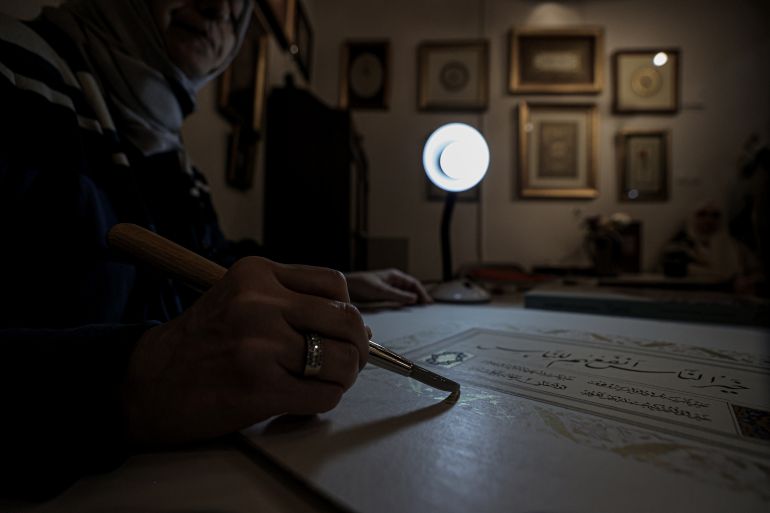
During her time in Sivas, she received the principles of the art according to the traditional Turkish master-apprentice method, but she soon realized that what she had learned was only enough to place her on the first threshold of this art.
She added that the lack of available resources and materials at the time pushed her to continue learning through personal effort, relying on research, observation, and experimentation.
She describes that phase as full of hardship, borrowing the expression “a pearl is born from pain” to explain how it required long patience, deep reading, and repeated attempts to understand what was missing.
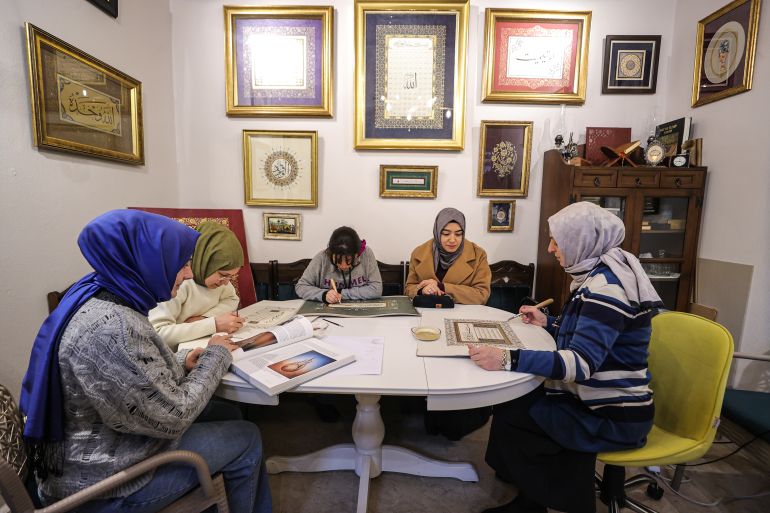
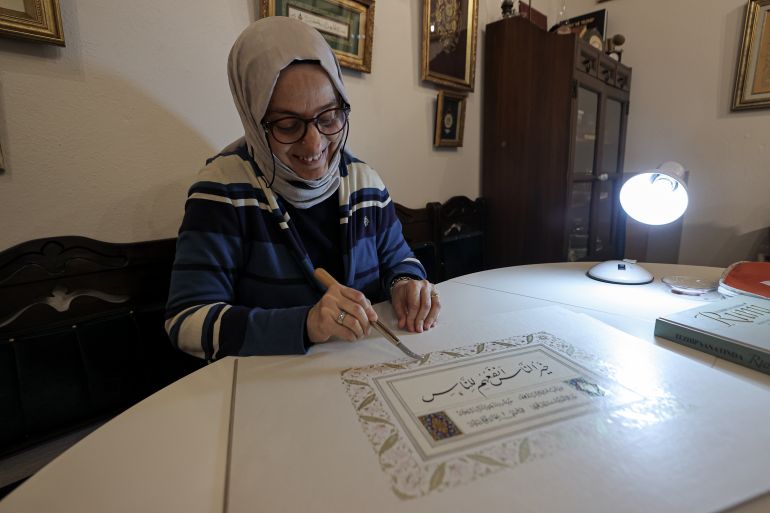
She clarified that she continued to practice the art of illumination and develop it step by step in her home, alongside her work as a teacher in primary and secondary schools and in public education centers in Sivas province.
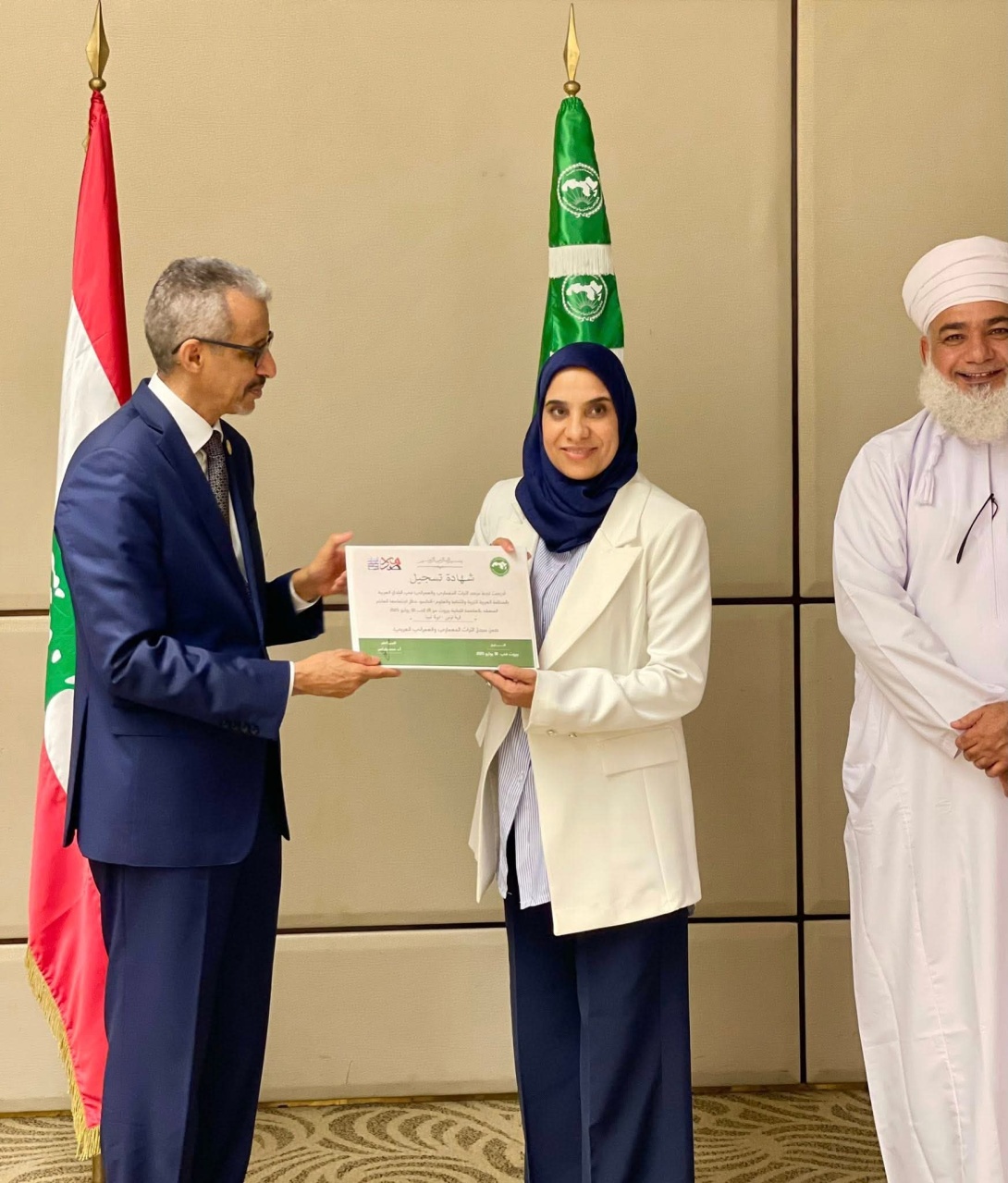
Over time, these efforts resulted in notable artistic maturity, crowned by her receiving the “Intangible Cultural Heritage Bearer” card from the Ministry of Culture and Tourism, along with her works entering private collections and museums, and her winning prestigious art awards.
A Message for the Future
Since 2011, she has been teaching the art of illumination at the Osman Gazi Public Education Center in Bursa province (western Turkey