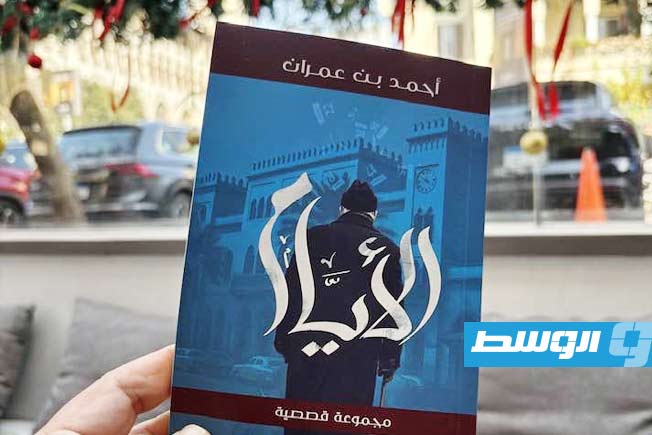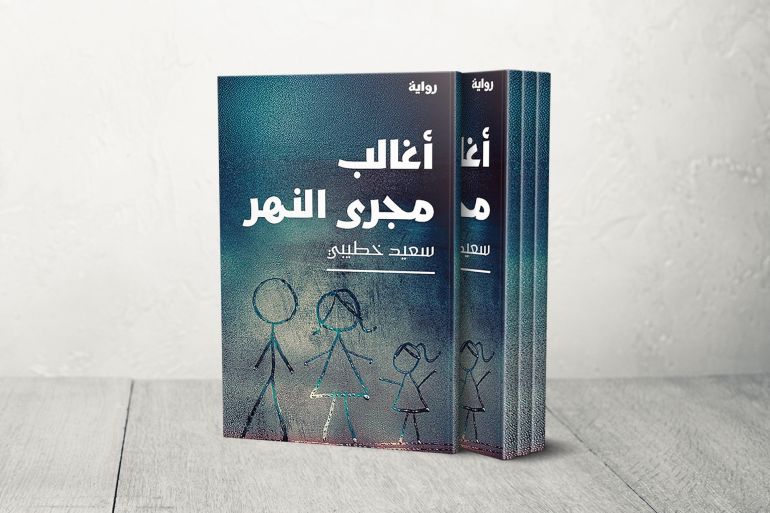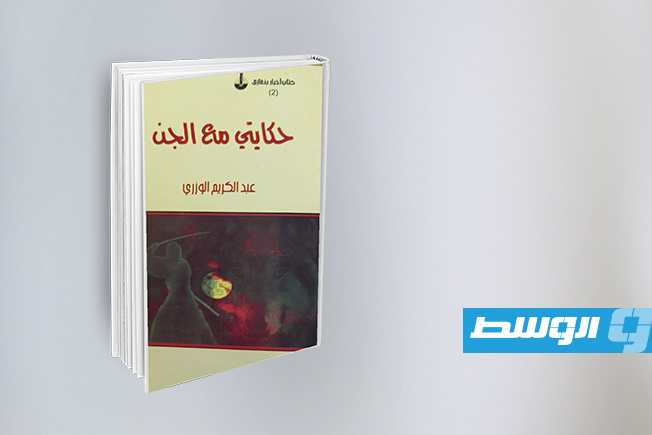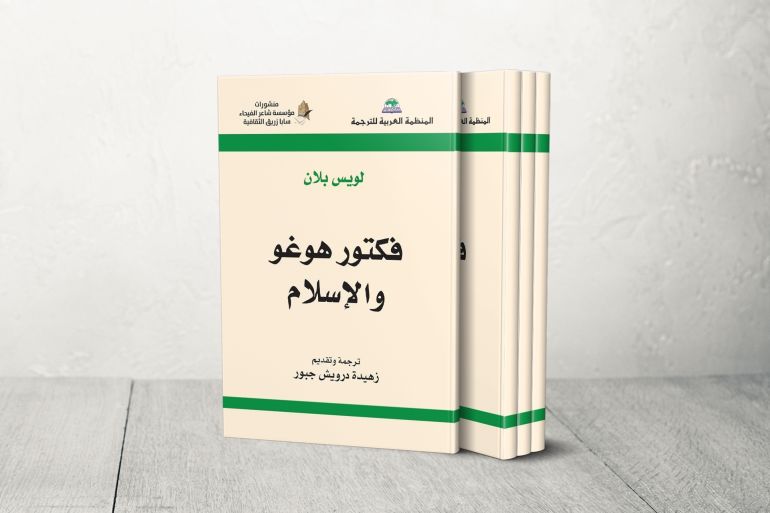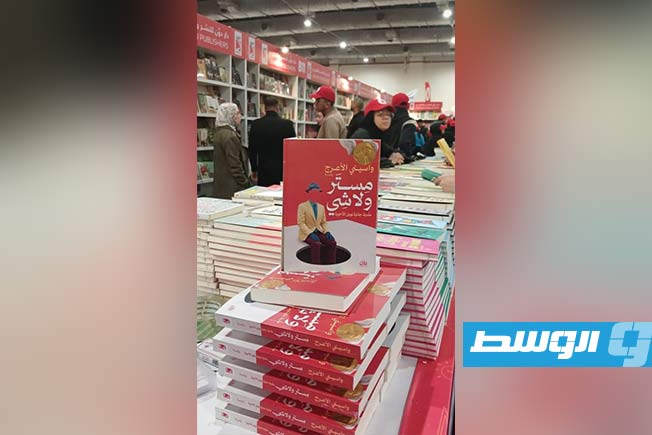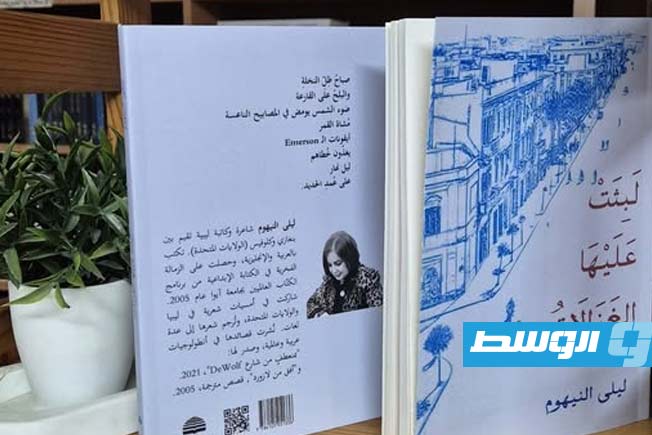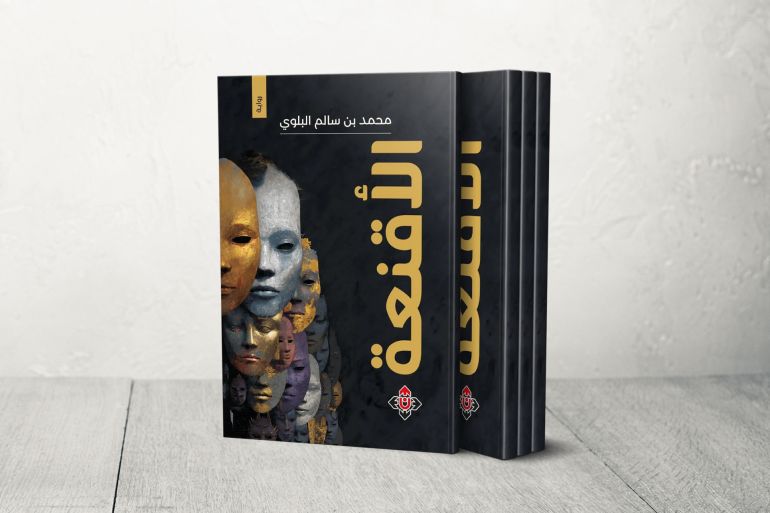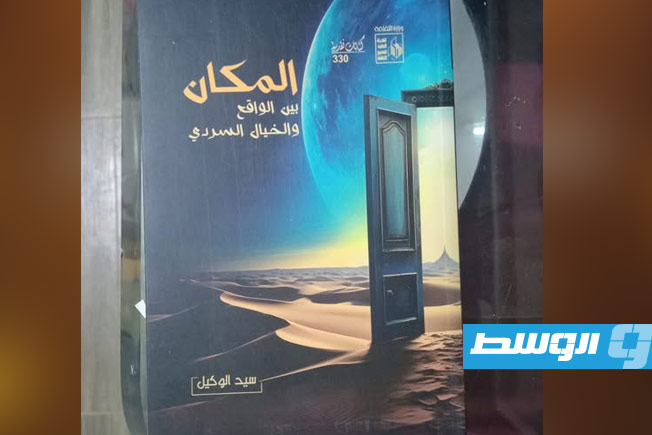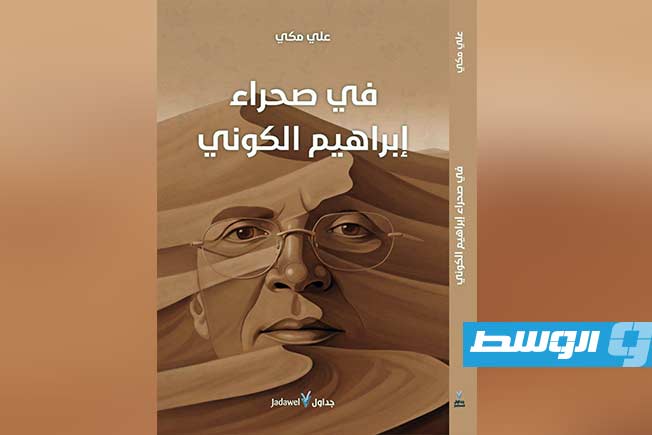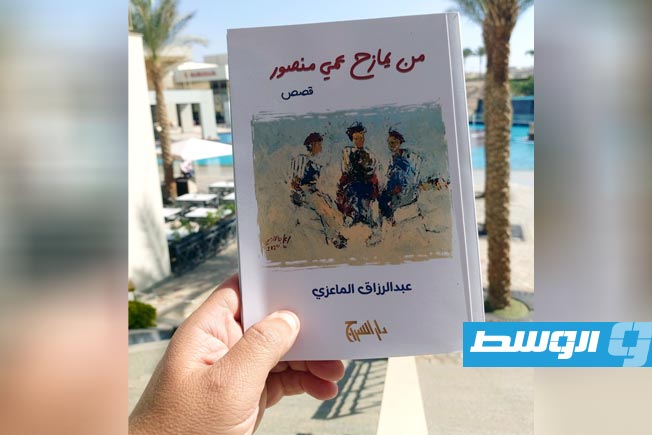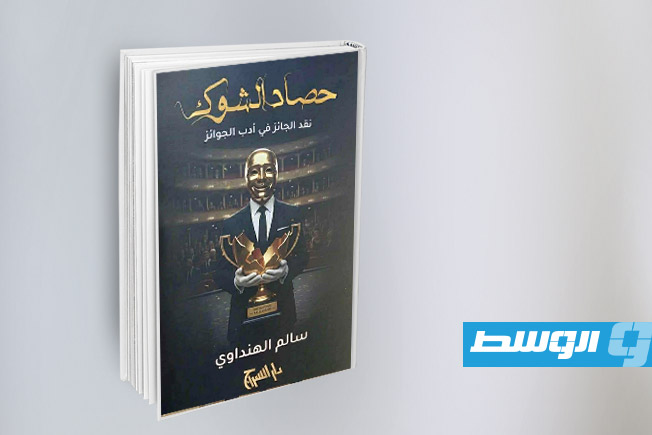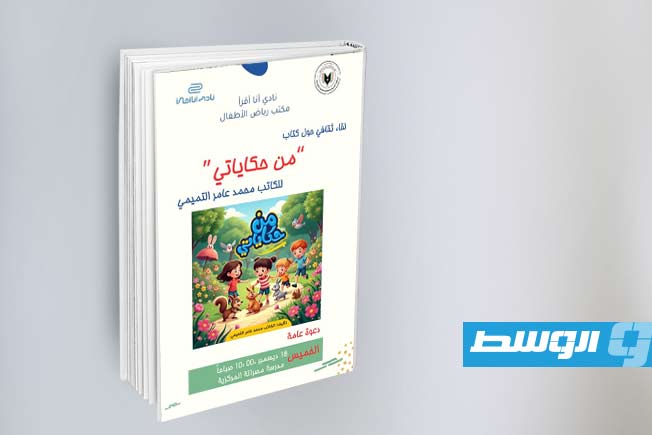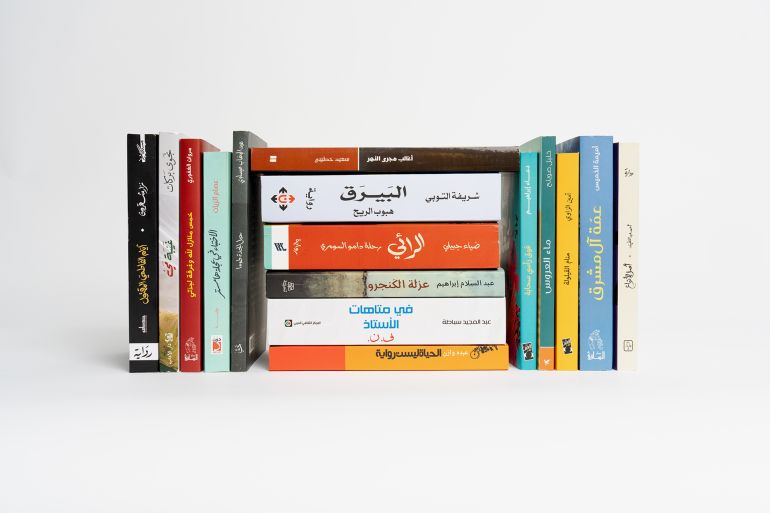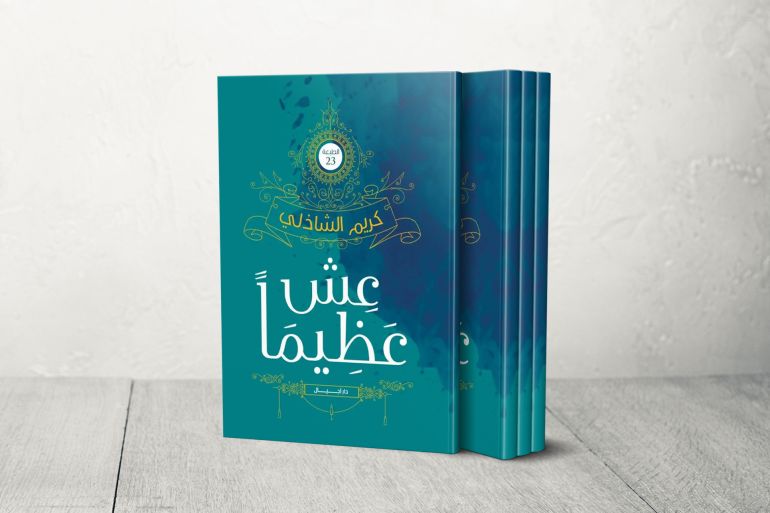
It is as if the book contains harmonious flashes that point you to the path. You could say they are like streams of water; a group of them converge into a tributary that tells you that you are a noble, great knight who must mount his steed to be among the knights in the battle of life.
Other streams form another tributary, announcing to the knight that there is a great cause in need of someone to champion and elevate it. The two tributaries meet to form a great torrent that calls out to every part of your being: “Live greatly, and champion your cause.”
At the beginning, the author takes us back to the first cry with which we begin our lives, which creates something common between us. However, we then take different paths in life. Some of us live their years only to die and be forgotten, while others, when they die, are a relief to those around them.
A third, small category remains: those who do not die because their great deeds continue to advocate for them after their departure, elevate their legacy, and remind people that they are alive, not dead. Such are the people of great causes, the adopters of grand principles; they live for them and by them, and these causes live for them and by them.
Your decision to live greatly is neither easy nor simple. It requires you to refine your soul and self, reshaping them anew in accordance with what you believe in. Then, each dissolves into the other, and at that point, your life becomes your cause, and your cause becomes your life.
He finds a compass through which he sees the disparity in degrees of greatness or baseness, linking it to the nature of the concerns carried by each person, which range from trivial to ordinary, then noble to great.
The author presents us with an embodiment of this truth, which he sees in the character of Sayyid Qutb, may God have mercy on him. Whether you disagree or agree with Sayyid, when you look at his biography, you cannot help but see in him a hero who lived for a cause and died for it. It is as if Sayyid Qutb’s journey was a practical affirmation of his sincerity with himself; the path he took confirmed his statement: “Those who wield pens can accomplish a great deal, but on one condition: that they die so their ideas may live.”
Undoubtedly, history abounds with many examples of others who paid the price for their belief in their ideas. Here we can recall from history the story of Ahmad ibn Hanbal, Sa’id ibn Jubayr, or Ibn Taymiyyah. The book’s author sees no issue in going beyond our heritage to learn from the history of Che Guevara, Lincoln, or Churchill.
It is unacceptable for a person who has not walked the path of noble goals to protest that life’s circumstances constrained them, for a person is where they place themselves. If life does not proceed as we desire, that is its nature; harshness is among its traits, and toughness is its way, but it soon makes way for the victor. We have an example of this in Antarah, who was an insignificant slave, but he excelled through his poetry and chivalry, and his excellence was his means of liberation from slavery.
However, with all this, the writer does not miss the opportunity to point out the necessity for a person to be small in their own eyes; for the truly great will only touch the limits of their greatness if they start from their true size and adhere to detachment and humility. Here, he cites the saying of Mustafa Sadiq al-Rafi’i: “A man’s admiration for his lofty deeds is the first of his base deeds.”
He finds a compass through which he sees the disparity in degrees of greatness or baseness, linking it to the nature of the concerns carried by each person, which range from trivial to ordinary, then noble to great.
A person should not make the level of their concerns lower than what their energies and capabilities qualify them for. Our great scholar Muhammad al-Ghazali warned that “the difficulties of life correspond to the ambitions of men, rising and falling,” and therefore, you are the one who places yourself in the position you were created for.
He explains to us that love is the greatest
Live Greatly
“Live Greatly” is a modern cultural movement and brand focused on promoting personal growth, mindfulness, and purposeful living through events, content, and community. It does not have a long historical background as a traditional site, but emerged in the early 21st century as part of the broader wellness and self-improvement industry. The concept centers on inspiring individuals to pursue a more meaningful and engaged life.Sayyid Qutb
Sayyid Qutb was an influential Egyptian author, educator, and leading member of the Muslim Brotherhood in the mid-20th century. He is best known for his extensive written works, particularly “Milestones,” which articulated a radical Islamist ideology and critique of Western society and secular governments. His execution by the Egyptian government in 1966 made him a significant martyr figure for modern Islamist movements.Ahmad ibn Hanbal
Ahmad ibn Hanbal was a prominent 9th-century Islamic scholar and theologian, best known for founding the Hanbali school of jurisprudence, one of the four major Sunni schools of thought. He is particularly remembered for his staunch defense of traditionalist Islamic doctrine during the Mihna, a period of inquisition under the Abbasid Caliphate. His tomb in Baghdad, originally the site of a famous mosque and madrasa, remains a significant historical and cultural site for many Muslims.Sa’id ibn Jubayr
Sa’id ibn Jubayr was a prominent and respected Islamic scholar from the generation following the Prophet Muhammad, known as a *Tabi’i*. He is best known for being a devoted student of Ibn ‘Abbas and for his scholarly opposition to the Umayyad governor al-Hajjaj ibn Yusuf, which ultimately led to his martyrdom in 714 CE.Ibn Taymiyyah
Ibn Taymiyyah refers to Taqī ad-Dīn Ahmad ibn Taymiyyah (1263–1328), a highly influential and controversial medieval Sunni Islamic scholar, theologian, and jurist from Harran. He lived during the tumultuous period of the Mongol invasions, which deeply shaped his staunchly traditionalist views and his calls for a return to the Quran and Sunnah. His extensive writings and confrontations with authorities have left a lasting legacy, making him a pivotal figure for modern reformist and Salafi movements.Che Guevara
Che Guevara was an Argentine Marxist revolutionary who became a key figure in Fidel Castro’s successful Cuban Revolution in 1959. He later pursued revolutionary activities in other countries, notably Bolivia, where he was captured and executed in 1967, cementing his status as a global icon of rebellion.Lincoln
The Lincoln Memorial in Washington, D.C., is a national monument honoring Abraham Lincoln, the 16th U.S. president. Completed in 1922, its design is inspired by a Greek temple and houses a large seated sculpture of Lincoln, symbolizing his preservation of the Union and his role in ending slavery.Churchill
Winston Churchill was a British statesman who served as Prime Minister during World War II, renowned for his leadership and oratory that rallied the Allied powers. His legacy is commemorated at sites like the Churchill War Rooms in London, an underground bunker complex that served as the British government’s command centre during the war.Antarah
Antarah refers to the historical site of Antarah’s Fortress in Saudi Arabia, traditionally associated with the pre-Islamic poet and warrior Antarah ibn Shaddad. The ruins are believed to be remnants of a structure from the 6th century, reflecting the region’s ancient Arabian heritage. It serves as a cultural landmark tied to the legends and poetry of the famous literary figure.Mustafa Sadiq al-Rafi’i
Mustafa Sadiq al-Rafi’i was a prominent early 20th-century Egyptian writer and poet, known for his eloquent Arabic prose and poetry that championed classical literary traditions. He was a key figure in the modern Arabic literary renaissance, contributing influential works like “The History of Arabic Manners” and engaging in famous intellectual debates of his time.Muhammad al-Ghazali
Muhammad al-Ghazali (1917–1996) was an influential Egyptian Islamic scholar and author, known for his contemporary approach to interpreting Islamic principles and social issues. He was a prominent member of the Muslim Brotherhood in his early career but later developed independent views, authoring numerous books that sought to reconcile Islamic tradition with modern thought.