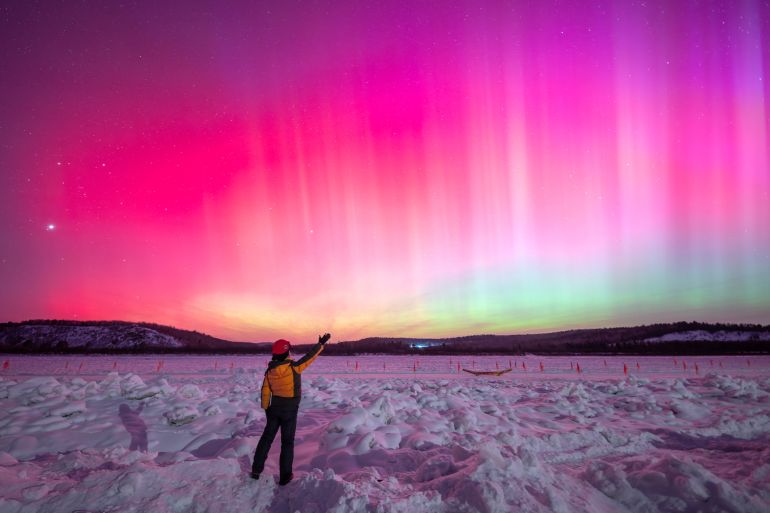
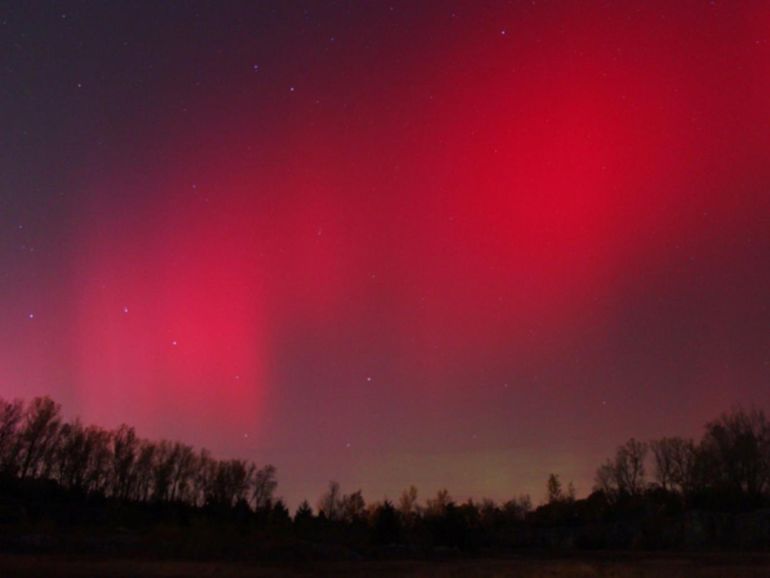
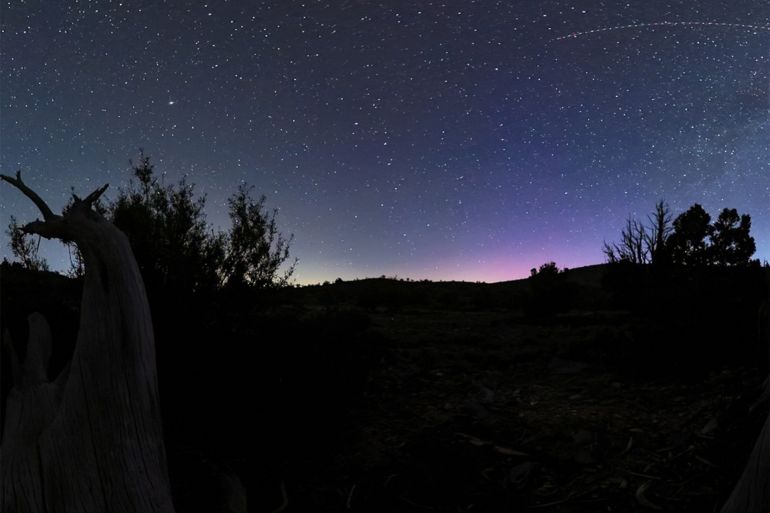
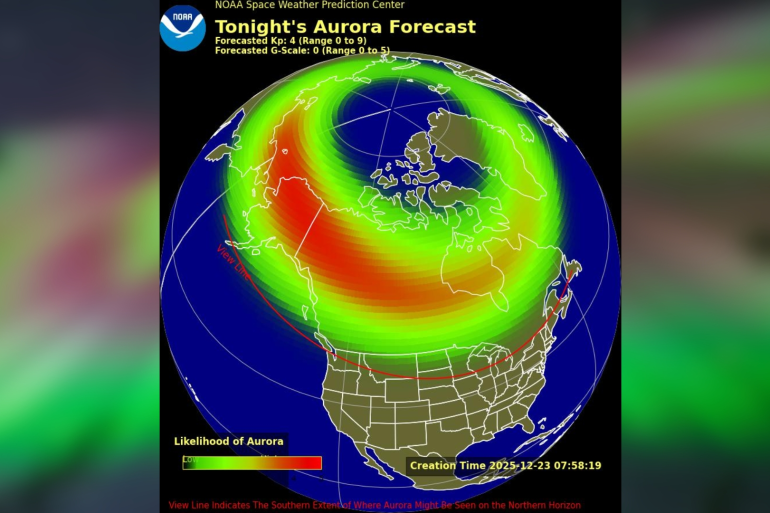
In recent days, Earth experienced one of the strongest solar storms in over 20 years, after being hit by a rare double wave consisting of a severe “S4” solar radiation storm accompanied by a powerful “G4” geomagnetic storm. This caused unprecedented disruption to Earth’s magnetic shield and the appearance of the aurora borealis in areas that had never seen it before, reaching as far as Southern California and parts of Central Europe.
The aurora borealis is an atmospheric light phenomenon directly linked to solar activity. It appears when charged particles emitted from solar storms interact with oxygen and nitrogen atoms in the upper layers of Earth’s atmosphere.
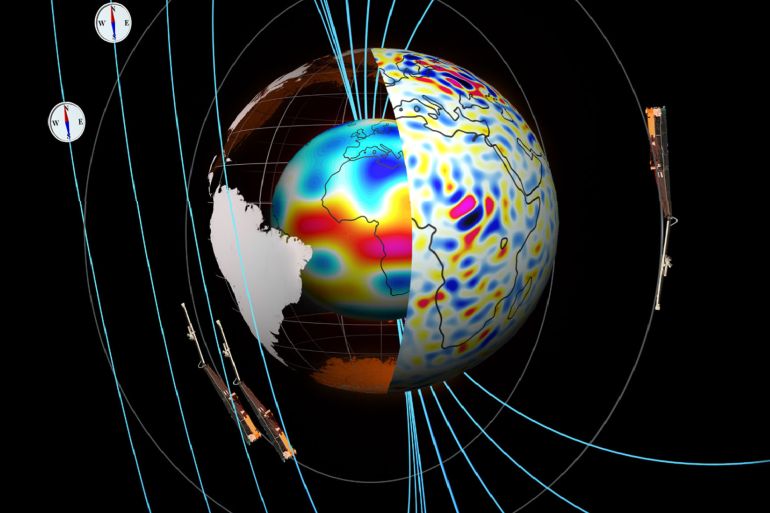
This interaction leads to the ionization of atoms and the release of dazzling colors ranging from green and red to violet and pink, unlike all other celestial bodies we see shining due to reflected sunlight. Earth’s magnetic field acts as a shield that directs these particles towards the poles, where the aurora typically appears.
The Aurora in History and Oman
Despite the aurora’s association with polar regions, historical and scientific records confirm its occasional appearance in lower latitude areas, especially during intense solar storms.
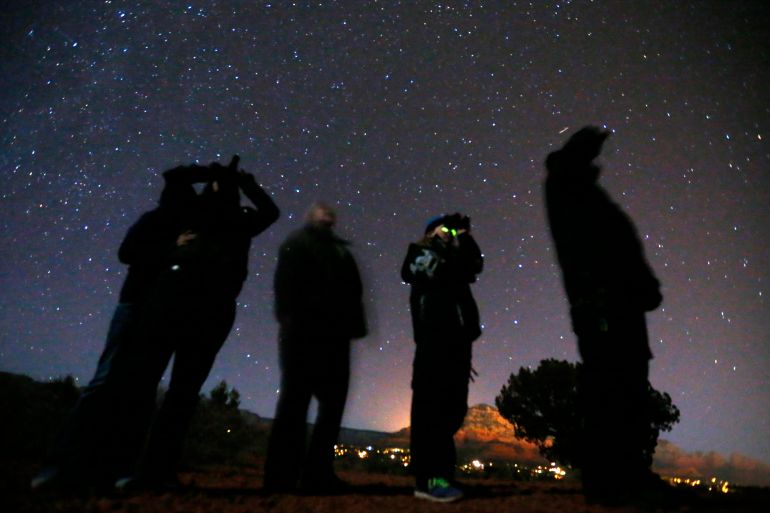
Ancient Arabic sources documented sightings in Yemen in the 7th century Hijri, and it was also recorded in Europe and Japan during the Middle Ages. In modern times, the Sultanate of Oman entered this scientific record for the first time, after the Omani Astronomical Society, with confirmation from NASA, documented the appearance of the aurora borealis in the skies of the Sultanate during a powerful solar storm in May 2024.
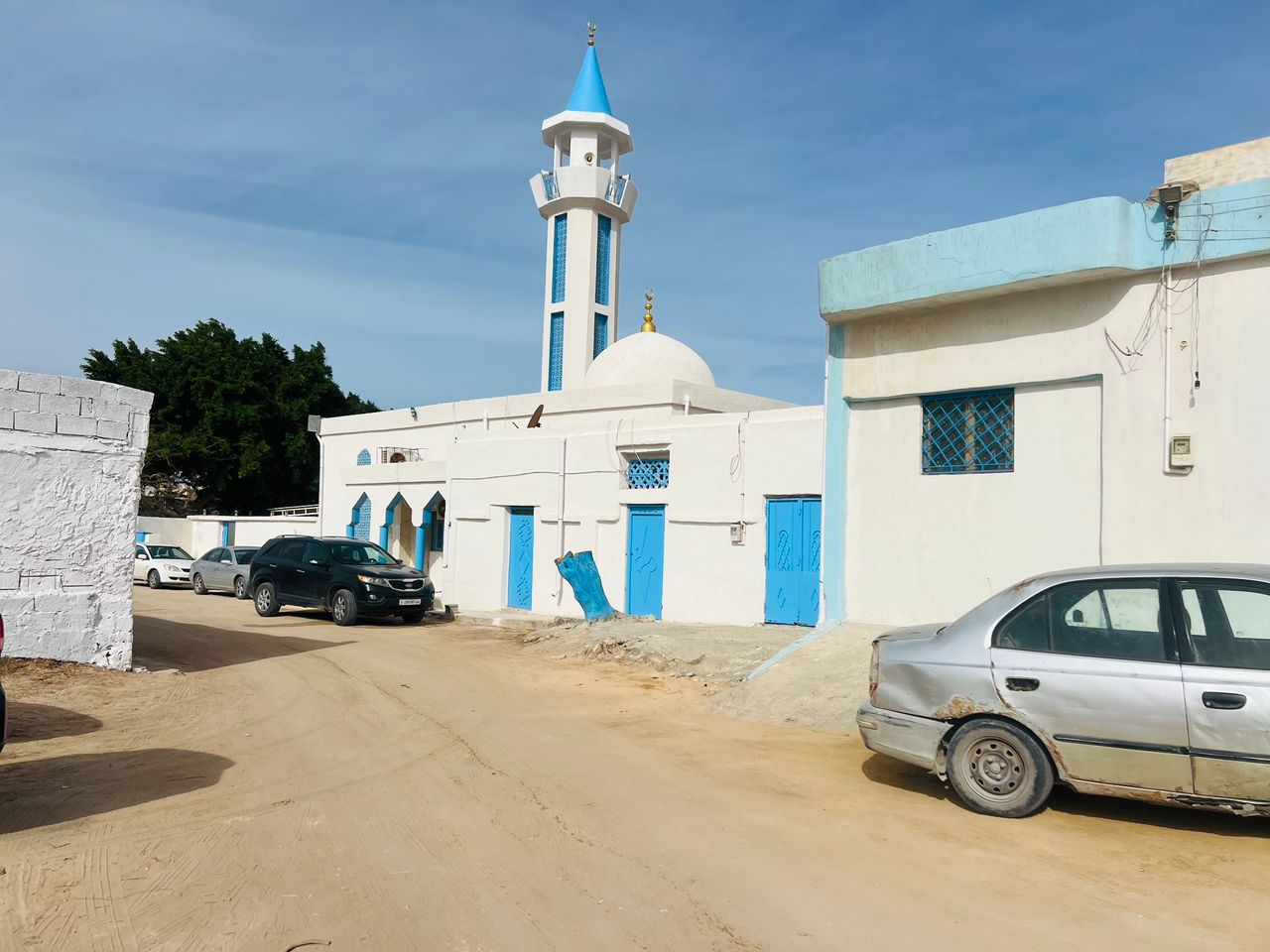
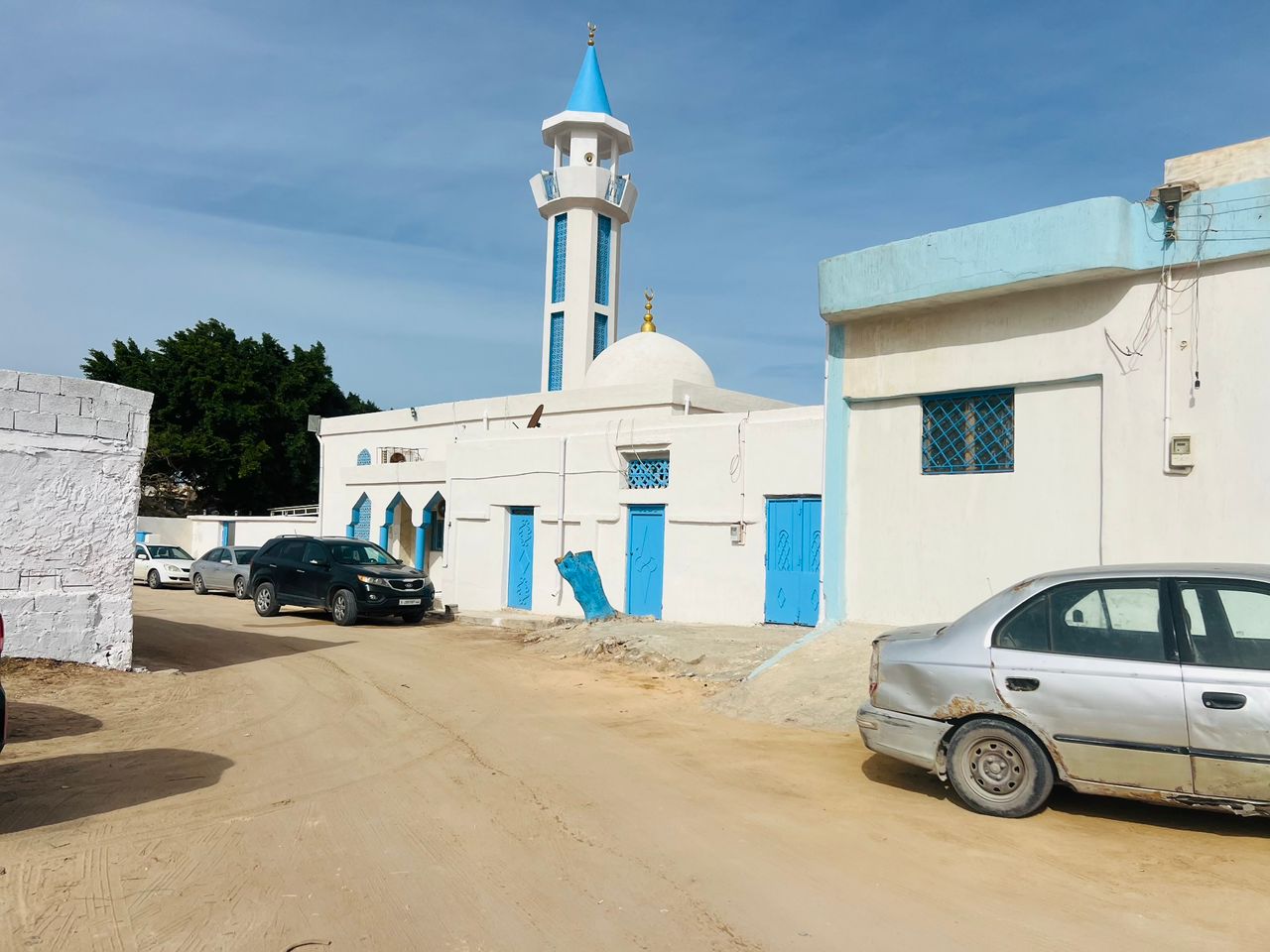
The aurora borealis phenomenon as seen in the skies of Oman in 2024.
The event began with a massive “X-class” solar flare at the start of the week, which ejected a stream of high-energy protons directly towards Earth, raising the density of charged particles to over 10,000 units—a level not recorded since 2003.
According to space weather monitoring agencies, this radiation storm is the most dangerous for polar aviation, satellites, and space navigation, but it does not pose a direct threat to humans on Earth’s surface.
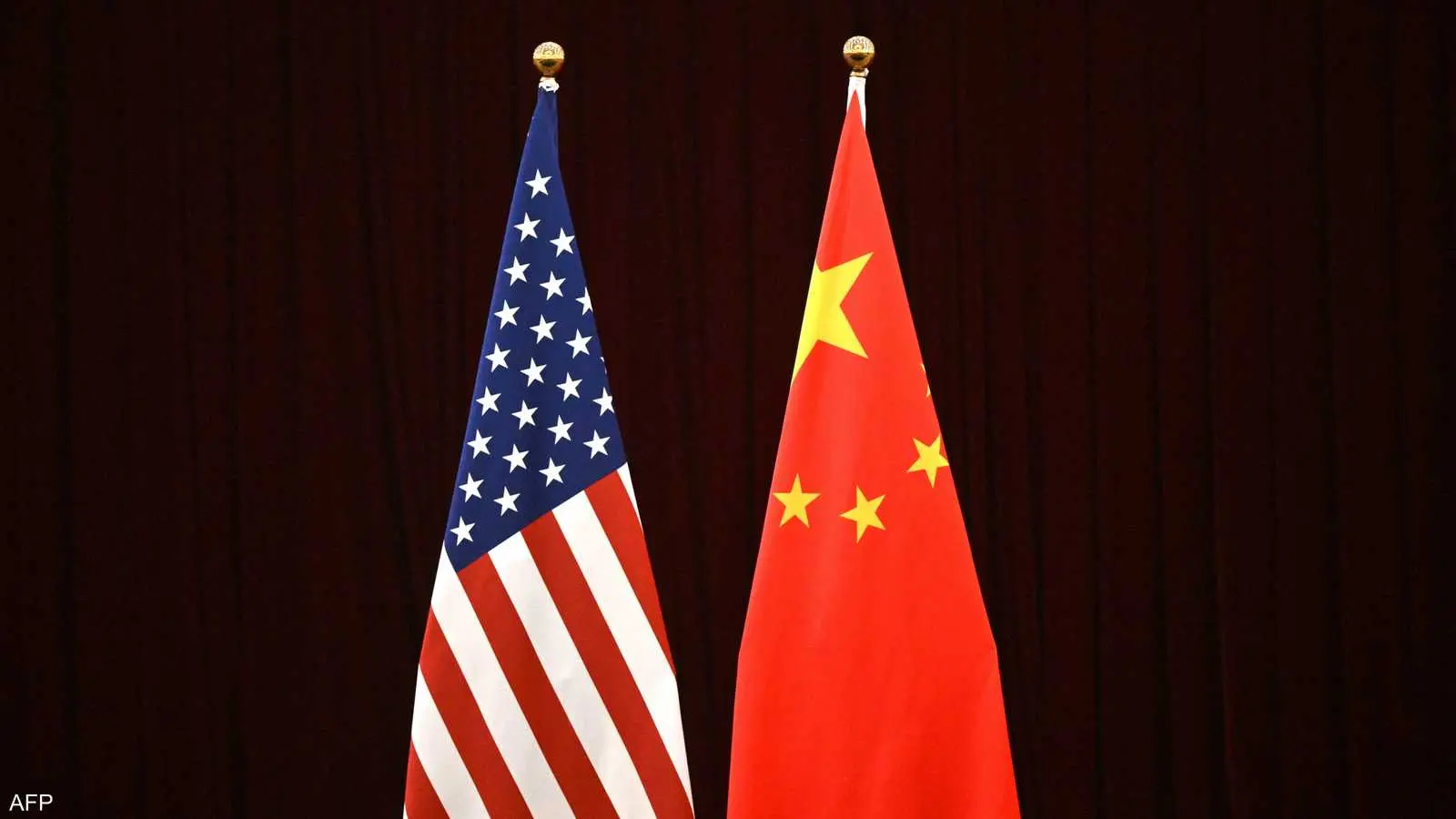
Simultaneously, these particles interacted with Earth’s magnetic field, generating a fourth-degree geomagnetic storm (the most severe being the fifth degree). This caused the aurora’s range to expand southward exceptionally, with confirmed sightings in Europe, China, and parts of the United States where this phenomenon is rarely seen.
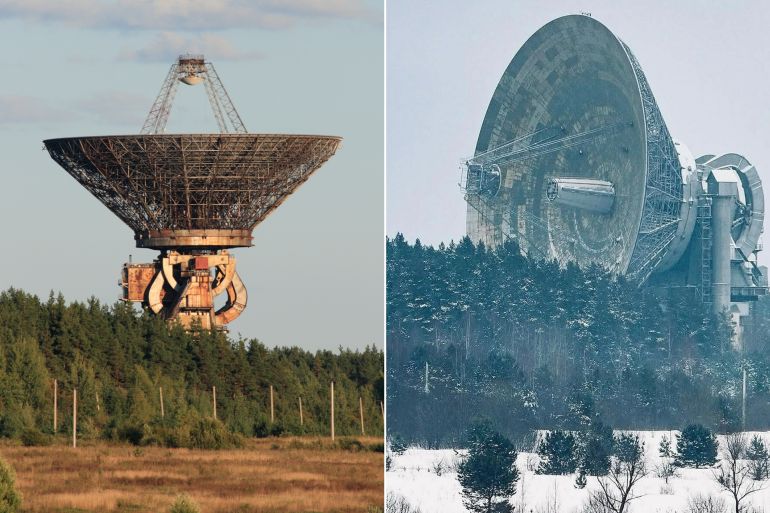
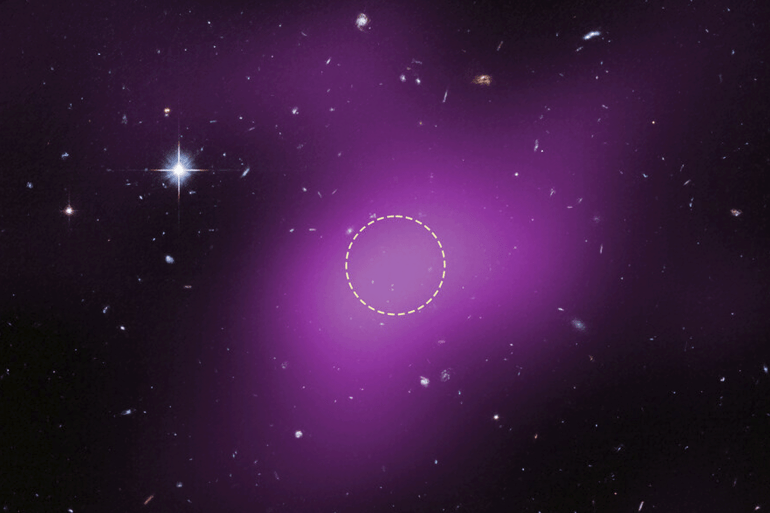
Scientists link this activity to what happened days earlier—a rare solar storm observed by Russian and American research centers, described as the product of a “precise physical coincidence” even though the Sun’s overall activity was not at its expected peak. This has reignited scientific questions about the Sun’s behavior during Solar Cycle 25, which began in 2019 and has surprised researchers with higher-than-expected activity.
Although no major damage has been recorded so far, experts confirm that this storm is a stark reminder of the fragility of modern technological infrastructure—from satellites to GPS and communication systems—
MOHE
MOHE is a county-level city in Heilongjiang Province, China, known for being the country’s northernmost urban settlement. It is historically significant as the site of the discovery of the first late Pleistocene human fossils in northeastern China and is a popular destination for tourists seeking to experience the “Northern Lights” phenomenon and extreme cold weather.
CHINA
China is one of the world’s oldest continuous civilizations, with a recorded history spanning over four millennia, marked by successive dynasties and profound cultural developments. It is home to numerous UNESCO World Heritage sites, such as the Great Wall and the Forbidden City, which reflect its long imperial history and architectural achievements. In the modern era, it has undergone significant transformation to become a major global economic and political power.
Beiji Village
Beiji Village is a traditional Hakka settlement located in Meizhou, Guangdong Province, China, known for its well-preserved circular fortified tulou earthen buildings. These structures, primarily built from the Ming to Qing dynasties, were designed for communal living and defense by the Hakka people. Today, the village serves as a significant cultural heritage site showcasing unique Hakka architecture and social history.
Mohe City
Mohe City is the northernmost city in China, located in Heilongjiang Province, and is renowned for its extreme cold winters and the natural phenomenon of the aurora borealis. Historically, it has been a settlement area for indigenous peoples and later developed through forestry and mining, with its modern identity heavily tied to tourism centered on its “Arctic Village” and status as a prime location to experience the midnight sun.
Heilongjiang Province
Heilongjiang Province is a northeastern administrative region of China, named after the Heilongjiang River (Amur River) which forms its border with Russia. Historically, it has been home to various Tungusic and Mongol peoples and was more fully incorporated into the Qing Empire in the 17th century before significant Han Chinese migration in the 19th and 20th centuries. The province is known for its cold winters, heavy industry, and rich cultural sites like the Saint Sophia Cathedral in Harbin.
Southern California
Southern California is a diverse region in the western United States, historically inhabited by various Indigenous nations before becoming part of Mexico and later the United States in the mid-19th century. Its modern cultural identity is heavily shaped by the rise of the entertainment industry in Los Angeles, aerospace development, and post-World War II suburban growth.
Central Europe
Central Europe is a historical and cultural region in Europe, generally understood to include countries such as Germany, Austria, Poland, the Czech Republic, Slovakia, Hungary, and Switzerland. Its history is deeply defined by its position between Western and Eastern Europe, marked by the Holy Roman Empire, the Habsburg Monarchy, and the shifting borders of 20th-century conflicts. The area is renowned for its diverse cultural heritage, from Gothic and Baroque architecture to classical music and a complex mix of Germanic, Slavic, and Magyar influences.
Earth
Earth is the third planet from the Sun and the only known astronomical object to harbor life. Its geological history spans over 4.5 billion years, with the development of a biosphere that has significantly altered its atmosphere and surface conditions. Human cultures have emerged and evolved across its diverse continents and ecosystems.
Babylon
Babylon was an ancient Mesopotamian city located in modern-day Iraq, which rose to prominence as the capital of the Neo-Babylonian Empire under King Nebuchadnezzar II in the 6th century BCE. It is famed for its monumental architecture, including the Ishtar Gate and the legendary Hanging Gardens, and its historical significance is deeply tied to the Code of Hammurabi and its depictions in biblical texts. Today, its archaeological remains, though heavily damaged in the late 20th century, are a UNESCO World Heritage Site.
Yemen
Yemen is a country on the southern tip of the Arabian Peninsula with a rich history as a center of ancient civilizations and trade, home to the famed Kingdom of Saba (Sheba). Its cultural landscape includes unique architectural sites like the mud-brick skyscrapers of Shibam and the historic capital of Sana’a, with its distinctive Old City.
Europe
Europe is a continent with a rich and complex history, shaped by ancient civilizations like Greece and Rome, the transformative periods of the Renaissance and the Enlightenment, and the profound impacts of two world wars. Culturally, it is renowned for its diverse array of artistic, architectural, and philosophical traditions, as well as its numerous UNESCO World Heritage sites. Today, it is largely united under the political and economic framework of the European Union.
Japan
Japan is an island nation in East Asia with a history spanning over two millennia, evolving from ancient imperial rule to a modern constitutional monarchy. Its rich cultural heritage includes traditions such as Shinto, Buddhism, and the samurai code, alongside globally influential contributions in art, technology, and cuisine.
Sultanate of Oman
The Sultanate of Oman is a nation on the southeastern coast of the Arabian Peninsula with a rich maritime history as a powerful trading empire. Its modern era began in 1970 with Sultan Qaboos bin Said, whose reign focused on modernization and neutrality in foreign policy. The country is known for its diverse landscapes, ancient forts, and the frankincense trade that shaped its historical significance.
Omani Astronomical Society
The Omani Astronomical Society is a non-profit organization founded in 2006 to promote astronomy and space sciences within Oman. It plays a key role in public education, organizing observation events, and preserving the nation’s rich heritage of celestial navigation and traditional star knowledge.
NASA
NASA, or the National Aeronautics and Space Administration, is the United States government agency responsible for the civilian space program, established in 1958 in response to the Soviet Union’s early space achievements. It is renowned for landmark projects like the Apollo moon landings, the Space Shuttle program, and ongoing exploration of the solar system through robotic missions and the International Space Station.
United States
The United States is a federal republic founded in 1776 following its declaration of independence from Great Britain, establishing itself through a revolutionary war and the subsequent adoption of its Constitution in 1787. It grew from thirteen original colonies into a global superpower, with a history significantly shaped by westward expansion, immigration, industrialization, and civil rights movements. Its diverse cultural landscape is a product of its indigenous heritage, colonial history, and the contributions of peoples from around the world.
China
China is one of the world’s oldest continuous civilizations, with a recorded history spanning over four millennia. It is home to numerous UNESCO World Heritage sites, such as the Great Wall and the Forbidden City, which reflect its long and complex imperial past. In the modern era, it has developed into a major global power with a unique blend of ancient traditions and rapid technological advancement.
Russian research centers
Russian research centers, such as the Kurchatov Institute, have been pivotal to the nation’s scientific and technological development since the Soviet era. They were originally established to advance nuclear physics, space exploration, and other strategic fields during the Cold War. Today, these centers continue to be major hubs for fundamental and applied research across a wide range of disciplines.
American research centers
American research centers, such as the National Institutes of Health (NIH) and Bell Labs, are institutions dedicated to scientific and technological advancement. Many were established or saw major growth in the 20th century, often driven by government investment during events like World War II and the Cold War. These centers have been foundational to major breakthroughs in fields like medicine, computing, and physics.