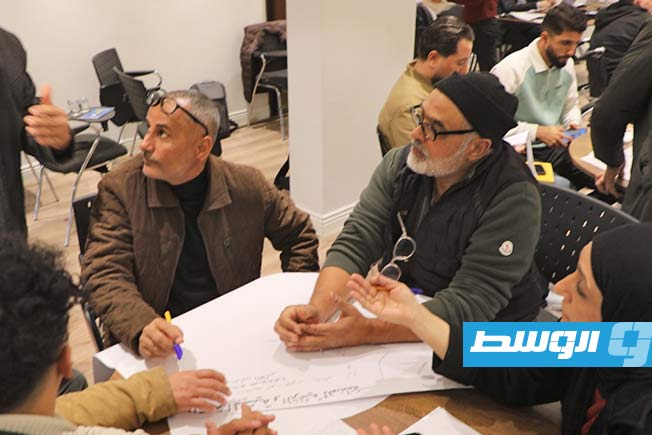
In a world where the pace of life is accelerating, and where people spend more than a third of their lives in workplaces, whether behind desks or in production fields, work is no longer just a means to secure a living. It has become a crucial factor in shaping identity and psychological stability. According to the World Health Organization, about 60% of the world’s population works. However, the biggest challenge lies not in work itself, but in maintaining mental health and psychological balance amidst increasing pressure and complexity.
Decent Work… More Than Just a Salary
Decent work is supposed to form a protective shield for mental health; it provides a stable income, gives the individual a sense of purpose and achievement, in addition to its role in promoting social integration. For people suffering from mental disorders, work represents a central element in the recovery path and regaining self-confidence. But the question that arises here is: what happens when the work environment transforms from a source of support into a psychological burden?
The results of a survey conducted by Mental Health America (MHA) in 2024, which included nearly 4000 employees across 21 different sectors, indicate that a workplace culture based on trust remains the most important factor in enhancing employee well-being. However, these results also reveal worrying gaps, which appear more clearly among younger generations.
Younger Generations Facing the “Psychological Magnet”
A recent 2024 study reveals what can be described as a “generational gap” in mental health within work environments, with Generation Z and Millennials recording the lowest mental health indicators compared to older generations. This is attributed to a phenomenon that can be called the “psychological magnet,” where work pressures are not confined to working hours, but are attracted to stick to the details of personal life.
Nearly 7 out of every 10 Generation Z employees reported receiving “unhealthy” scores on workplace health metrics, while 90% of workers in unsupportive environments indicated that job pressures negatively affected their sleep quality and weakened their family relationships. It is like a functional “static electricity” that attracts stress and implants it into the daily fabric of the employee’s life, making the separation between work and home a real challenge, if not a losing battle, for many.
Psychosocial Risks
The risks that threaten mental health at work can be generalized under the term “psychosocial risks.” These risks not only affect the individual but also negatively reflect on workplace productivity. Based on recent data and reports, the most prominent of these factors can be identified:
Task and Skill Mismatch: Lack of adequate training or assigning employees burdens that exceed their capacity and go beyond their actual skills.
Job Burnout: Long working hours, inflexible work schedules, or an excessive work pace that leaves no room for rest.
Negative Culture and Poor Management: Micromanagement, lack of appreciation, or a culture that fosters negative behaviors like bullying and exclusion.
Job Insecurity: Constant anxiety about job loss, inadequate wages, and weak investment in professional development.
Psychological Safety… The Missing Key
According to the Mental Health America survey, the concept of “psychological safety” emerges as the most important driver for empowering employees. Employees who feel psychologically safe are 87% more capable of advocating for their own needs or those of their colleagues. The shocking thing is that 63% of Generation Z employees reported not feeling confident in expressing their opinions within their teams, and 60% feel they cannot act naturally at work, forcing them to wear “functional masks” that consume their psychological energy.
GERMANY
Germany is a country in Central Europe with a rich and complex history, having been a collection of states for centuries before unification in 1871. It is known for its significant cultural contributions in philosophy, music, and science, as well as for its pivotal and often turbulent role in 20th-century world events. Today, it is a leading economic power and a key member of the European Union, with cultural sites ranging from medieval castles to museums documenting its historical periods.
World Health Organization
The World Health Organization (WHO) is a specialized agency of the United Nations, established in 1948 to promote global public health. It is responsible for directing international health efforts, setting norms and standards, and providing technical support to countries worldwide.
Mental Health America
Mental Health America is the United States’ oldest nonprofit organization dedicated to addressing mental health, founded in 1909 by Clifford W. Beers. It focuses on advocacy, education, and services, historically pioneering the mental hygiene movement and establishing the concept of May as Mental Health Month.
Generation Z
“Generation Z” refers to the demographic cohort born roughly between the mid-to-late 1990s and the early 2010s, following Millennials. This generation is characterized by having been raised in a fully digital, connected world, with its identity and cultural impact shaped by the internet, social media, and global events like the 2008 financial crisis and climate change awareness.
Millennials
Millennials refer to the demographic cohort born roughly between the early 1980s and mid-1990s, coming of age around the turn of the 21st century. This generation is often characterized by its familiarity with digital technology, communication, and media, and its formative years were shaped by events like the rise of the internet and the 2008 financial crisis.
AUSTRALIA
Australia is a continent and nation with a history spanning over 65,000 years of continuous Indigenous culture, followed by British colonization beginning in 1788. It is known for its unique ecosystems, modern multicultural cities, and landmarks like the Sydney Opera House and Uluru.
Queensland
Queensland is an Australian state known for its tropical climate, the Great Barrier Reef, and the Daintree Rainforest. It was first established as a separate British colony in 1859, named in honour of Queen Victoria, and later became a founding state of the Commonwealth of Australia in 1901.
Barnaby Joyce
Barnaby Joyce is an Australian politician who has served as the Deputy Prime Minister of Australia and leader of the National Party. He has been a prominent, often controversial, figure in Australian politics, known for his advocacy on rural and agricultural issues.
Telstra
Telstra is Australia’s largest telecommunications company, originally founded as a government-owned entity in 1975 when it took over domestic telecom services from the Postmaster-General’s Department. It was fully privatized in stages between 1997 and 2006 and has since grown into a major provider of mobile, internet, and media services across the country.
Parliament House
Parliament House is the meeting place of the Australian Parliament in Canberra, opened in 1988 to replace the provisional Parliament House. Its design is symbolic, built into Capital Hill with a large flagpole structure, and it represents a permanent home for the nation’s democracy following the federation of Australia in 1901.
Canberra
Canberra is the purpose-built capital city of Australia, established as a compromise between the rival cities of Sydney and Melbourne. Its design was selected through an international competition, won by American architects Walter Burley Griffin and Marion Mahony Griffin, with construction beginning in 1913.