In the history of Western literature, little has been written about Islam outside the dualities of fear, distortion, or superficial curiosity. For centuries, prejudices and stereotypes about the Islamic religion became entrenched in the European imagination, ranging from the “strange other” inviting ridicule and satire, to the “cultural enemy” viewed with suspicion and caution.
But amidst this intellectual noise, a few voices emerged who chose to listen instead of judge, to approach and contemplate, instead of distance themselves and prejudge.
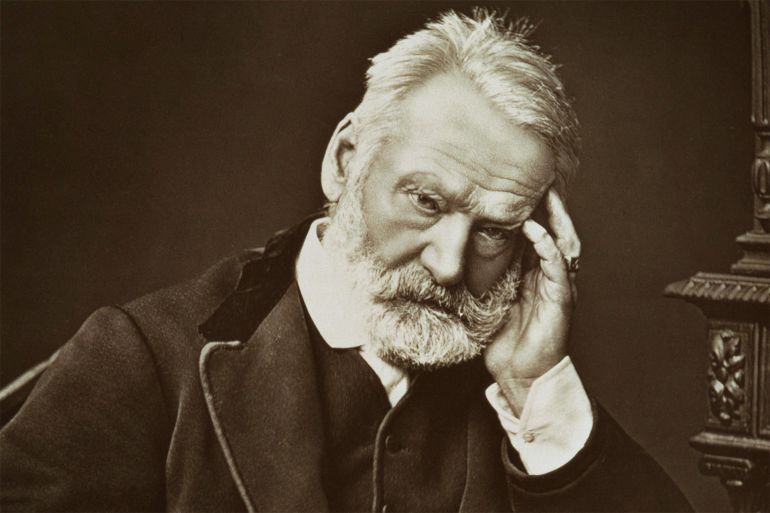
Among these voices shines the name of Victor Hugo, the great French poet and novelist, who saw in Islam a profound human and spiritual experience, worthy of being read as part of his poetic and intellectual journey in search of the universal meaning of life and death, the soul, and freedom.
The author of “Les Misérables” and “The Hunchback of Notre-Dame” did not write a direct book about Islam, nor did he present a religious thesis or doctrinal defense, but he did something deeper: he introduced this religion into his poetry as a major moral force and a civilization that contributed to shaping human consciousness, leaving a profound impact on history.
In his texts, Islam does not appear as a strange “other,” but as a wellspring from which flow answers to the questions that preoccupied the poet throughout his life: the meaning of existence, justice, light, and human responsibility.
And while Western literature is filled with the names of writers who chose to side against Islam and clearly declared their fears of its “dark” ideas, such as the French explorer who linked Islam with strangeness and threat, the English historian who portrayed the Islamic religion within the framework of political and military conflicts, and the English poet who expressed suspicion of the East in his poems, only a few attempted to approach it as a complete spiritual experience, and Hugo was among this few.
For in a time when Europe looked upon the East with suspicion or a sense of superiority, Hugo saw in Islam a religion of monotheism and dignity, and in the Prophet Muhammad a human figure bearing the burden of the message, not a distorted myth nor a symbol of enmity. This in itself was an early breach in the wall of silence and misunderstanding that affected the relationship between the West and Islam in the 18th and 19th centuries.
From this point, studying Islam in Hugo’s works becomes more than mere historical curiosity; it is an endeavor to understand how literature can open a window onto the spirit of another civilization and enable a shared vision among humans across time and space.
Shock, Astonishment, and Contemplation
Victor Marie Hugo (1802-1885) was born in Paris to a middle-class family that did not pay great attention to religious practice, during a period when French society was undergoing deep transformations following the French Revolution (1789).
He grew up in a Catholic environment, but his religious views soon evolved into a state of spirituality open to major questions about meaning and existence. Throughout his life, he gradually moved away from traditional doctrines and began searching for moral and spiritual concepts that transcended narrow interpretations, placing him in a unique position among the writers of his time.
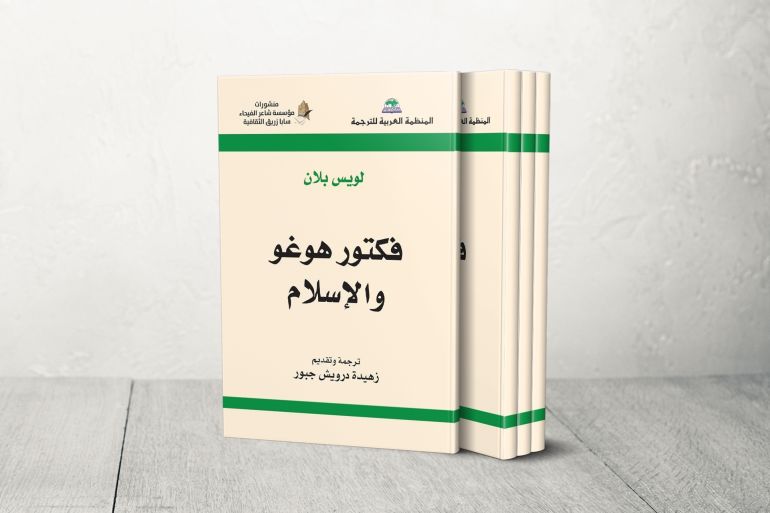
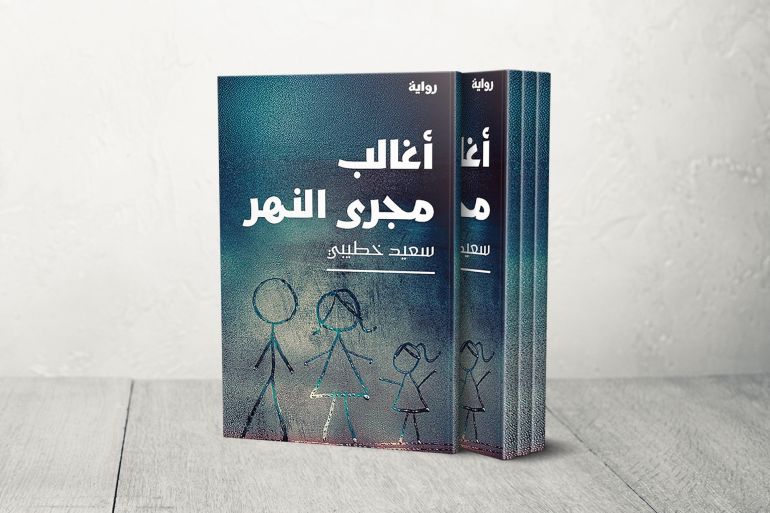
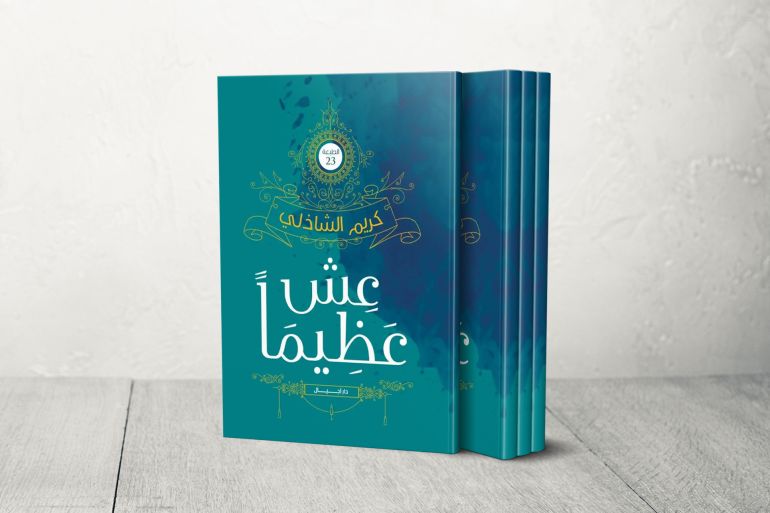
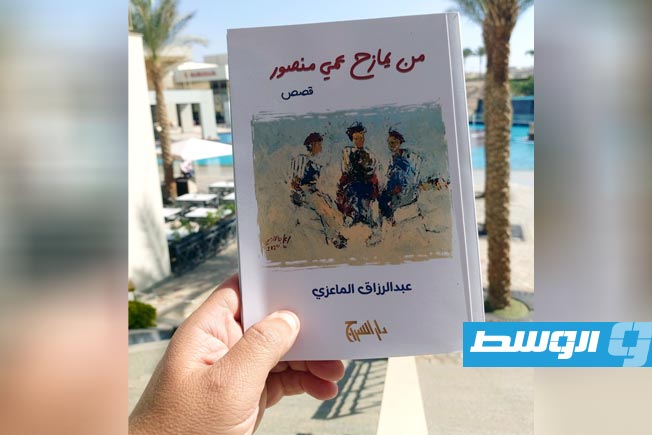
It is noted in the introduction to the Arabic edition that “Hugo’s output, especially in his youth, was not devoid of many references indicating fear of Islam and a superior view influenced by colonial logic and Eurocentrism, which makes Islam synonymous with fanaticism and portrays Muslims as a submissive group ruled by ignorance and captive to stagnation.”
Hugo’s Shock
However, the fundamental turning point in Hugo’s religious path occurred at the age of 44, when he read a translation of the Holy Quran. This constituted an intellectual and literary shock for him at once, a pivotal moment that contributed to deepening his humanism and expanding his literary horizon.
He did not view the Quran merely as a religious text, but as a unique linguistic and spiritual work, astonishing in its imagery, the depth of its meanings, and the power of its moral discourse.
He was amazed by the condensed language of the Quran, which combines spiritual sublimity and poetic elo
Victor Hugo
Victor Hugo was a renowned 19th-century French author, poet, and playwright, best known for novels like *Les Misérables* and *The Hunchback of Notre-Dame*. His literary work often engaged with social and political issues, and he was also an active political figure who lived in exile for nearly 20 years due to his opposition to Napoleon III.
Islam
Islam is a major world religion founded in the 7th century CE in Mecca by the Prophet Muhammad, who Muslims believe received revelations from God (Allah) that were later compiled into the Quran. Its core practices are based on the Five Pillars, which include faith, prayer, charity, fasting, and pilgrimage, and it has profoundly shaped the civilizations, laws, and cultures of numerous societies across the globe.
Les Misérables
“Les Misérables” is a novel by French author Victor Hugo, first published in 1862. It follows the lives and struggles of several characters in early 19th-century France, particularly the ex-convict Jean Valjean, against a backdrop of social injustice, revolution, and redemption.
The Hunchback of Notre-Dame
“The Hunchback of Notre-Dame” is a famous 1831 historical novel by Victor Hugo, set in 15th-century Paris. The story, centered on the cathedral of Notre-Dame, played a crucial role in inspiring a major restoration movement for the neglected Gothic landmark.
French Revolution
The French Revolution was a period of radical social and political upheaval in France from 1789 to 1799, which overthrew the monarchy, established a republic, and featured periods of intense violence like the Reign of Terror. It was driven by Enlightenment ideals, widespread discontent with the absolute monarchy, and severe financial crisis, fundamentally reshaping the country’s political landscape and inspiring movements worldwide.
Paris
Paris is the capital of France, historically founded as the Roman town of Lutetia in the 3rd century BC. It is globally renowned as a center for art, fashion, and culture, home to iconic landmarks like the Eiffel Tower, the Louvre Museum, and Notre-Dame Cathedral.
Holy Quran
The Holy Quran is the central religious text of Islam, believed by Muslims to be the verbatim word of God as revealed to the Prophet Muhammad through the angel Gabriel over a period of approximately 23 years in the 7th century CE. It serves as the primary source of Islamic faith, law, and spiritual guidance, and its compilation into a single book was completed shortly after the Prophet’s death.
Prophet Muhammad
The Prophet Muhammad is the founder of Islam, considered by Muslims to be the final prophet of God. He was born in Mecca around 570 CE and received his first revelation from God through the Angel Gabriel at age 40, which began the revelation of the Quran. His migration (Hijra) from Mecca to Medina in 622 CE marks the beginning of the Islamic calendar.
Europe
Europe is a continent with a rich and complex history, shaped by ancient civilizations like Greece and Rome, the Middle Ages, the Renaissance, and transformative events such as the Industrial Revolution and two World Wars. It is home to a vast array of cultural sites, from prehistoric cave paintings to medieval castles and grand capital cities, reflecting its diverse heritage and profound global influence.
West
The American West is a vast region of the United States, historically defined by 19th-century frontier expansion and the concept of Manifest Destiny. Its history is marked by the displacement of Native American tribes, the Gold Rush, cattle ranching, and the establishment of iconic landscapes and national parks. This history has deeply shaped enduring cultural myths of exploration, individualism, and opportunity in American identity.
East
“East” is a broad term, but in a cultural context, it often refers to East Asia, a region with ancient civilizations like China and Japan. This area is historically defined by influential philosophies such as Confucianism and Buddhism, and by traditions like the imperial system in China and the shogunate in Japan.
France
France is a Western European country with a rich history dating back to ancient Gaul, later evolving into a powerful monarchy and a center of the Enlightenment. It is globally renowned for its cultural influence in art, cuisine, and philosophy, and was the birthplace of the influential French Revolution in 1789. Today, it is a leading democratic republic and a major cultural, economic, and political hub within the European Union.
English
English is the official language of England and the United Kingdom, with its origins tracing back to the 5th-century Germanic invasions of Britain. It evolved through Old, Middle, and Modern English, heavily influenced by Latin, Norse, and French, and has become a global lingua franca due to the historical reach of the British Empire and its widespread use in international business, science, and culture.
Catholic
The Catholic Church is a global Christian institution tracing its origins to the teachings of Jesus Christ and the apostolic ministry of Saint Peter in the 1st century AD. It is characterized by its sacramental system, hierarchical structure headed by the Pope in Rome, and a rich history of theological development, cultural patronage, and global missionary work.