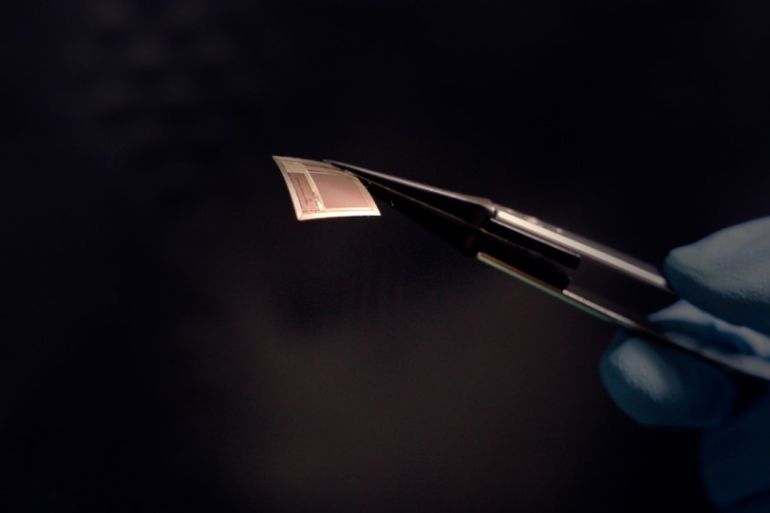
A study published in the journal Nature Electronics revealed the development of a silicon-based electronic neural implant that forms a wireless link between the brain and external computers, in a system known as the Brain-Computer Interface System for the Cortex.
According to the study, the implant captures electrical signals from the surface of the cerebral cortex, then wirelessly transmits this data from the implant to a nearby device, to be processed by algorithms on a computer.
The significance of implanting this brain device lies in its extremely small size and its ability to transmit data at very high speeds, and therefore it is expected to revolutionize treatments for many medical conditions.
The implant is very flexible, about 50 micrometers thick, and with a very small size reaching less than 1/1000th of traditional devices, so it can be inserted to rest between the brain and the skull, adhering to the brain’s surface like a thin sheet of paper.
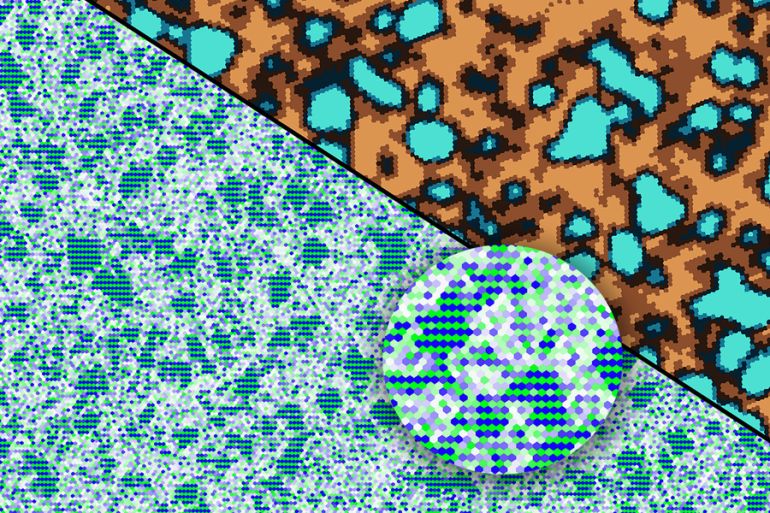
On this chip, the team placed an unusual density of contact points, represented by more than 65,000 electrodes to capture signals from the cortical surface, with the ability to record up to 1024 channels simultaneously, meaning selecting a group of electrodes for synchronous recording.

An Electronic Chip on the Brain’s Surface
“Most implantable systems are built around an electronic case that occupies a large volume inside the body. Our device’s implant is a single, very thin integrated circuit chip, so thin that it slips into the space between the brain and the skull, resting on the brain like a piece of damp tissue paper.”
“The implant can be considered an ultra-thin electronic chip implanted on the brain’s surface, capable of ‘listening’ to brain activity and controlling it with very high spatial and temporal precision, without penetrating brain tissue.”
Current brain-computer interfaces are often limited by wired connections, large implant size, or low electrode density. In contrast, the new implant can be fully implanted under the dura mater region, operates wirelessly to provide power and transmit data, and contains a high-density electrode array.
This design gives patients freedom of movement, enables more precise and efficient treatment, and significantly reduces tissue damage and surgical risks.
A Revolution in Neurological and Brain Treatments
Implanting the new device helps identify abnormal brain activity earlier and more accurately, allowing for targeted stimulation to stop epileptic seizures before they spread.
For patients unable to move, the implant can decode movement intentions from the brain with higher accuracy, enabling smoother and more natural control of robotic prosthetics or computers.
In the field of cortical visual prosthetics, the high electrode density of the implant allows for more precise stimulation of the visual cortex, which may lead to more accurate visual perception compared to current methods.
The new device opens a new window for understanding how the brain works as a dynamic system. Instead of monitoring isolated points, researchers can study how brain activity propagates across space and time, much like watching a high-definition video instead of scattered snapshots.