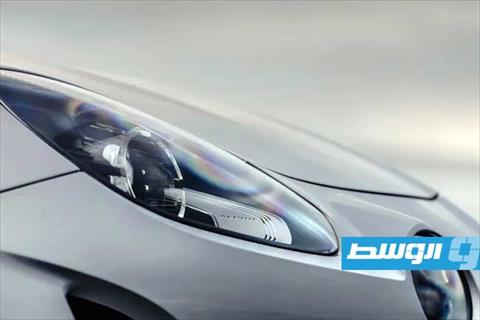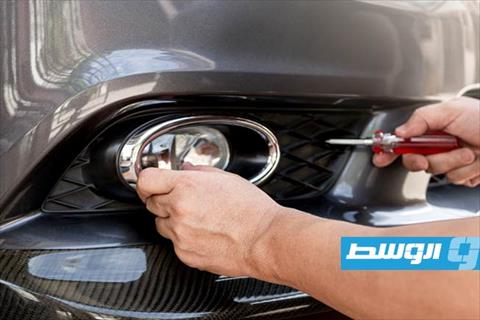
Fog lights are part of a vehicle’s auxiliary lighting system, designed to improve visibility in difficult weather conditions by distributing a low, wide beam that reduces light reflection.
When a car’s fog lights stop working, the cause is often a fault in one of the system’s essential components, such as the bulbs, fuses, electrical relays, or wiring connections. In modern vehicles, the malfunction may be related to the switch or the electronic control unit.
Accurate diagnosis of a car’s fog light failure helps find the appropriate solution, whether by replacing damaged parts or checking the entire electrical circuit, ensuring the restoration of lighting efficiency and maintaining safety levels while driving.
Preventive Tips for Fog Lights
To avoid any fog light malfunctions, you can follow some simple steps that are effective solutions for fog light failure:
– Periodic Inspection: Regularly check your fog lights to ensure they are functioning properly.
– Cleaning the Lenses: Keep the fog light lenses and headlight lenses clean to improve lighting levels and visibility, and always try to remove condensation from headlights to increase clarity.
– Use Only When Necessary: Reduce unnecessary use to extend the lifespan of the bulbs.
– Protect the Wiring: Ensure that wires and connectors are protected from moisture, dust, and debris.
– High-Quality Parts: Always use original or high-quality bulbs, fuses, and relays to ensure reliability.