In a remarkable scientific achievement, astronomers have announced the discovery of the fastest-spinning large asteroid ever recorded, thanks to the capabilities of the new Vera C. Rubin Observatory in Chile, which has not yet begun its full scientific mission but is already impressing the scientific community.
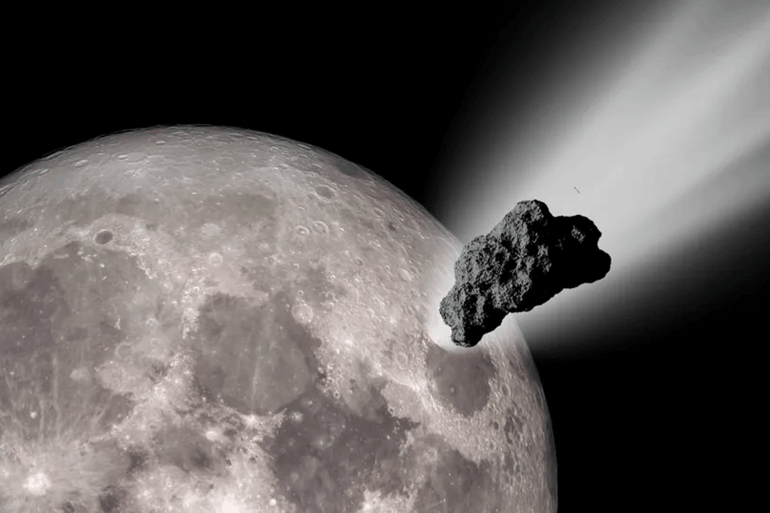
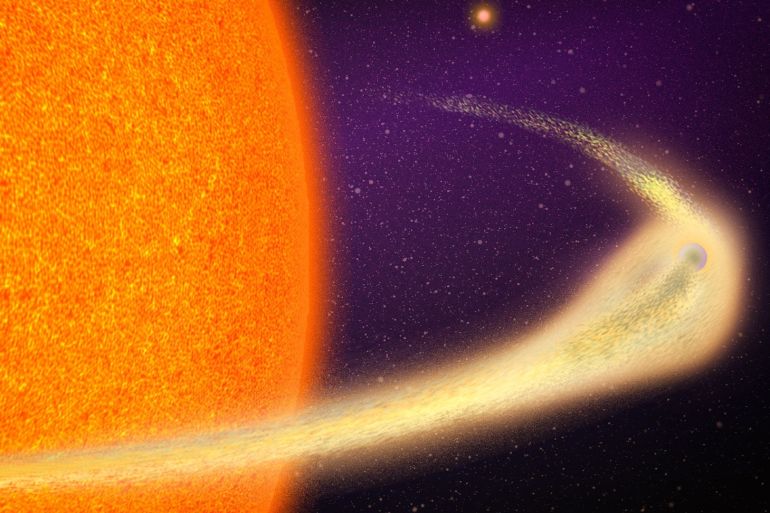
The asteroid, named ‘2025 MN45’, has a diameter of about 710 meters (equivalent to roughly eight football fields) and rotates on its axis once every just 1.88 minutes, an unprecedented record for an asteroid over half a kilometer in diameter.
Astonishing Rotation Reveals Secrets of Internal Structure
According to a statement, this celestial body is “the fastest known asteroid of this size to rotate on its axis” and is located—like most newly discovered asteroids—in the main asteroid belt between Mars and Jupiter.
It is stated that, “Clearly, this asteroid is made of highly cohesive material, otherwise it would not have been able to hold together during such an extremely rapid rotation.”
Calculations indicate that its cohesive strength resembles solid rock, which is surprising because most known asteroids are classified as “rubble piles,” meaning loose collections of rocks and debris.
Why is this Discovery Important?
The asteroid’s rotation rate is key to understanding its history and internal structure. Such violent rotation may indicate past severe collisions that shattered a larger body or an internal composition more rigid than previously thought.
Although there are smaller asteroids that spin faster (some in less than a minute), ‘2025 MN45’ is the fastest among large asteroids, making it a unique case for study.
The Power of the Rubin Observatory: A Glimpse of What’s to Come
The discovery came from the first observational data captured by the Vera Rubin Observatory, which included about 2,000 newly discovered asteroids, 19 of which are ultra-fast rotators.
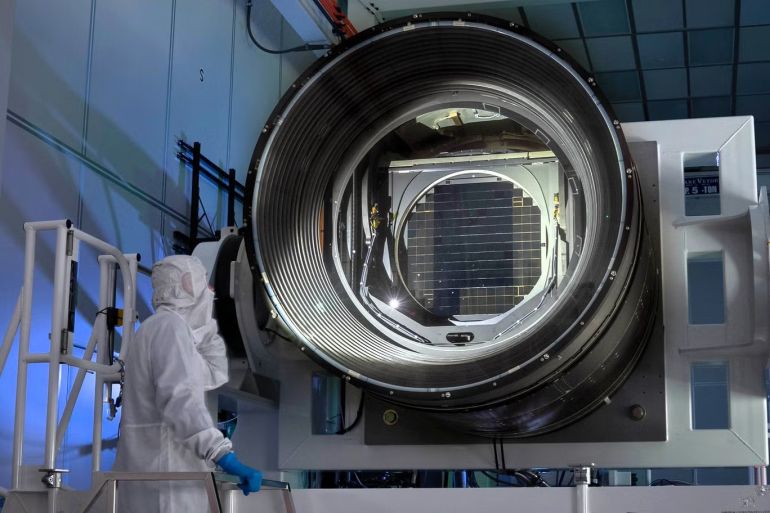
It is said, “We have known for years that the Rubin Observatory would be an amazing discovery machine, and now we are seeing the true power of combining the project’s camera—the largest and most powerful digital astronomical camera in the world, the size of a small car and weighing 3 tons—with the observatory’s speed, which can capture an image every 40 seconds.”
It was added that these discoveries represent just a first glimpse of what the 10-year survey will reveal, using the world’s largest digital camera with a resolution of 3.2 billion pixels.
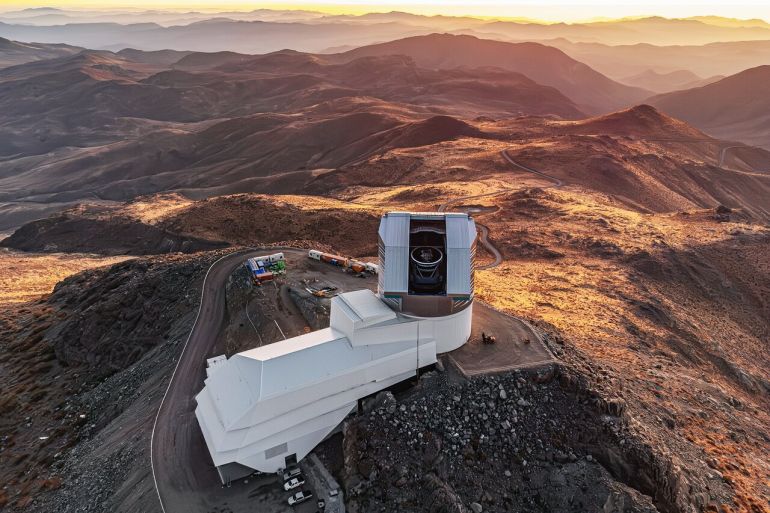
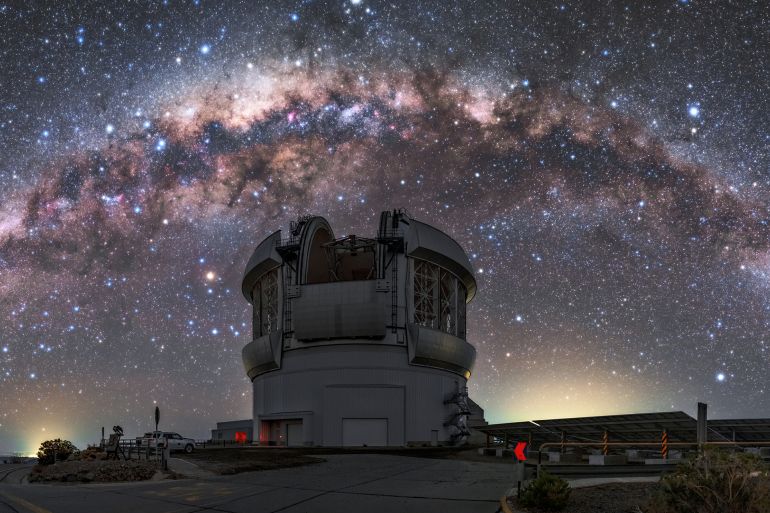
The Vera Rubin Observatory with its giant 8.4-meter diameter mirror atop Cerro Pachón mountain in Chile
The study results have been published and were presented at a press conference during the 247th meeting of the American Astronomical Society in Phoenix, which concluded its proceedings on Friday, January 8, 2026.
The Vera Rubin Observatory is one of the world’s most advanced astronomical observatories, with an 8.4-meter diameter mirror. It is located atop Cerro Pachón mountain in Chile at an altitude of 2,682 meters and is a joint project.
The observatory was designed to conduct an unprecedented sky survey as part of the ten-year Legacy Survey of Space and Time (LSST) project, using the world’s largest digital camera with a resolution of 3.2 gigapixels.
With the start of full scientific operations in 2026, the observatory will be able to image the entire sky every few days, allowing for the observation of moving and variable objects such as asteroids, comets, and supernovae, the study of dark
Vera C. Rubin Observatory
The Vera C. Rubin Observatory, currently under construction in Chile, is a next-generation astronomical facility designed to conduct an unprecedented 10-year survey of the sky. Named for the American astronomer who provided evidence for dark matter, its primary instrument, the Simonyi Survey Telescope, will capture wide-field images to study dark energy, dark matter, and create a vast catalog of our solar system’s objects.
Chile
Chile is a long, narrow country stretching along South America’s western edge, known for its diverse landscapes ranging from the Atacama Desert to Patagonian glaciers. Its history is marked by pre-Columbian cultures like the Mapuche, Spanish colonization beginning in the 1540s, and independence achieved in 1818. The 20th century included significant political shifts, including the 1973 coup and a return to democracy in 1990.
2025 MN45
“2025 MN45” is not a known cultural site or place; it is the provisional designation for a near-Earth asteroid discovered in 2025. As an asteroid, it has no human history, though its astronomical history involves its orbit around the Sun and its classification as a potentially hazardous object due to its predicted close approaches to Earth.
Mars
Mars is the fourth planet from the Sun and is often called the “Red Planet” due to its iron oxide-rich surface. It has been a major focus of scientific exploration, with robotic missions revealing a history of ancient water flows and the potential for past habitability.
Jupiter
Jupiter is the largest planet in our solar system, a gas giant composed primarily of hydrogen and helium. It has been known since ancient times and is named after the king of the Roman gods, with its observation history revolutionized by Galileo’s telescopic discoveries in 1610.
Sun
The Sun is a star at the center of our Solar System, formed approximately 4.6 billion years ago from the gravitational collapse of a giant molecular cloud. It has been the central object of worship and study in numerous ancient cultures, from the sun gods of Egypt and Mesoamerica to the foundational observations of astronomers like Galileo.
LSST Camera
The LSST Camera is the largest digital camera ever built for astronomy, designed as the centerpiece of the Vera C. Rubin Observatory in Chile. Once operational, it will conduct a 10-year survey of the sky to study dark matter, dark energy, and create an unprecedented catalog of celestial objects. Its development, led by SLAC National Accelerator Laboratory, represents a major milestone in the history of wide-field optical imaging.
American Astronomical Society
The American Astronomical Society (AAS) is a major professional organization for astronomers in North America, founded in 1899 to promote and share astronomical research. It supports the astronomical community through publications, meetings, and public policy advocacy, playing a key role in advancing the field for over a century.
Phoenix
Phoenix is the capital and largest city of Arizona, founded in 1867 on the ruins of ancient Hohokam settlements. It grew rapidly as an agricultural hub following the construction of irrigation canals and later became a major center for government, business, and tourism in the Southwestern United States.
Cerro Pachón
Cerro Pachón is a mountain peak in northern Chile, home to major astronomical observatories including the Gemini South Telescope and the future Vera C. Rubin Observatory. Its history as a scientific site began with its selection in the late 20th century due to its exceptionally clear skies and stable atmospheric conditions for astronomical observation.
Legacy Survey of Space and Time
The Legacy Survey of Space and Time (LSST) is a major ten-year astronomical survey project set to begin in 2025 at the Vera C. Rubin Observatory in Chile. It will repeatedly image the entire southern sky to create an unprecedented movie of the universe, aiming to study dark energy, dark matter, and catalog billions of celestial objects. The project builds upon a long history of astronomical surveys and is designed to transform our understanding of the structure and evolution of the cosmos.
LSST
The Large Synoptic Survey Telescope (LSST), now officially named the Vera C. Rubin Observatory, is a major astronomical facility under construction in Chile designed to conduct a 10-year survey of the sky. Its history stems from early 21st-century planning to create an unprecedented wide-field optical survey, with first light anticipated in the mid-2020s. The project aims to revolutionize astronomy by studying dark energy, dark matter, and cataloging billions of celestial objects.