At a time when health consciousness has become a fundamental part of daily lifestyle, whole grains top the list of foods recommended by nutrition experts worldwide. Among the many options, oats and millet stand out as some of the most important grains with high nutritional value, to the extent that some specialists describe them as supergrains for the diverse benefits they offer.
Despite their similar health status, each has distinct characteristics. Knowing these differences helps you choose what precisely suits your health goals and nutritional needs.
Whole Grains: A Nutritional Pharmacy
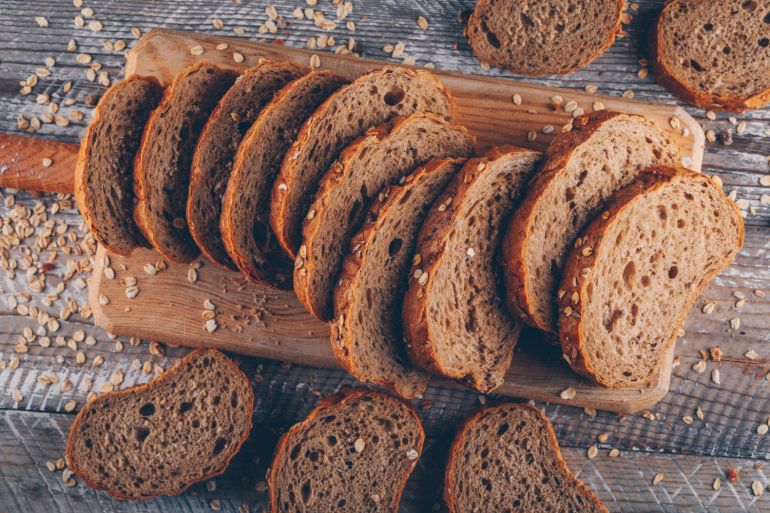
The importance of turning to whole grains is increasing today, due to their ability to provide much higher nutritional value compared to refined grains. These types retain the bran and germ layers, which are the parts rich in fiber, minerals, and antioxidants. This contributes to supporting digestion, regulating blood sugar levels, and providing a longer-lasting feeling of fullness.
Their natural components also help promote heart health and reduce the risk of diet-related chronic diseases. With the growing reliance on processed foods, whole grains stand out as a choice closer to nature and more sustainable, as they often require less processing and maintain their original flavor and nutritional value, making them a healthy and practical choice for a more balanced daily life.
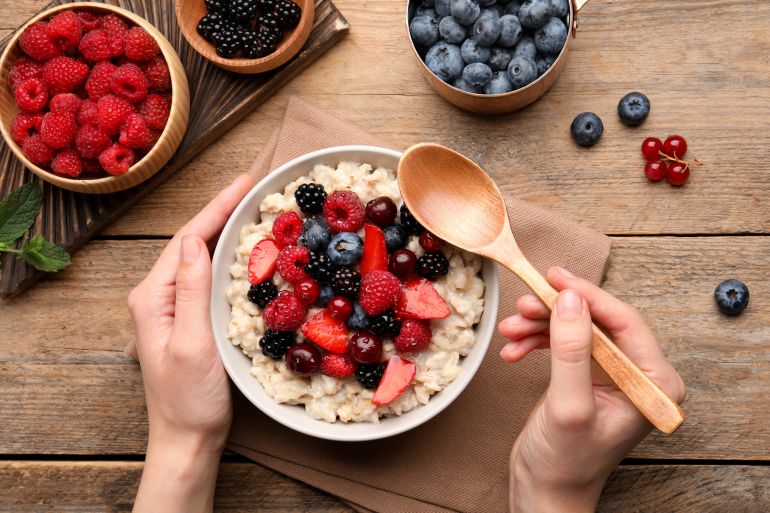
Oats: Your Daily Partner for Weight Loss and Lasting Fullness
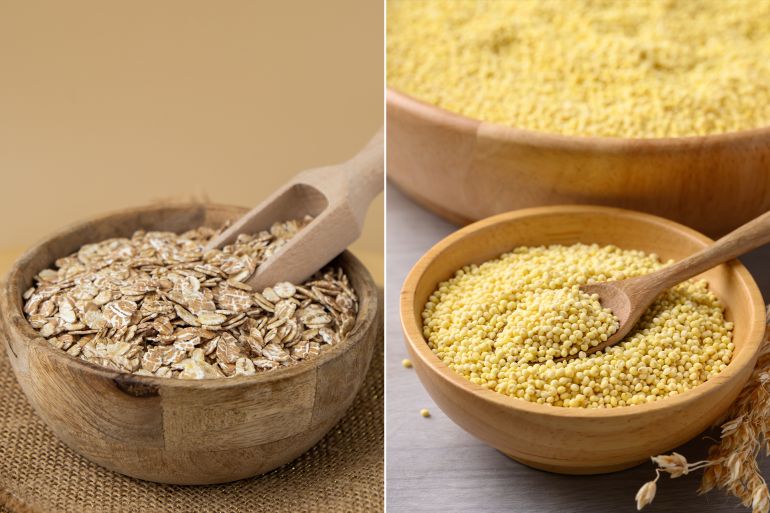
Oats are one of the most widespread grains, thanks to their high nutritional value and content of soluble fiber, foremost among which is beta-glucan fiber, which plays an important role in lowering levels of bad cholesterol. This fiber forms a gel-like substance inside the intestines that binds to cholesterol and limits its absorption, contributing to heart protection and reducing the risk of arterial diseases.
Soluble fiber also helps enhance the feeling of fullness and regulate appetite, which supports weight loss plans and controlling food portions. Oats also contribute to improving blood sugar stability, thanks to their ability to slow glucose absorption, especially when consumed with other components like nuts, yogurt, or fruits.
Oats are also distinguished by their content of important minerals, including iron and magnesium, in addition to B vitamins that support energy production and brain functions. And since they are naturally gluten-free, they can be a suitable option for those with gluten sensitivity, provided contamination during manufacturing is confirmed to be absent.
Millet: The Forgotten Grain That Deserves a Return to Our Tables
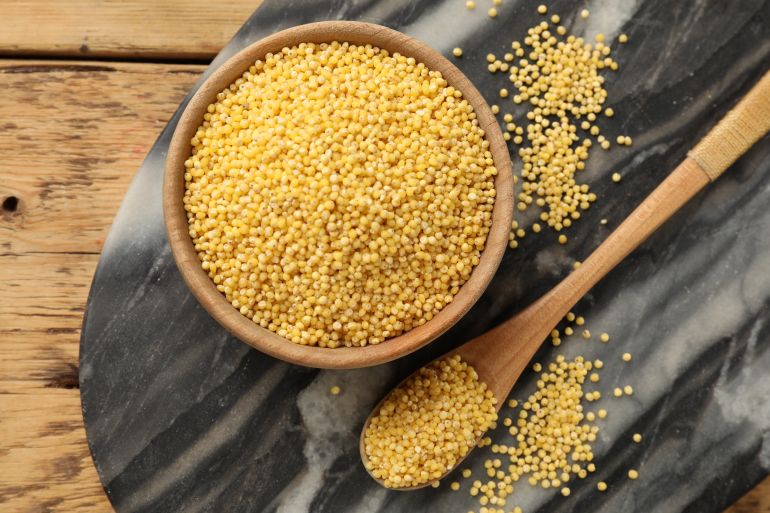
Millet is one of the ancient grains that has not gained widespread fame like oats, despite its important nutritional status and its use as a staple food in many Asian and African cultures for thousands of years. Millet is characterized by its high content of insoluble fiber, a type of fiber that plays a pivotal role in supporting digestive health, regulating bowel movements, and promoting a feeling of fullness for longer periods, making it suitable for those suffering from digestive problems or seeking to control appetite.
One of the most prominent characteristics of millet is its low glycemic index – a number used to know the effect of certain foods on blood sugar levels – as it raises blood sugar levels gradually and slowly. This helps stabilize energy and makes it an ideal choice for diabetics or those who wish to avoid glucose fluctuations.
Millet also contains a good percentage of plant-based protein, along with a range of essential minerals like calcium, magnesium, and iron. These are elements necessary to support bone and muscle health and the body’s vital functions, and in some cases, it even surpasses other grains in terms of mineral density.
Millet’s distinction is not limited to its nutritional value alone but extends to its environmental aspect, as it is considered a crop capable of growing in difficult agricultural conditions with limited water consumption, making it a choice that supports sustainability and food security.