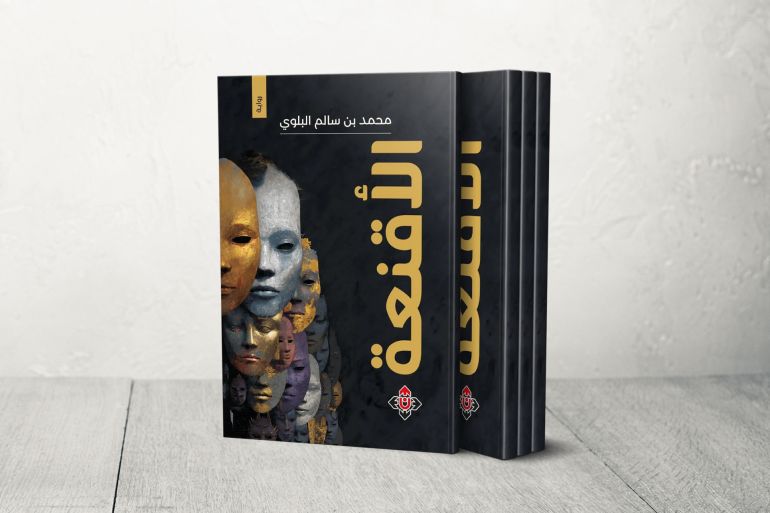
The novel "The Origin of Species," recently published, is based on a physical transformation that seems simple on the surface but quickly branches out narratively and philosophically, opening horizons for contemplating the city, language, strangeness, and the individual’s relationship with a world collapsing from within.
In this interview, we shed light on this work, which is competing for the International Prize for Arabic Fiction in its current cycle, to learn about the background of its writing, the aesthetic choices of its author, and what it aims to provoke in its reader.
- First, how did you receive the news of "The Origin of Species" making the longlist for the International Prize for Arabic Fiction? Did this nomination change anything in your relationship with the novel after its publication, or is your view of it today the same as the moment you finished writing it?
There is no doubt that the Booker Prize is important, as it significantly contributes to the popularity of books that reach its lists or win it. As a writer, I am keen for my works to reach readers, as I see writing as a participatory act, similar to other arts like cinema and music. However, my relationship with my book is limited to the writing stage itself, which is a long, arduous, and enjoyable process.
Once the book leaves the printing press and reaches bookstores, I deal with it as a separate entity from me, without cutting the umbilical cord.
I am keen for my works to reach readers, as I see writing as a participatory act similar to other arts like cinema and music
Therefore, I read the opinions of readers and critics as much as I can, and I appreciate the extent to which my concerns and obsessions resonate with those of the readers, but I do not expect anything beyond that. If it happens to win a prize, that is the book’s good fortune, and if it does not, the real gain has already been achieved during the writing process itself.
-
The title is striking and carries clear intellectual and scientific weight. How did you settle on "The Origin of Species" as the title for the novel, and what distance separates this title from its well-known scientific reference?
The novel is based on a well-known and established scientific theory, the theory of evolution or natural selection. This basis has an aesthetic and artistic dimension, as the theory itself seems, at its core, to be a literary theory pertaining to humanity and its questions since the beginning of the universe.
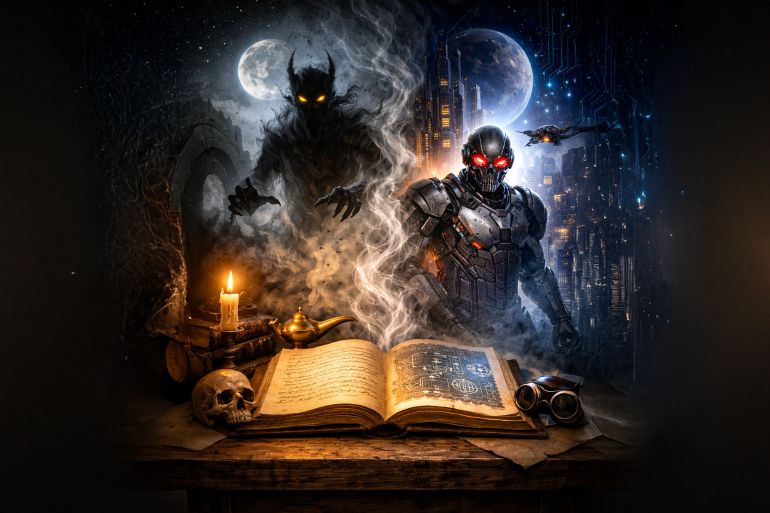
Let me reveal to you that there is writing that stems from fear, and there are texts driven by panic. "The Origin of Species" belongs to this type, as what contemporary humans do in their lives, and how they contribute to the ruin of the world, could be a concise summary of my feeling during writing.
There is writing that stems from fear, and there are texts driven by panic… my novel "The Origin of Species" belongs to this type
However, contemporary humans, at the same time, are not separate from ancient humans, and if we extend the thread of evolution in a straight line, natural selection would be a human action, not a catastrophe that befalls them suddenly. In a way, Charles Darwin’s theory seems to me a metaphor, carrying within it tremendous conceptions about our human identity.
This metaphor seems to me more philosophical than scientific, and this metaphor is what I worked on in my novel. If human nature in Darwinian theory is based on "abandonment," why not borrow "abandonment" as a horizon for a novel whose events take place in a time where abandonment (of identity, origin, love, the word) seems to be the implicit contract between individuals, the clear abandonment between authority and the people, and the terrifying abandonment of our dead and their traces?