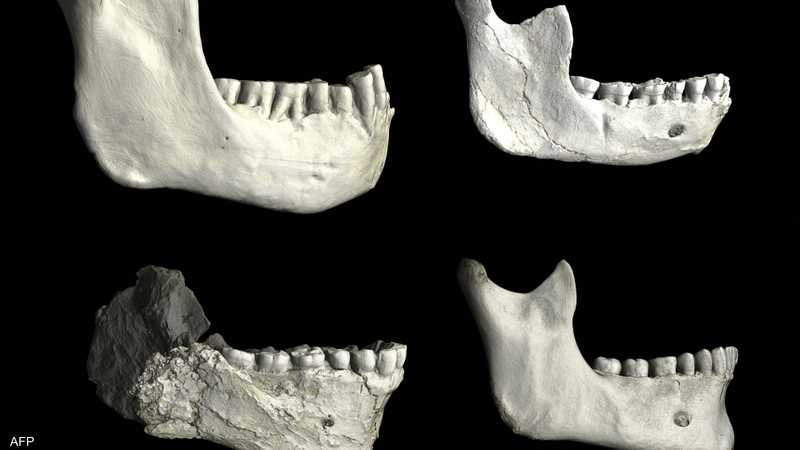
Fossilized bones and teeth discovered in a Moroccan cave, dating back 773,000 years, provide a deeper understanding of the emergence of the “Homo sapiens” lineage, which scientists believe may have been ancestors of our human species.
The fossils, which include the lower jawbones of two adults and a small child, as well as teeth, a thigh bone, and some vertebrae, were discovered in a cave at a site in a city.
The cave appears to have been a predator’s den, as the thigh bone bears bite marks suggesting the individual may have been hunted or that hyenas fed on the corpse.
The most plausible explanation is that these fossils represent an evolved form of the ancient “Homo erectus” lineage, which first appeared around 1.9 million years ago in Africa and later spread to Europe and Asia.
The bones and teeth show a mix of primitive and more modern characteristics, filling a gap in the African fossil record from about one million to 600,000 years ago.
The fossils may represent an African population that existed shortly before the evolutionary split of lineages that led to the emergence of “Homo sapiens” in Africa and two other hominins, “Neanderthals” and “Denisovans,” which inhabited Eurasia.
“I would be cautious about classifying them as the ‘last common ancestor,’ but they are reasonably close to the lineages from which the African lineage, Homo sapiens, and the Eurasian lineages, Neanderthals and Denisovans, ultimately emerged,” said a paleoanthropologist.
The oldest known fossils of Homo sapiens, dating back about 315,000 years, were also found in Morocco at an archaeological site called Jebel Irhoud.
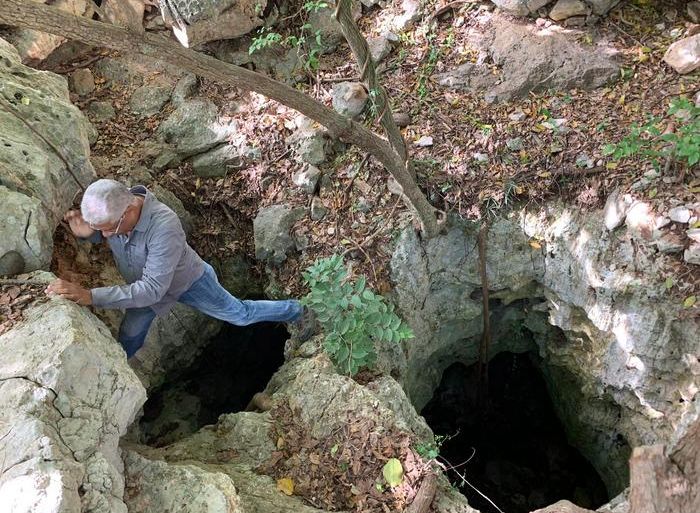
Moroccan cave
The Moroccan cave, often referring to the prehistoric caves of the Jebel Irhoud archaeological site, is one of the world’s most significant paleoanthropological locations. Fossils discovered there in 2017 were dated to around 300,000 years ago, providing crucial evidence that early *Homo sapiens* originated in North Africa much earlier than previously believed.
Morocco
Morocco is a North African country with a rich history shaped by indigenous Amazigh (Berber) cultures, Arab influence from the 7th century, and successive dynasties like the Almoravids and Almohads. Its cultural sites, such as the ancient Roman ruins of Volubilis and the historic medinas of Fez and Marrakech, reflect this diverse heritage. The country is also known for its unique blend of Arab, African, and European influences in architecture, cuisine, and traditions.
Jebel Irhoud
Jebel Irhoud is an archaeological site in Morocco where fossil remains of *Homo sapiens*, dating back approximately 300,000 years, were discovered. These findings, announced in 2017, significantly pushed back the timeline for the origin of our species, suggesting early human evolution occurred across the African continent.
Africa
Africa is the world’s second-largest continent, recognized as the birthplace of humanity with some of the oldest archaeological evidence of human ancestors. It is home to a vast array of cultures, languages, and historic civilizations, such as ancient Egypt, the Mali Empire, and Great Zimbabwe. The continent’s more recent history includes complex periods of trade, colonization, and the struggle for independence across its 54 sovereign nations.
Europe
Europe is a continent with a rich and complex history, shaped by ancient civilizations like Greece and Rome, the Middle Ages, the Renaissance, and periods of both conflict and cooperation. Its cultural sites are immensely diverse, ranging from prehistoric cave paintings to medieval castles, grand cathedrals, and modern architectural marvels. This shared history is foundational to Western civilization and is preserved in its many UNESCO World Heritage sites.
Asia
Asia is the world’s largest and most populous continent, home to ancient civilizations like those in Mesopotamia, the Indus Valley, and China. Its history spans millennia, featuring the rise and fall of vast empires, the spread of major world religions, and profound developments in science, art, and governance. Today, it is a region of immense cultural, economic, and political diversity.
Eurasia
“Eurasia” is a combined continental landmass of Europe and Asia, primarily defined by geography and plate tectonics rather than as a single cultural site. Historically, the term has also been used in geopolitical contexts, such as in classical geopolitics and in the name of the fictional superstate in George Orwell’s novel *Nineteen Eighty-Four*.