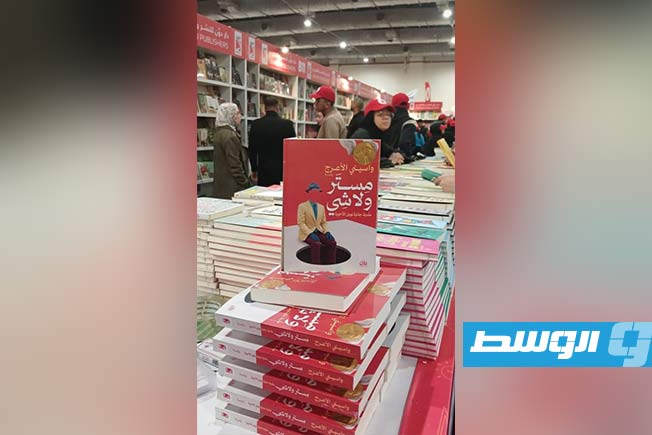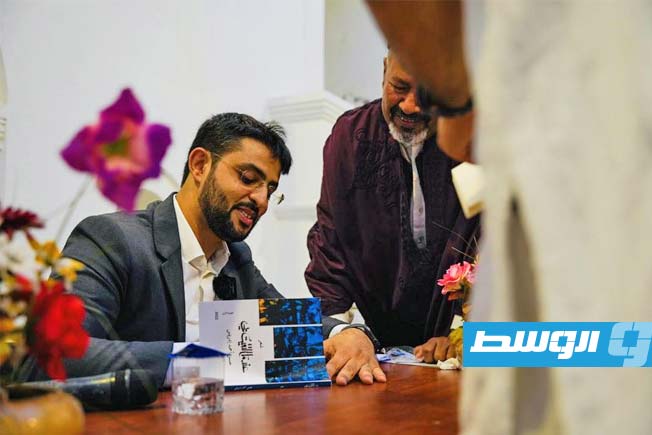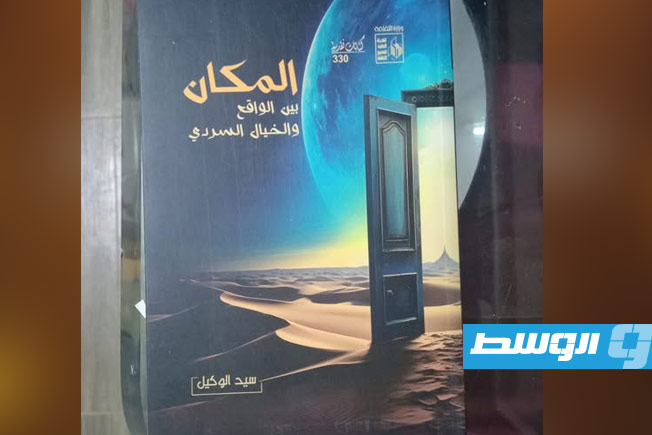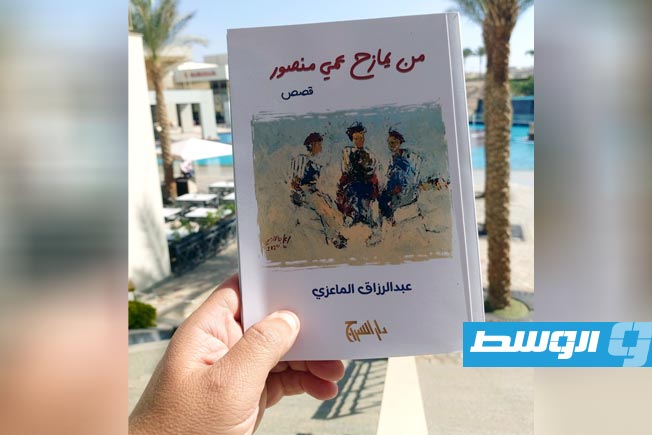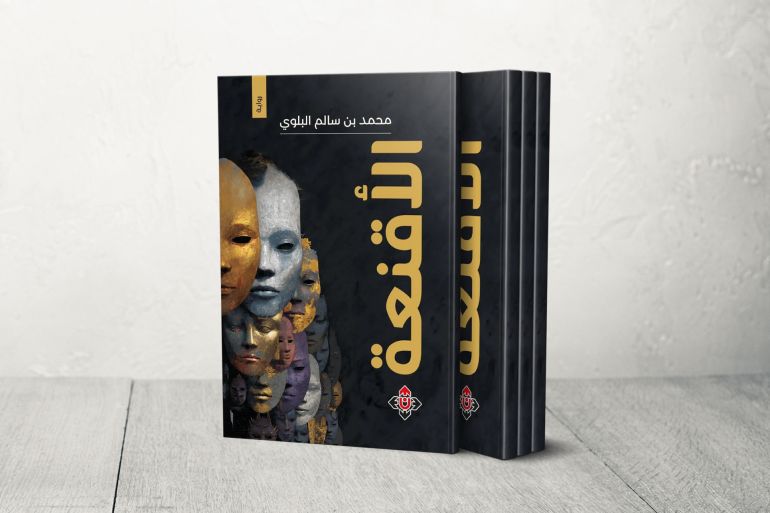
In his novel “The Masks,” a futuristic tale about an imagined city is presented, offering a deep narrative meditation on one of the most critical questions of our age: “What happens when the mask is no longer a tool, but becomes the face itself?”
From the very first pages, the text places us before the long history of the mask, not as a tool of disguise, but as a human invention predating philosophy and politics. The mask, as suggested, was born from fear, grew through cunning, before transforming into a complete system for managing people.
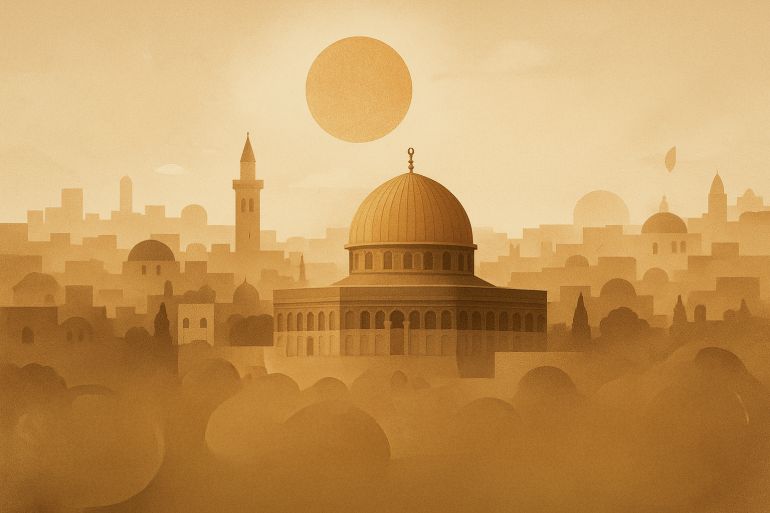
The events of the novel take place in the city of “Nivara,” a utopia in appearance, but terrifying in essence. In this city, the human face is considered an “indecency” or a technical sin, so everyone is forced to wear masks. There is no place for spontaneous emotions, nor room for improvisation; the masks are not merely a face covering, but a complete “operating system” that classifies people according to specific colors: blue for the elite, green for employees, and red for observers.
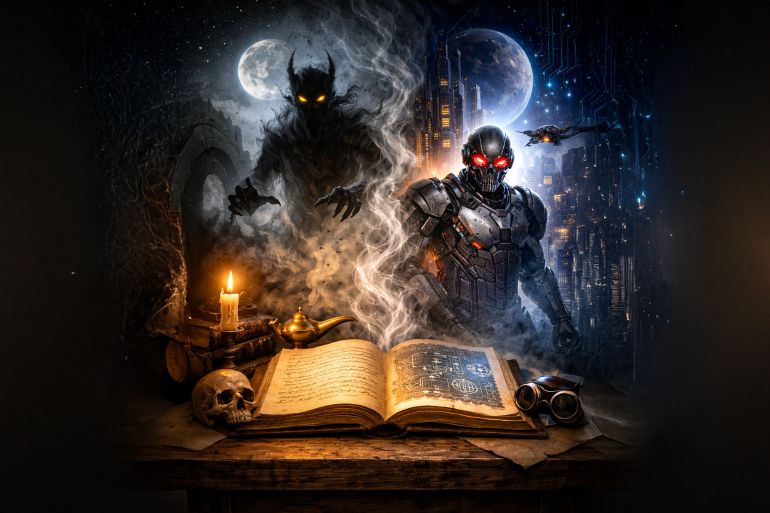
A nightmarish or “dystopian” world is masterfully created in the novel – a world of post-catastrophe or a corrupt city, where algorithms govern consciences, replace the real sky with blue screens, and completely ban mirrors, because seeing oneself is the beginning of rebellion.
In literature, dystopia describes an imagined future society that appears organized, safe, or advanced, but in reality is based on oppression, the confiscation of freedom, and the distortion of humanity in the name of order, happiness, or the public good.
The Journey to Find the First Face
The narrative unfolds through the character of “Siyar,” an employee at the “Ministry of Digital History.” Siyar represents that remaining human tremor in an automated society that functions like machines. His journey begins when he doubts the data he is reformatting, and when ancient metal pieces fall into his hands, reminding him that there is a world beyond the walls, a world inhabited by the “Naked Ones,” those who refused the masks.
The protagonist is aided on this journey by the character “Nuria,” who represents the voice of nature and truth, and the mute clown who provides him with keys to decipher the codes of the “Central Mind” that runs the city.

The protagonist is not chosen from the ranks of revolutionaries or rebels, but from the very heart of the system itself; an archive employee whose task is to purify digital history of what the authority calls “distortion.” Therefore, his rebellion does not begin with an action, but with a small and dangerous question: Is this my real face?
In the world of Nivara, the question is more dangerous than disobedience. The desire to see the face means questioning the entire system. From here begins the hero’s journey towards the “forbidden mirror,” where he confronts not only his reflection but also his stolen past, his implanted memory, and the version of himself he could have been.
The Philosophy of the Mask… From the Cave to the Screen
What distinguishes this work is the philosophical “prologue,” which connects ancient man who saw his shadow on the cave wall with the future man who hides behind a digital “filter.” The mask in the novel is not merely a tool of concealment; it is a “shield for the soul” from the attacks of the outside world, but at the same time, it is a prison that deprives its wearer of honesty.
The novel presents a poignant paradox: after years of wearing masks, the characters discover that some masks “revealed more of their inner selves than they concealed,” and that removing the mask requires courage greater than the courage to wear it.
In a world where facial features are no longer an identity card but a burden that must be concealed, we are confronted with major questions, making us wonder: Are we the faces we are born with? Or are we the masks we choose to coexist with the world? Perhaps the deeper question that comes to the