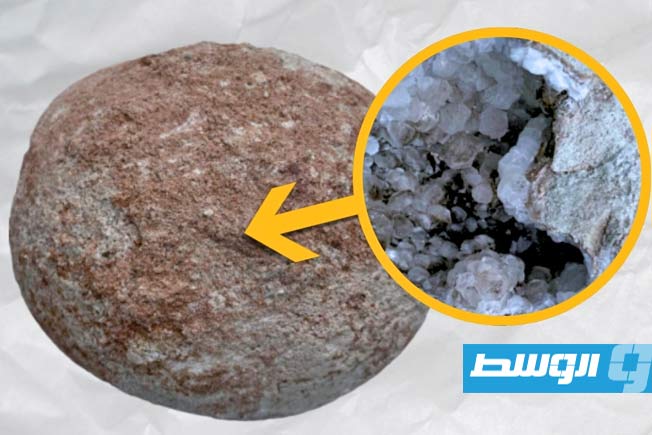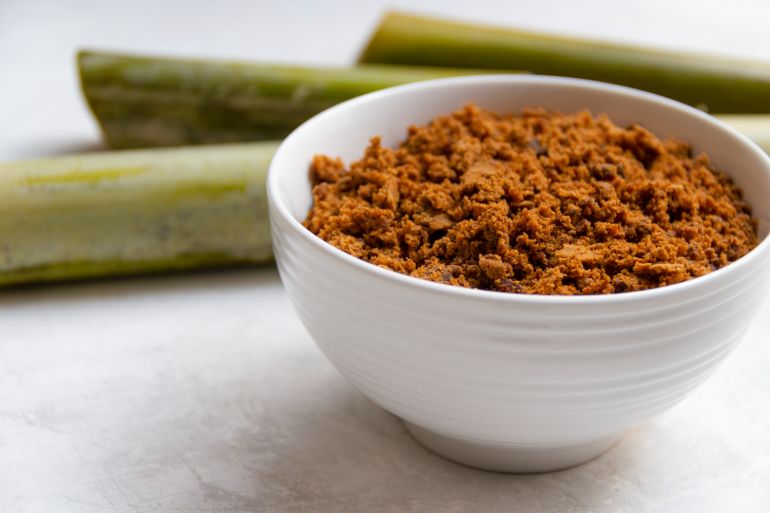
Jaggery, also known as “gur” or “gud,” is a type of unrefined natural sugar that has maintained its presence in Asian and African cuisines for centuries. It is typically extracted from sugarcane juice or the sap of date palms or coconut palms. This natural sweet liquid is obtained from palm trees and is characterized by its golden-brown color and rich, caramel-like flavor.
Unlike white sugar, which undergoes intensive refining that removes molasses and natural elements, jaggery retains a large portion of its original components. This gives it a deeper flavor and relatively higher nutritional value. Therefore, in countries such as India, Pakistan, Bangladesh, Southeast Asia, and Africa, its use is not limited to being just a natural sweetener. It is also incorporated into many traditional recipes and folk medicine practices, considered a choice closer to nature compared to refined sugar.
How is Jaggery Made?
The production of jaggery begins with extracting the natural juice from sugarcane or palm trees. The juice is then filtered to remove impurities before being simmered over low heat until most of its water content evaporates and the liquid transforms into a dense mass. This mass is then left to cool and gradually solidify.
The color of jaggery varies depending on the manufacturing method and the quality of the raw material, ranging from light amber to dark brown. The color serves as a relative indicator of purity. A key feature of this process is that it is carried out without the use of any chemicals, making jaggery closer to a natural raw sugar compared to traditional white sugar.
What is the Difference Between Jaggery and White Sugar?
Both jaggery and white sugar are common sweetening agents, yet there are clear differences between them in terms of composition and nutritional value. White sugar is produced through complete refining processes of sugarcane or sugar beets, during which the mineral-rich molasses is removed, leaving behind sucrose that is nearly 99.9% pure.
As a result, white sugar is considered a source of so-called “empty calories,” as it lacks real nutritional value. In contrast, jaggery—being unrefined—retains part of the natural molasses, giving it a relatively better nutritional composition. It contains modest amounts of important minerals, such as iron, essential for blood cell formation; magnesium, which supports muscle and nerve functions; potassium, which helps regulate blood pressure; and manganese, which plays a role in bone health and metabolic processes.
In terms of calories, there is no significant difference between them. A teaspoon weighing about 5 grams of either jaggery or white sugar contains approximately 15 calories. Therefore, the advantage does not lie in reducing calories but in the quality of these calories and the accompanying micronutrients. However, jaggery remains a sweetener that should be consumed in moderation, as excessive intake can lead to elevated blood sugar levels and increased risks of obesity and type 2 diabetes, just like refined sugar.
Health Benefits of Jaggery: Between Folk Tradition and Scientific Evidence
In folk medicine, jaggery has been associated with multiple health benefits. Some of these are based on preliminary scientific indications, while others require further research and study. Due to its natural molasses content, jaggery contains phenolic compounds with antioxidant properties. These may help combat free radicals and reduce oxidative stress in the body, potentially lowering the risk of some chronic diseases.
Traditionally in India, jaggery is used to support digestive health. It is believed to stimulate the secretion of digestive enzymes and help relieve constipation and indigestion, which is why it is often consumed after meals. It is also considered a quick source of energy. With its mineral content, it is thought to provide a more gradual release of energy compared to white sugar, alongside the common belief in its role in providing a feeling of warmth in cold regions.
Limited preliminary studies suggest that some active compounds in jaggery may contribute to reducing inflammation, particularly in conditions like arthritis.
However, these benefits should be viewed realistically. The amounts of minerals it contains