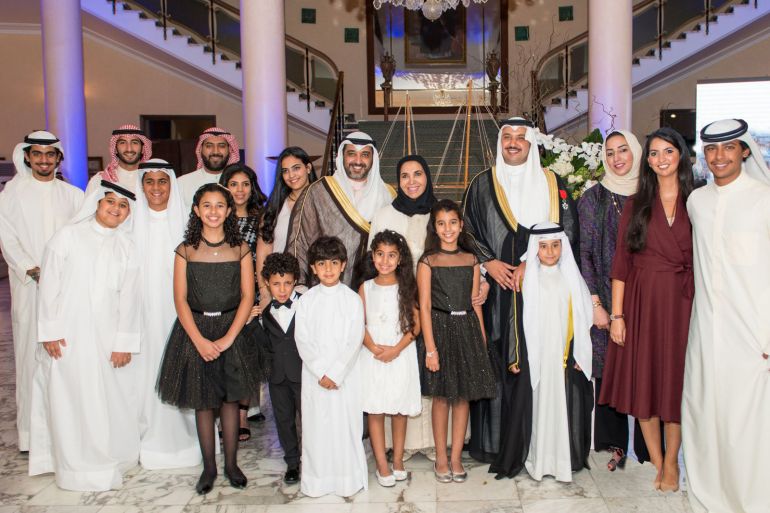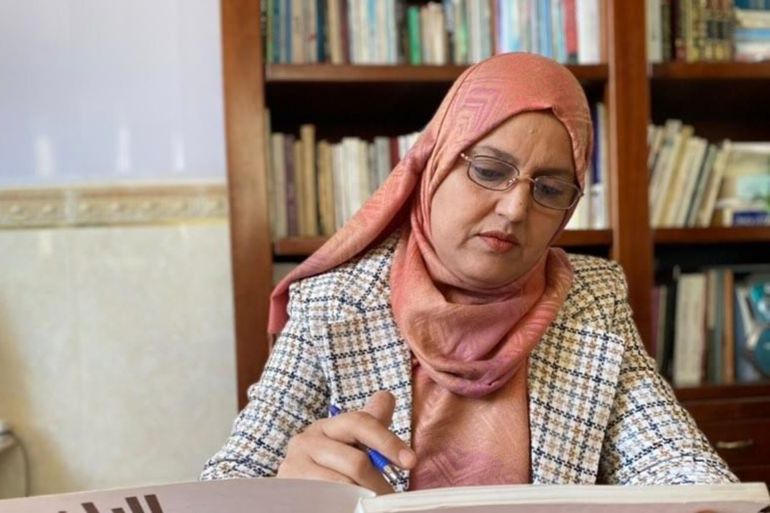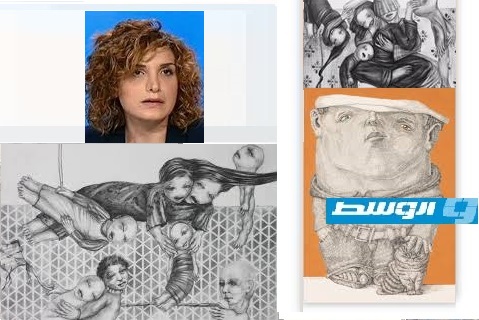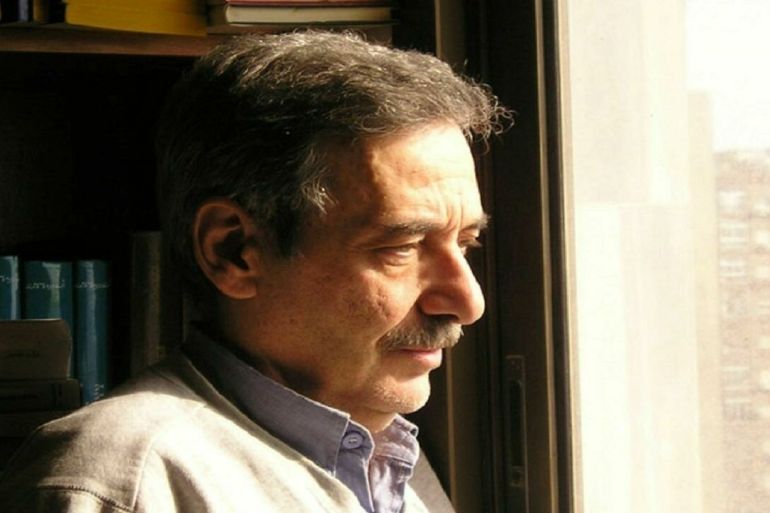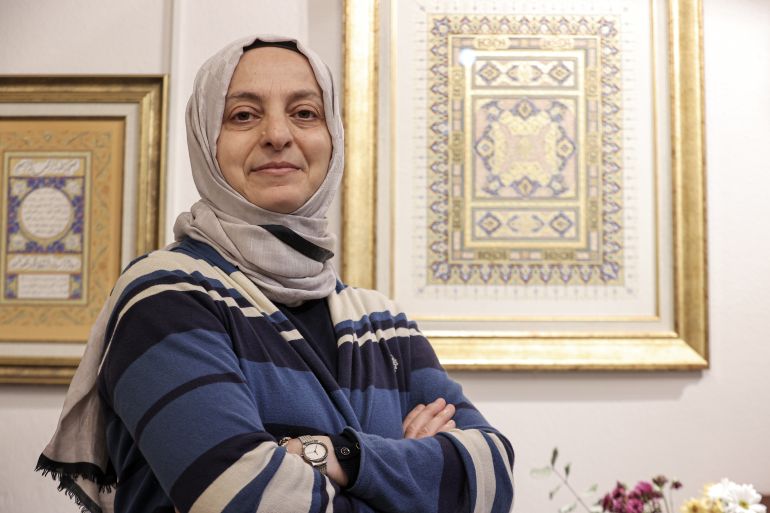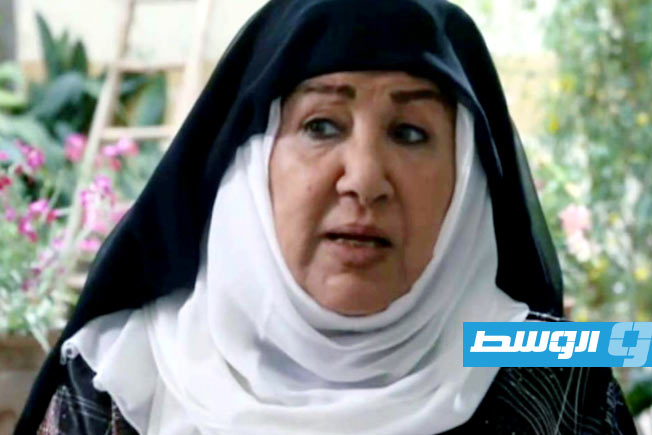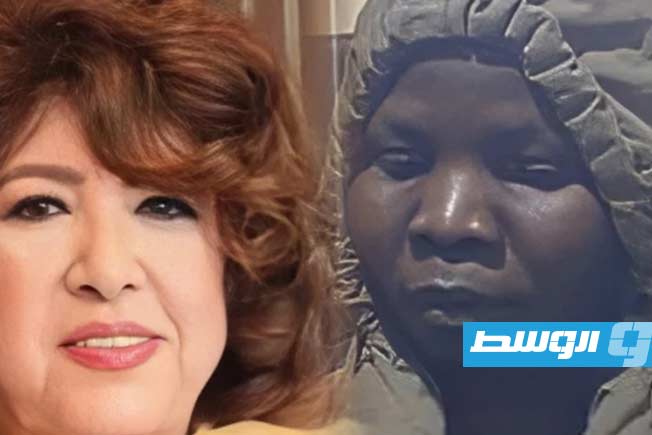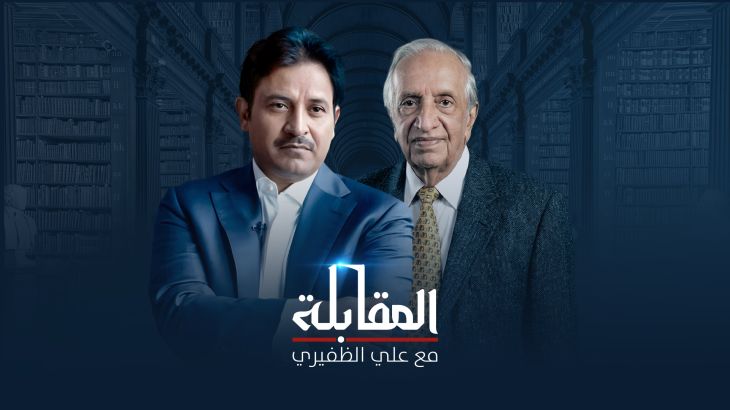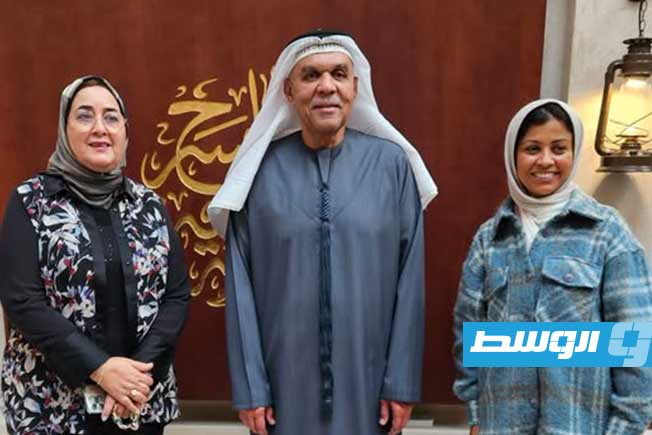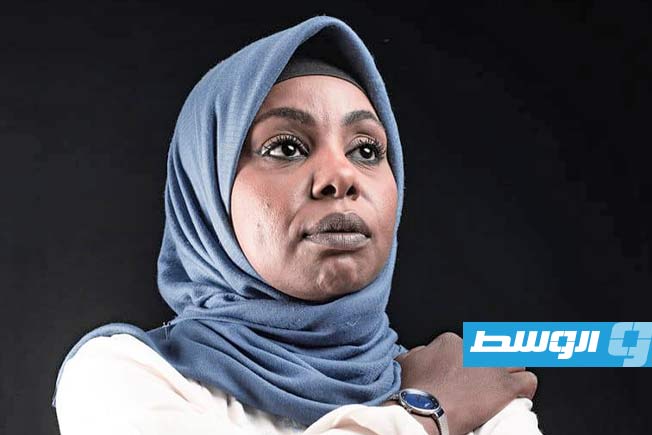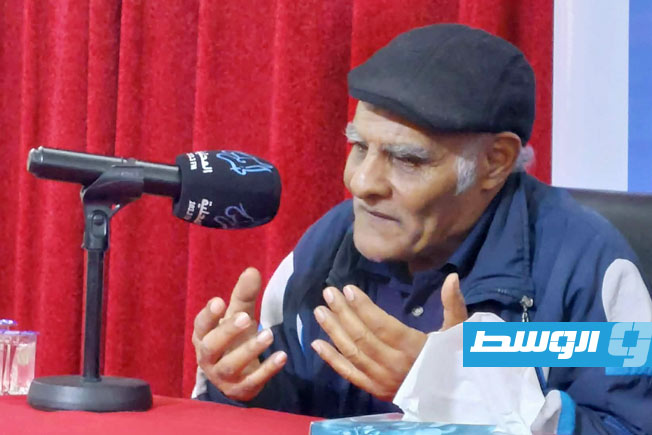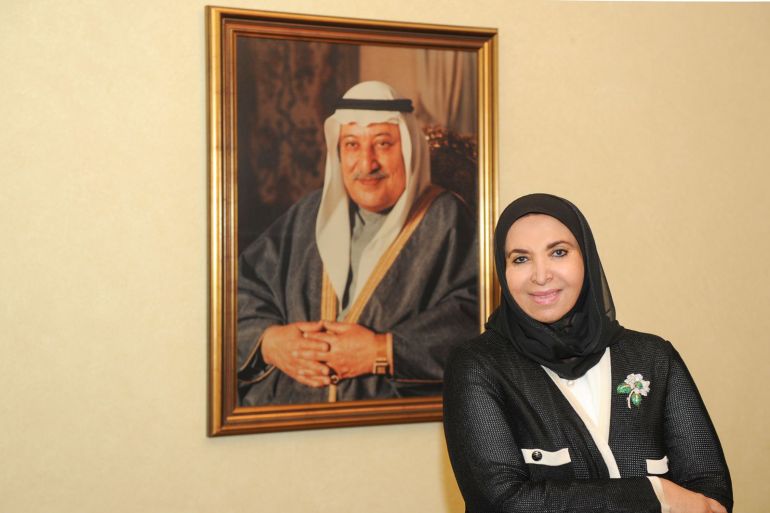
In a special interview, a fundamental question is raised about the legitimacy of the intellectual’s voice with the Kuwaiti poet and writer Dr. Souad Al-Sabah, who has been navigating her creative and humanitarian experience for decades, as a frank questioning of belonging and responsibility.
Here, the owner of the comprehensive cultural project answers the question of cultural representation: How is the poet’s moral mandate born? She replies, in words that condense her life’s path: “No one granted me the mandate… pain, awareness, and sincerity granted it to me.” An answer that dismantles social hierarchy and returns poetry to its primary human source.
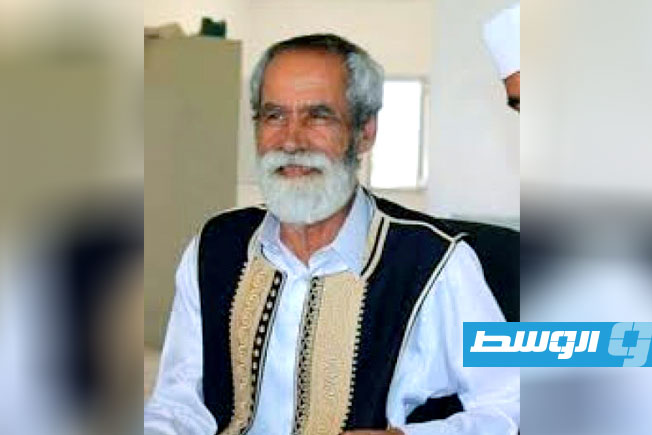
The interview traces the transformations Souad Al-Sabah (84 years old) has undergone, from the circle of tribe and power to the space of shared suffering with her contemporaries from Kuwait and the Arab world, passing through personal and public turning points: the loss of her husband, regional transformations, and human tragedies like the recent Gaza catastrophe.
The interview also reveals Al-Sabah’s vision of the intellectual’s role in times of collapse, and her insistence that poetry be a “vigilant conscience” even when the nation slumbers.
Between poetry, the experience of founding “Dar Souad Al-Sabah,” and the adventure of visual art, the deepest concern remains the question of writing as an act of resistance: resistance to forgetting, resistance to despair, and resistance to blocked horizons.
Let’s begin the interview:
- You describe yourself as the “voice of the voiceless”… Who are these people you speak for? Do you feel their voice has truly reached others through your poetry? And what role should the poet undertake regarding issues of human destiny?
From my beginnings, I realized that poetry is only complete when it touches a wound, illuminates a mind, or pats the shoulder of those who have walked long without a guide.
These “voiceless” are all those consumed by the machinery of life: the woman who hides her tear, the broken who swallows their anger, the child who asks and finds no one to listen, and every person who feels alone under a vast sky.
Has their voice reached? I do not claim that, but I know that every poem I wrote was an attempt to do them justice, or to stand by their side.
The poet is not a political orator, but a vigilant conscience, reminding humans that humanity is not slogans, but a daily practice of justice and compassion… The poet’s role is to keep awareness alive, to be a beacon when paths are confused, and to remind the world that every person has a story worth listening to.
- For a poet to see themselves as a voice expressing marginalized classes in society is a heavy responsibility they may not be able to bear… Who granted Souad Al-Sabah this mandate to speak on behalf of these people? Was there a specific event that made you feel you could truly embody their suffering, especially since you are a daughter of a tribe with its internal social hierarchy, in addition to being a descendant of a family that has ruled Kuwait for nearly three centuries?
I am a child of humanity before being a child of the tribe or family… No one grants the poet a mandate; pain grants it, awareness grants it, sincerity grants it… I was born into an environment with its hierarchies, yes, but since childhood I discovered that pain does not differentiate between a prince and a pauper, between a son of the desert and a son of the city.
We are all wounded in the same way, we fear in the same way, and we dream in the same way.
As a young child, I saw the girls who traverse distances of poverty on foot, and I saw the mothers who knead patience and then bake it by the light of hope. There, I felt that true belonging is not to class, but to humanity. No one granted me the mandate… but life granted me experience, loss granted me insight, and writing granted me courage.