Head of the Presidential Council Receives More Congratulations on the Occasions of Independence Anniversary and the New Year.
libyawire.org > News > Culture > Head of the Presidential Council Receives More Congratulations on the Occasions of Independence Anniversary and the New Year.
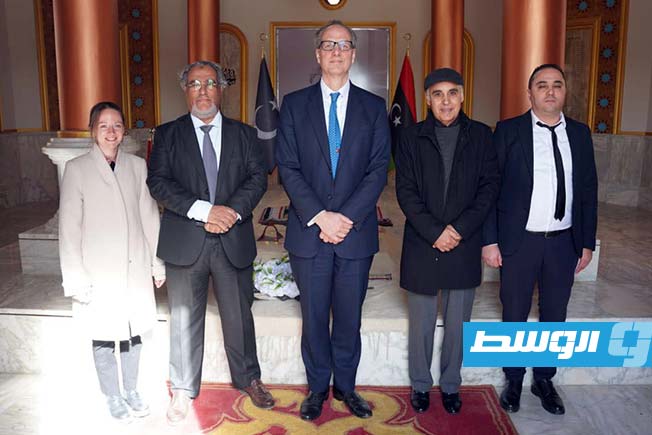
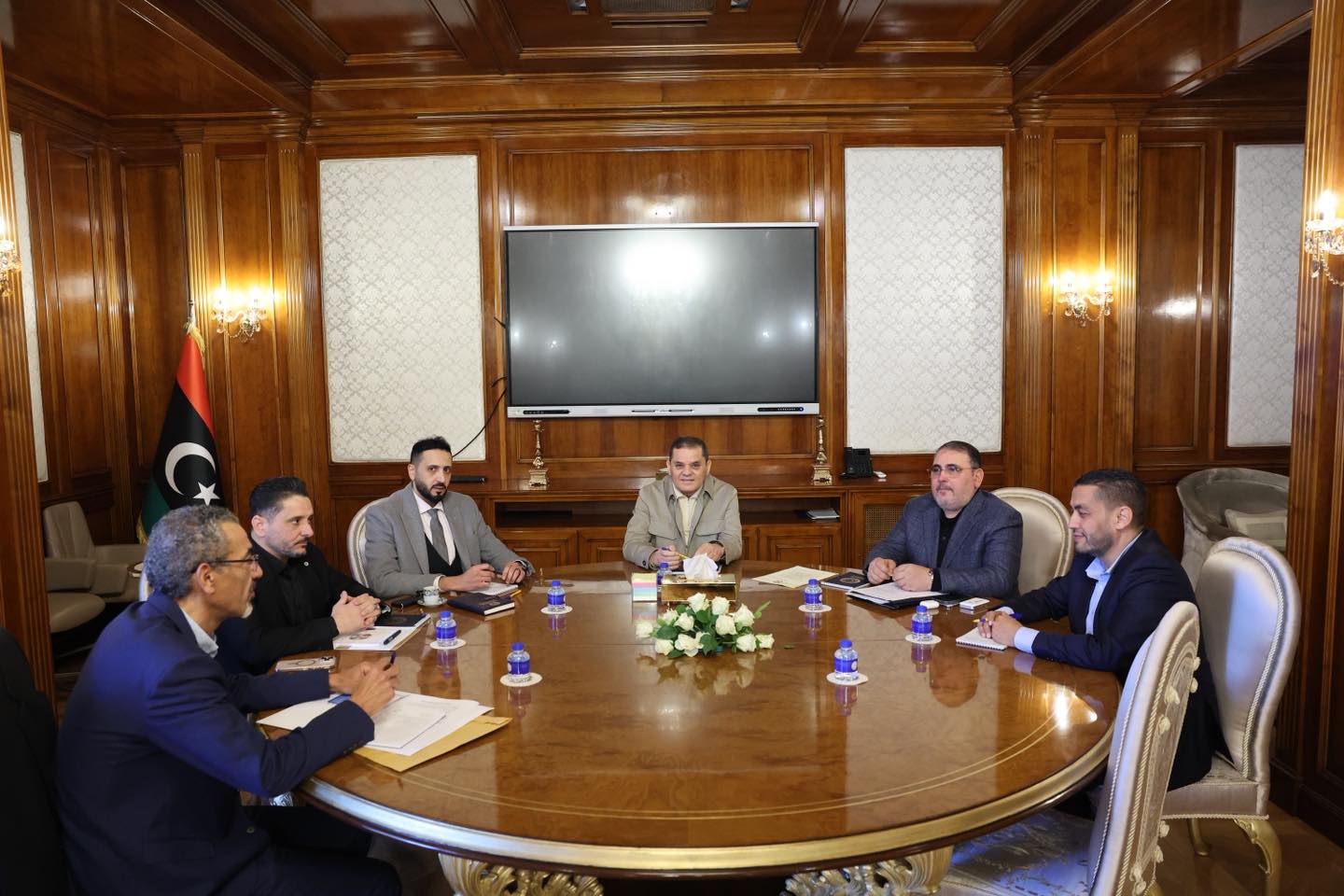
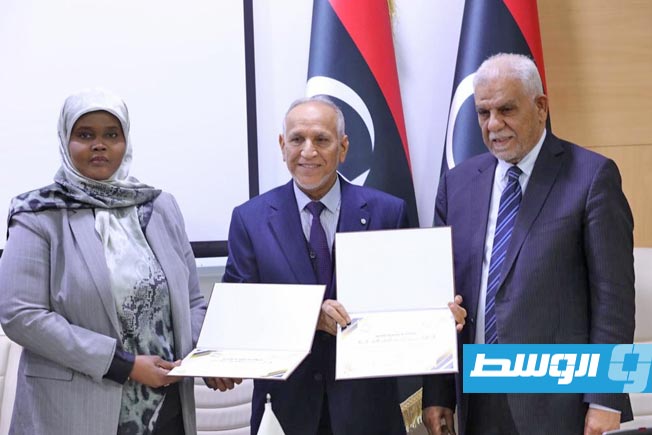
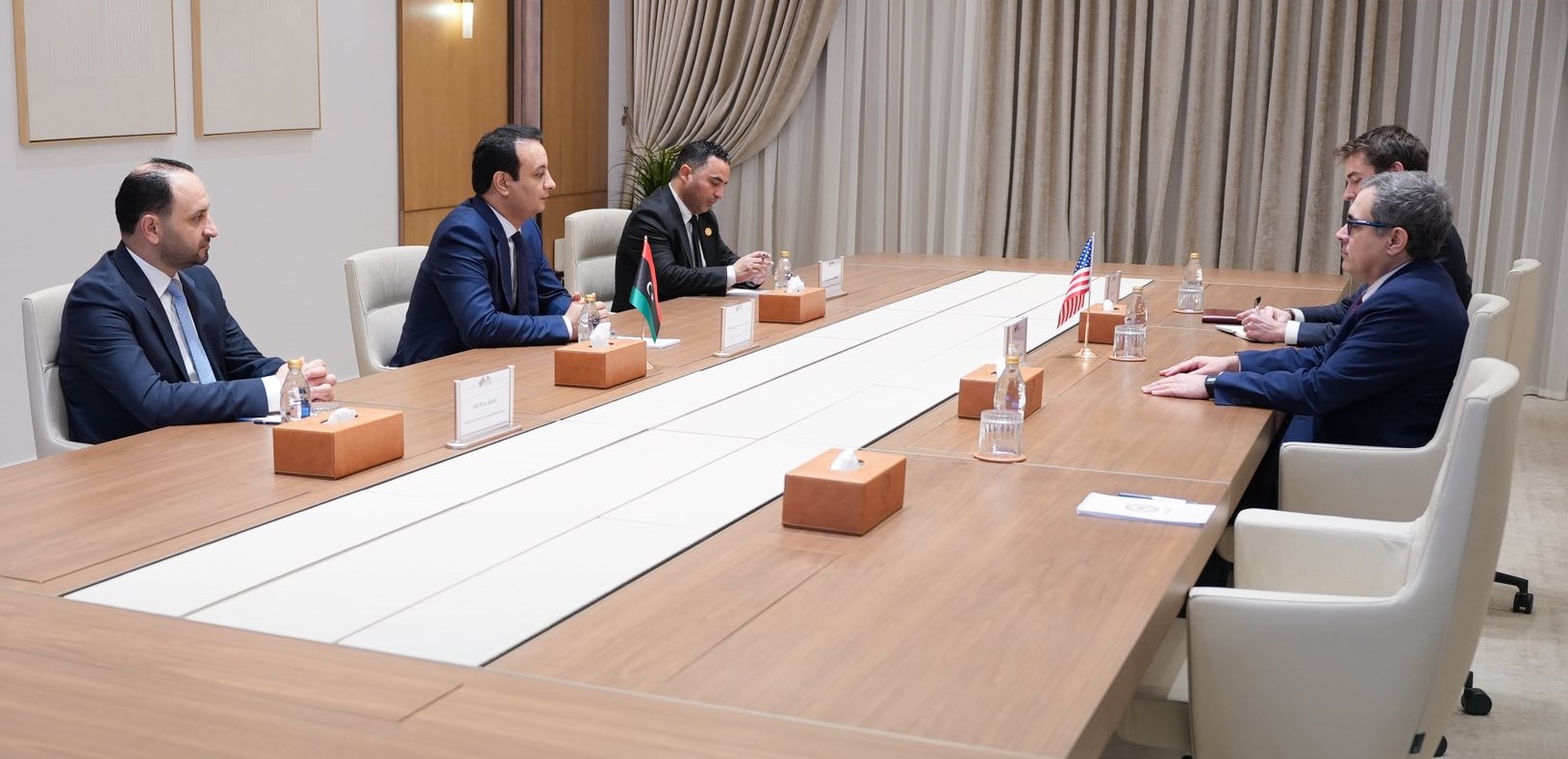
Tripoli, January 2, 2026 – The President of the Presidential Council, Mohamed al-Menfi, received a number of congratulatory cables from heads of state and world leaders on the occasion of the 74th anniversary of Libya’s independence and the new Gregorian year 2026.
The cables conveyed wishes to the Libyan people on this eternal national occasion and the new year, praising the depth of historical ties and relations of friendship and cooperation that unite their countries with the state of Libya.
Congratulations were received from:
– President of the United States of America, Donald Trump.
– President of the Republic of Indonesia, Prabowo Subianto.
– President of the Republic of Malta, Miriam Spiteri Debono.
– President of the Italian Republic, Sergio Mattarella.
– President of the Republic of Korea, Lee Jae-myung.
– President of the Republic of Azerbaijan, Ilham Aliyev.
– President of the Arab Republic of Egypt, Abdel Fattah el-Sisi.
– President of the Republic of Poland, Karol Nawrocki.
– President of the Republic of Portugal, Marcelo Rebelo de Sousa.
– Federal President of the Republic of Austria, Alexander Van der Bellen.
– President of the Republic of Serbia, Aleksandar Vučić.
– President of the Republic of Sri Lanka, Anura Kumara Dissanayake.
– President of the Republic of Niger, General Abdourahamane Tchiani.
– President of the Republic of Montenegro, Jakov Milatović.
– Governor General of Canada, Mary Simon.
– Governor General of the Commonwealth of Australia, Sam Mostyn.
Tripoli
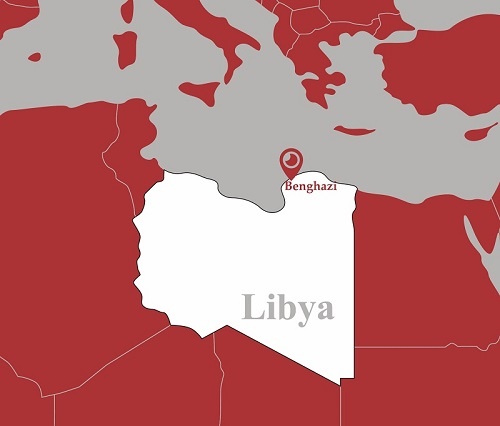
Tripoli is the capital and largest city of Libya, located on the country’s Mediterranean coast. Historically, it was founded by the Phoenicians in the 7th century BC and has since been ruled by the Romans, Arabs, Ottomans, and Italians, serving as a major port and cultural crossroads. Its historic center, the medina, features ancient architecture like the Arch of Marcus Aurelius and the Red Castle (Assai al-Hamra).
Libya
Libya is a North African country with a rich history rooted in ancient civilizations like the Phoenicians and Romans, followed by centuries of Arab and Ottoman influence. In the modern era, it was an Italian colony before gaining independence in 1951, later becoming known for Muammar Gaddafi’s lengthy rule from 1969 until the 2011 revolution. Its cultural heritage includes UNESCO World Heritage sites such as the ancient Greek city of Cyrene and the Roman ruins of Leptis Magna.
United States of America
The United States of America is a federal republic founded in 1776 after declaring independence from Great Britain, establishing itself through a revolutionary war and the ratification of its Constitution in 1789. It grew from thirteen original colonies into a global superpower, with a history shaped by westward expansion, industrialization, and significant civil rights movements.
Indonesia
Indonesia is a Southeast Asian archipelago of over 17,000 islands, historically shaped by powerful Hindu-Buddhist kingdoms like Srivijaya and Majapahit, followed by centuries of Dutch colonial rule. It declared independence in 1945 and is now the world’s largest Muslim-majority nation, renowned for its immense cultural and biological diversity.
Malta
Malta is a small island nation in the Mediterranean Sea with a rich history shaped by successive rulers, including the Phoenicians, Romans, Moors, Knights of St. John, French, and British. It is renowned for its historic sites such as the megalithic temples, which are among the world’s oldest free-standing structures, and its well-preserved fortifications in the capital, Valletta. The country gained independence from the United Kingdom in 1964 and remains a member of the Commonwealth.
Italian Republic
The Italian Republic is a modern democratic state founded in 1946 after a referendum abolished the monarchy, with its current constitution enacted in 1948. Its rich cultural history is deeply rooted in the Roman Empire and the Renaissance, which left a profound legacy of art, architecture, and law across Europe.
Republic of Korea
The Republic of Korea, commonly known as South Korea, is a country in East Asia that was formally established in 1948 following the post-World War II division of the Korean Peninsula. It has since developed from the ruins of the Korean War into a major global economy and vibrant democracy, renowned for its dynamic pop culture and technological innovation.
Azerbaijan
Azerbaijan is a country located at the crossroads of Eastern Europe and Western Asia, historically influenced by Persian, Turkic, and Russian empires. Its cultural landscape is epitomized by the Walled City of Baku, a UNESCO World Heritage site featuring the medieval Maiden Tower and 15th-century Shirvanshahs’ Palace. The country is also known for its ancient Zoroastrian fire temples, reflecting its historical nickname as the “Land of Fire.”
Arab Republic of Egypt
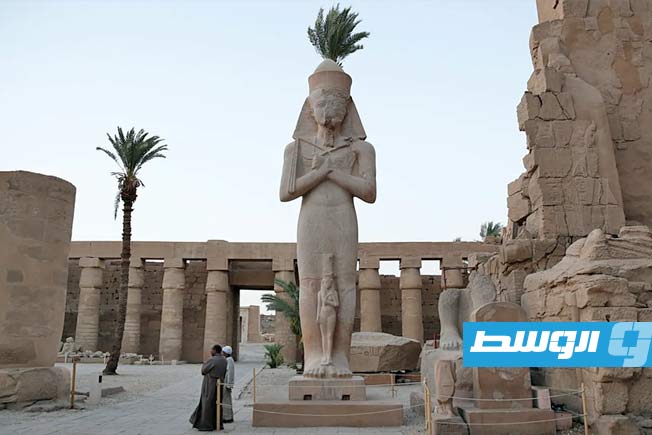
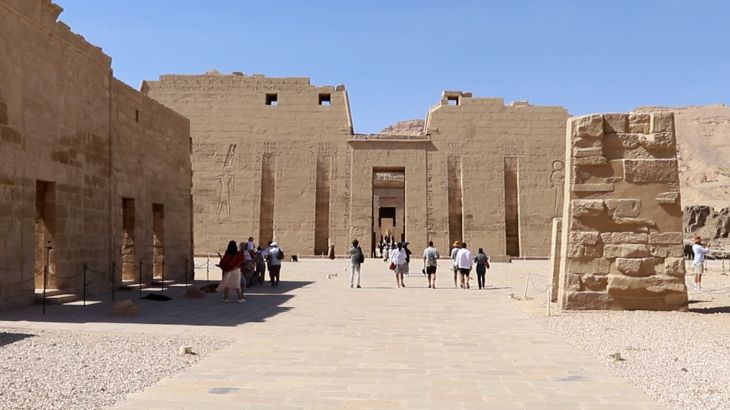
The Arab Republic of Egypt, located in Northeast Africa, is a modern nation-state with a history stretching back to one of the world’s earliest civilizations, ancient Egypt. Its iconic cultural sites, such as the Pyramids of Giza and the temples of Luxor, are remnants of the powerful pharaonic kingdoms that flourished along the Nile River for millennia.
Poland
Poland is a Central European country with a rich and complex history, marked by its establishment as a kingdom in 1025, its golden age in the 16th century as the Polish-Lithuanian Commonwealth, and its later partitions and struggles for sovereignty in the 20th century. Today, it is known for its resilient culture, medieval town centers like Kraków, and significant historical sites including the Auschwitz-Birkenau memorial and the Warsaw Old Town, which was meticulously reconstructed after World War II.
Portugal
Portugal is a country in southwestern Europe on the Iberian Peninsula, with a history deeply shaped by exploration. It established a vast maritime empire beginning in the 15th century, becoming a major global power. Key cultural sites include the Jerónimos Monastery and Tower of Belém in Lisbon, which are UNESCO World Heritage monuments from that Age of Discovery.
Republic of Austria
The Republic of Austria is a landlocked country in Central Europe with a rich history as the heart of the Habsburg Monarchy and the Austro-Hungarian Empire. Its cultural landscape is marked by historic sites like the Hofburg Palace in Vienna and the Salzburg Altstadt, reflecting its legacy as a major center of European music, art, and politics.
Serbia
Serbia is a country in Southeast Europe with a rich history dating back to the Roman Empire and later serving as the core of the medieval Serbian Kingdom and Empire. Its cultural heritage is exemplified by sites like the Studenica Monastery, a UNESCO World Heritage site founded in the 12th century. Modern Serbia’s identity is deeply shaped by its historical role in the Balkans and its status as a former republic of Yugoslavia.
Sri Lanka
Sri Lanka is an island nation in South Asia with a rich history dating back over 3,000 years, featuring ancient kingdoms like Anuradhapura and Polonnaruwa. It is renowned for its cultural heritage, including significant Buddhist sites such as the Temple of the Sacred Tooth Relic in Kandy. The country’s diverse landscape ranges from rainforests and highlands to pristine beaches.
Niger
Niger is a landlocked country in West Africa named after the Niger River, with a history shaped by ancient trans-Saharan trade routes and powerful empires like the Songhai. It gained independence from France in 1960 and is known for its diverse cultures and significant uranium deposits.
Montenegro
Montenegro is a country in Southeastern Europe with a rich history of medieval Slavic principalities, most notably the Kingdom of Zeta. It later existed as an independent theocratic state and a kingdom before becoming a part of Yugoslavia in the 20th century, regaining its independence in 2006. Its cultural sites include the historic coastal city of Kotor, a UNESCO World Heritage site known for its medieval architecture and fortified walls.
Canada
Canada is a North American country formed in 1867 through Confederation, evolving from earlier British and French colonial territories. It is known for its vast landscapes, multicultural society, and a historical development deeply influenced by Indigenous peoples, colonization, and immigration.
Commonwealth of Australia
The Commonwealth of Australia is a sovereign nation comprising the Australian mainland, the island of Tasmania, and numerous smaller islands. It was established on January 1, 1901, when six separate British colonies federated to form a single, self-governing dominion within the British Empire. Today, it is a modern, independent constitutional monarchy with a rich Indigenous history dating back over 65,000 years.