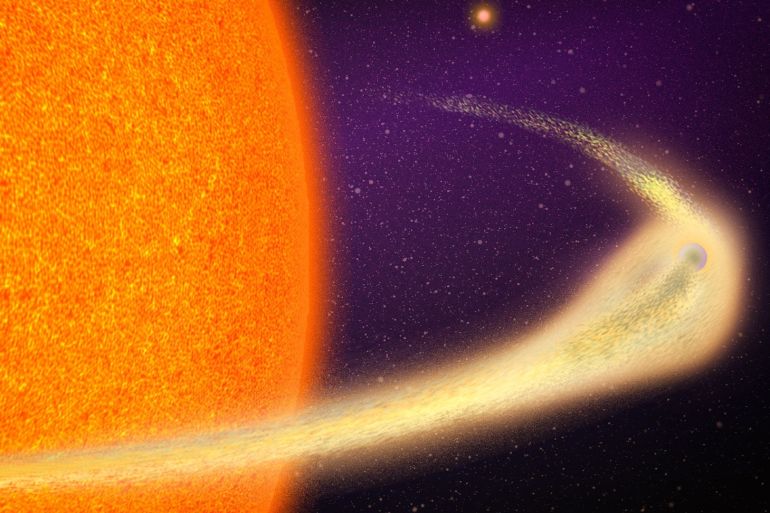
The year 2025 was filled with astonishing wonders and questions that contributed to the exploration of space and the deep universe. Planets were born before the eyes of scientists, while others slowly evaporated, leaving comet-like tails. Researchers discovered worlds orbiting two stars at once, and even orbiting “failed stars” that never ignited. Amidst these unprecedented cosmic scenes, the question of extraterrestrial life reignited global debate after mysterious gaseous signals were detected in the atmosphere of a distant exoplanet, signals said to potentially carry the fingerprints of living organisms.
In a frenzied scientific race, astronomers announced last year that the number of planets discovered outside our solar system had surpassed the 6,000 mark—a number considered science fiction just three decades ago. These worlds no longer resemble our quiet solar system; instead, they appear as giant planets burning close to their stars (called hot Jupiters), others Earth-sized in twisted orbits, and planets swimming between two stars in chaotic systems thought to be unsuitable for planet formation in the first place.
Stranger still, some of these worlds are living their final days; planets have been observed losing entire mountains of rocky material with each orbit around their star, while the remnants of other planets are torn apart near dead stars, scenes documenting the end of entire worlds. Conversely, the same telescopes have revealed resilient planets enduring heat capable of melting rock, yet retaining atmospheres that defy all scientific expectations.
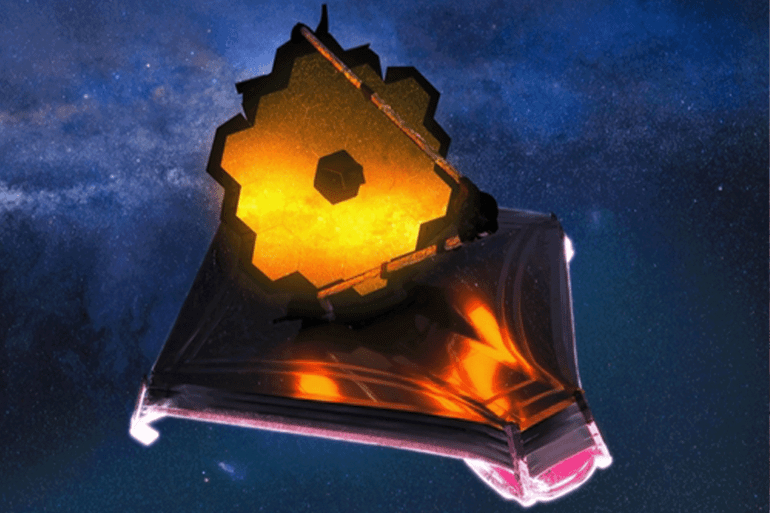
These discoveries, made possible by advanced telescopes like the James Webb and TESS, along with new high-precision observation instruments, have not only added numbers to astronomical records but have also redrawn the map of our galaxy, changing our perspective on how planets form and the chances for life beyond Earth.
With each newly announced strange exoplanet, it becomes clear that the universe is more diverse, chaotic, and exciting than humans ever imagined, and what we know so far is merely a first glimpse of a long cosmic story whose chapters are still being written.
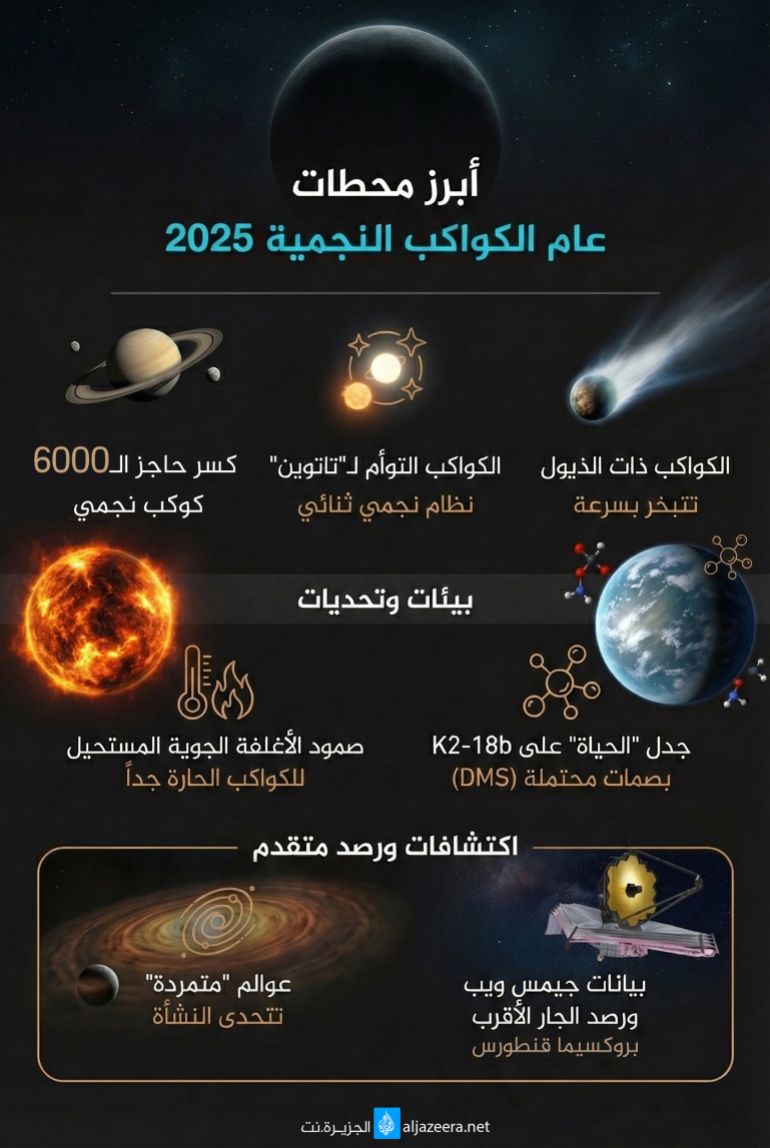
Here are the key highlights of the “Year of Exoplanets” 2025:
1- The Twin-Star “Tatooine” Exoplanet
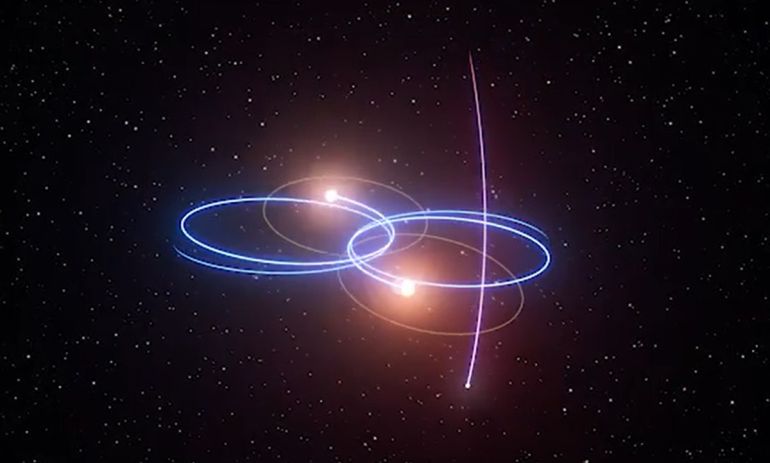
Science fiction turned into reality with the discovery of exoplanets orbiting “two suns,” exactly like the planet “Tatooine” in Star Wars. Even stranger was the planet “2M1510B,” which orbits a pair of “brown dwarfs” (stars that failed to ignite), in a strange vertical orbit passing over the stars’ poles instead of the traditional flat orbital plane.
2- The “Life” Debate on Planet “K2-18b”
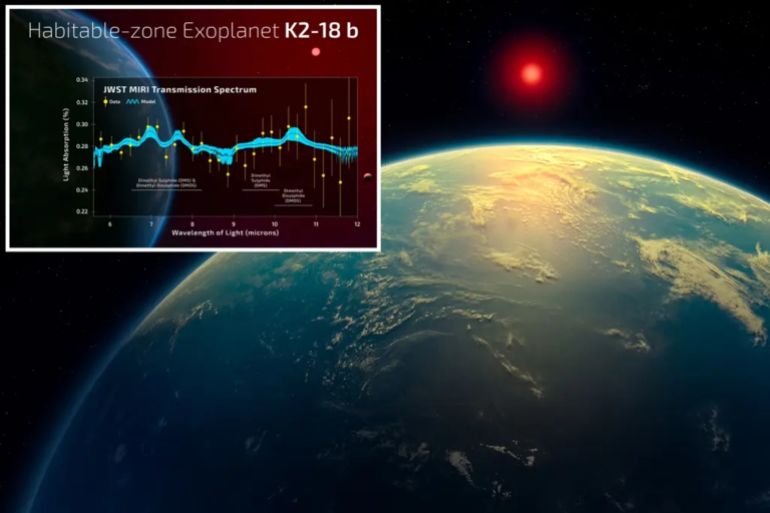
The exoplanet “K2-18b” made headlines after the James Webb Telescope detected gases of “dimethyl sulfide,” which on Earth are associated with marine biological activity.
While one team believes the planet may be covered in oceans and “teeming with life,” other scientists argue the signals might just be cosmic noise or non-biological gases, putting the capabilities of the giant James Webb Telescope to a real test.
3- “Tailed” Planets on a Path to Suicide
Scientists discovered planets committing suicide in space, including