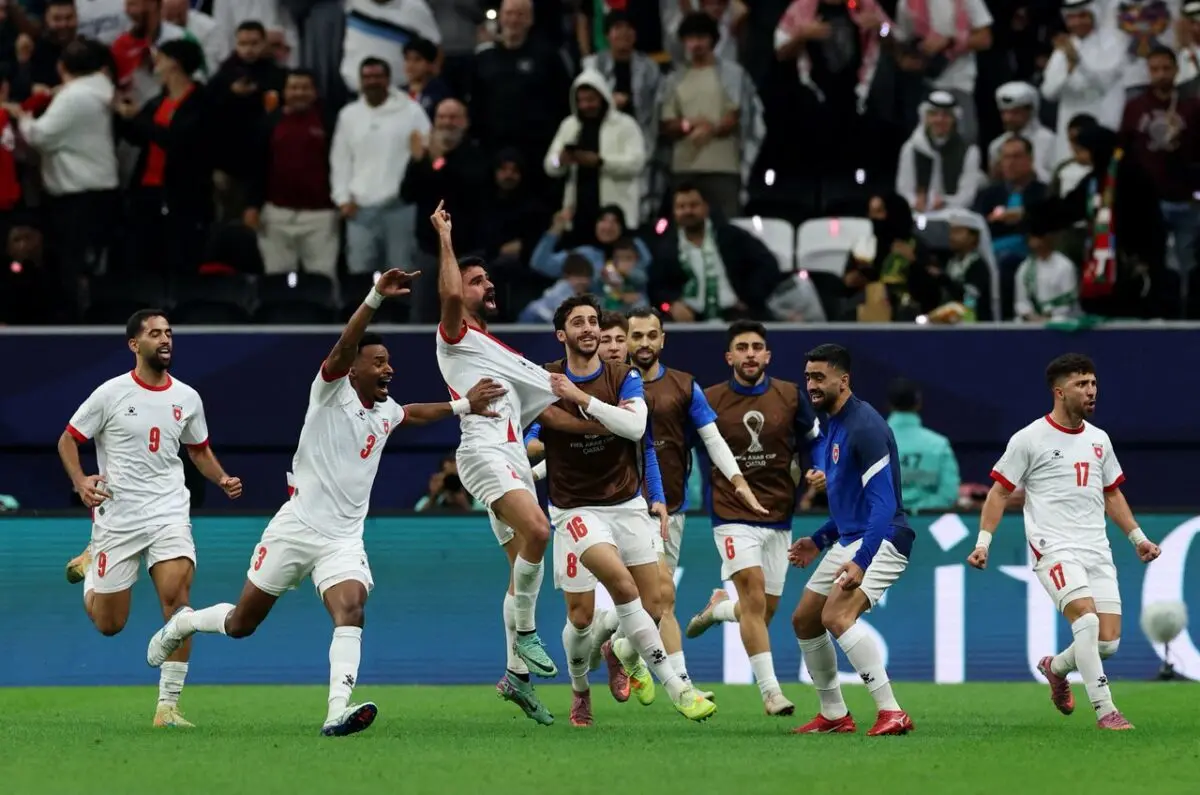
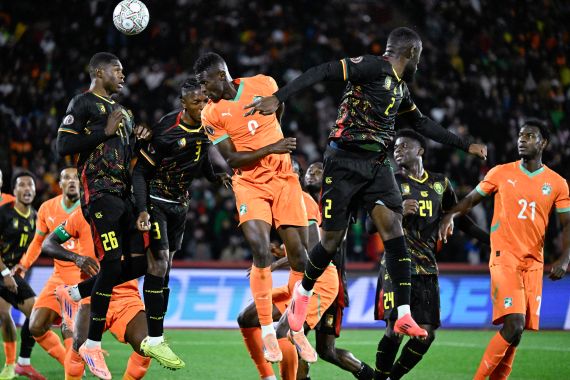
During the Global Sports Summit in Dubai, the president of FIFA hinted at the possibility of modifying the offside rule to make the game more attractive.
On Monday, the president explained: “We continue to study how to develop the laws to make the game more offensive and attractive,” emphasizing the need to “reduce stoppages in play to a minimum.”
He continued: “We are studying the offside law, which has evolved over the years and currently requires the attacker to be behind the last defender or level with him,” adding that “perhaps in the future” a player would need to be “completely ahead of the last defender to be considered offside.”
According to this change, offside would not be called if only a player’s leg or arm is ahead of the last defender.
This change, which favors attackers, is supported by the former French coach of the English club Arsenal and the current director of football development at FIFA.
This proposal, which has previously been tested in youth tournaments, must be approved by the International Football Association Board (IFAB), the body responsible for the laws of the game, which is scheduled to hold its annual meeting on January 20th, before being ratified by FIFA during its general assembly.
Although it is unlikely that the new law will be applied starting this summer during the World Cup in the United States, Canada, and Mexico, a Spanish sports newspaper indicated on Tuesday that it could come into effect from next season.
FIFA
FIFA, the Fédération Internationale de Football Association, is the international governing body for association football, futsal, and beach soccer, founded in Paris in 1904. Its primary role is to oversee major international tournaments, most notably the FIFA World Cup, which it first organized in 1930. The organization has a complex history, marked by both the global growth of football and periods of significant corruption scandals in the early 21st century.
Dubai
Dubai is a major global city and emirate in the United Arab Emirates, historically a small fishing and pearling village. Its modern transformation began in the late 20th century, fueled by oil revenue and strategic investments, leading to its current status as a hub for tourism, finance, and luxury. It is renowned for iconic landmarks like the Burj Khalifa, the world’s tallest building, and ambitious artificial island projects.
Arsenal
The Arsenal is a historic military complex in Venice, Italy, established in the early 12th century. It was the heart of the Venetian Republic’s naval power, functioning as a large, state-owned shipyard that pioneered early assembly-line production techniques for warships.
International Football Association Board
The International Football Association Board (IFAB) is the independent body that determines and governs the Laws of the Game of association football. It was founded in 1886 to standardize rules across the home nations of the United Kingdom and is now composed of the four British football associations and FIFA.
IFAB
The International Football Association Board (IFAB) is the global body that determines the Laws of the Game for association football. It was founded in 1886 to standardize rules, originally established by the football associations of England, Scotland, Wales, and Northern Ireland, with FIFA joining as a member in 1913.
World Cup
The FIFA World Cup is an international football tournament first held in 1930 in Uruguay. Organized by FIFA, it is contested every four years by the senior men’s national teams of its member associations and is the world’s most widely viewed sporting event.
United States
The United States is a federal republic founded in 1776 after declaring independence from Great Britain, with its modern government established by the Constitution in 1789. Its history includes westward expansion, a civil war over slavery, and its emergence as a global superpower in the 20th century. The nation is defined by its diverse cultural heritage, democratic ideals, and significant economic and political influence worldwide.
Canada
Canada is a country in North America formed through the union of British and French colonial territories, becoming a self-governing dominion in 1867. It is known for its vast natural landscapes, multicultural society, and a historical development deeply shaped by Indigenous peoples, colonization, and subsequent waves of immigration.
Mexico
Mexico is a country with a rich pre-Columbian history, including advanced civilizations like the Maya and Aztec, whose monumental sites, such as Teotihuacán and Chichén Itzá, remain today. Following Spanish conquest and colonization in the 16th century, it gained independence in 1821, blending indigenous and European influences into a unique national culture. This heritage is evident in its vibrant traditions, cuisine, architecture, and UNESCO World Heritage sites.