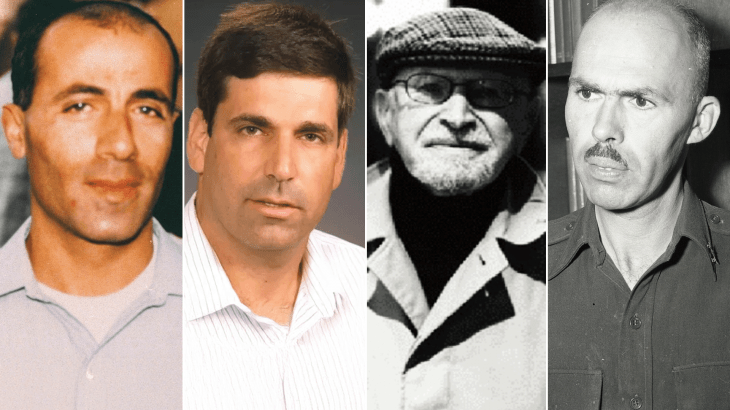
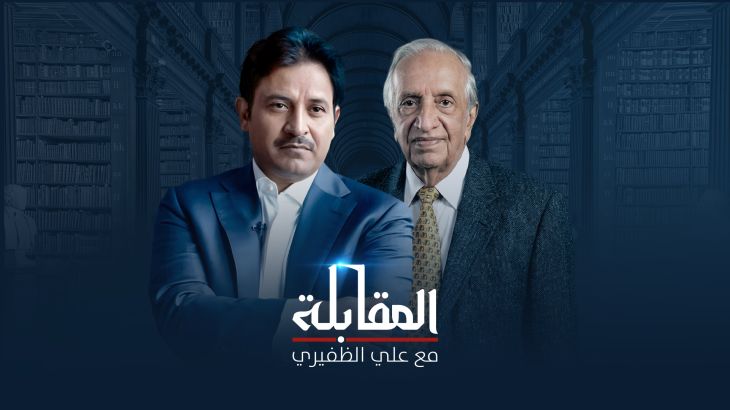
The documentary “Breach from Within” has unveiled the hidden face of the Israeli internal security service (Shin Bet), dismantling the myth of the “world’s strongest security fortress” that it has long boasted about.
The film presented shocking stories of spies who did not merely deceive the agency from the outside but worked as employees within it or held highly sensitive state positions, causing severe strategic damage, some details of which remain classified to this day.
Levi Levy… The Spy Who Was Employed in the “Shin Bet”
The story of “Levi Levy” is one of the most infuriating tales for former Shin Bet leaders. The Polish Jewish immigrant, who arrived in the summer of 1948, succeeded in obtaining a sensitive position within the “Operations Department” of the Shin Bet itself for 11 years (1948-1957).
According to testimonies from former officers in the film, Levy’s official task was to plant listening devices in Eastern European embassies in Tel Aviv. Instead, he would inform his handlers in Polish intelligence about the details of those operations, warning them by saying, “Tomorrow or the day after, there is an operation against you,” giving them a golden opportunity to deceive the Israelis for years.
Levy’s breach has been described as playing the role of “the wolf ordered to guard the milk,” indicating that his motives were purely financial, as he lived a luxurious life thanks to Polish money, before he was exposed and forced the Shin Bet to change all its operational methods and code names.
“The Traitor” in Ben-Gurion’s Office
The breach was not limited to employees; it reached the top of the political pyramid. The film highlighted the spy “Israel Beer,” who immigrated to Israel in the early 1940s and succeeded in rising to become a senior officer and special advisor to the then Prime Minister and Minister of Defense, David Ben-Gurion.
Beer exploited his high position and reputation as a strategic expert who authored several military books and was a trusted lecturer at military gatherings, to access the most precise tactics and secret consultations in the Prime Minister’s office.
Beer continued to deceive the Shin Bet until early 1961 when he was caught red-handed while handing over a bag of sensitive files to his handler from the Soviet embassy. It was revealed that he had provided information about the Ministry of Defense and intelligence.
Beer later admitted that his motive stemmed from a conviction that the Soviet Union was the “most important power in the world.”
The spy Beer has been described as “one of the strongest and most damaging spies to Israeli security,” which explains the harsh punishment he received—15 years in prison—amid intense Israeli secrecy regarding the volume of secrets he leaked.
In a related context, “Breach from Within” reviewed other figures who manipulated the security system at high levels, including:
- Shimon Levinson: Who worked as a security officer in the Prime Minister’s Office and exploited his position in the 1990s to sell top state secrets and information from closed-door meetings of mini-ministerial councils to the Soviets for money.
- Gonen Segev: Former Energy Minister, who was recruited by Iranian intelligence in 2012 to provide it with sensitive information about the energy and security sectors.
Breaching Nuclear and Biological Facilities
The most dangerous types of espionage mentioned in the film targeted fortified scientific institutions:
- Marcus Klingberg: Described as the “most dangerous spy,” he was a scientist at the “Biological Institute” who leaked secrets of biological and chemical weapons to the Soviets for decades, motivated by an ideological aim for “international balance.”
- Professor Kurt Sitte: A cosmic ray scientist at the “Technion,” who was recruited by the Czechs and Soviets to obtain information on the Israeli nuclear program in its early stages.
- Mordechai Vanunu: The nuclear technician who exposed Israeli nuclear capabilities to the world via the “Sunday Times” in 1986.
</
Shin Bet
Shin Bet, officially known as Israel Security Agency, is Israel’s internal security service, primarily responsible for counterterrorism, counterintelligence, and protecting state secrets within the country’s borders. It was founded in 1949, shortly after the establishment of the State of Israel, and has played a central and often secretive role in the nation’s security landscape.
Ben-Gurion’s office
Ben-Gurion’s office, located in Tel Aviv, is the preserved former study and library of David Ben-Gurion, Israel’s first Prime Minister. It served as his primary working space from the 1930s until 1953, where he made pivotal decisions leading to the establishment of the State of Israel in 1948. The site is now a museum showcasing original artifacts and documents from that foundational period.
nuclear reactor
A nuclear reactor is a facility designed to initiate and control a sustained nuclear chain reaction, historically developed during the 1940s as part of the Manhattan Project. Today, reactors are primarily used for generating electricity in power plants, where the heat from fission is used to produce steam that drives turbines.
Polish intelligence
Polish intelligence refers to the intelligence and security services of Poland, with historical roots dating back to the interwar period and notable operations during World War II, such as providing crucial Enigma cipher breakthroughs to the Allies. Its modern structure includes agencies like the Internal Security Agency (ABW) and Foreign Intelligence Agency (AW), which focus on national security, counterintelligence, and external threats in the post-communist era.
Tel Aviv
Tel Aviv is a major coastal city in Israel, founded in 1909 as a modern Jewish suburb of the ancient port of Jaffa. It is renowned for its UNESCO-listed Bauhaus architecture, vibrant cultural scene, and status as a global center for technology and innovation.
Eastern European embassies
Eastern European embassies are diplomatic missions representing countries from the region, such as Poland, Czechia, and Hungary, in foreign capitals. Historically, many of these embassies, particularly during the Cold War, served as critical points of contact and sometimes defection between the Eastern Bloc and the West. Their architecture and locations often reflect both their national heritage and their diplomatic functions.
Israel
Israel is a country in the Middle East, established as a modern state in 1948 following a United Nations partition plan. It is a historic homeland for the Jewish people, with deep cultural and religious roots spanning millennia, and contains significant sites sacred to Judaism, Christianity, and Islam.
David Ben-Gurion
David Ben-Gurion was the primary founder and first Prime Minister of the State of Israel. He famously proclaimed Israel’s independence in 1948 and served as a central figure in shaping the nation’s early political and security institutions.
Soviet embassy
The Soviet embassy refers to diplomatic missions representing the former Union of Soviet Socialist Republics (USSR) in foreign capitals. These buildings, often constructed in a monumental or functionalist style, served as central hubs for Soviet diplomacy, intelligence, and ideological projection during the Cold War era. Following the dissolution of the USSR in 1991, these properties were inherited and repurposed by the Russian Federation as its new embassies or consulates.
Ministry of Defense
The Ministry of Defense is the government department responsible for implementing national defense policy and overseeing a country’s armed forces. Historically, such institutions evolved from earlier offices like war departments, becoming centralized civilian-led ministries in the 19th and 20th centuries to manage military affairs under democratic control.
Soviet Union
The Soviet Union was a socialist state that existed from 1922 to 1991, formed after the Russian Revolution and encompassing much of the former Russian Empire. It was a one-party state governed by the Communist Party, characterized by a centrally planned economy and a major role in 20th-century geopolitics as a superpower during the Cold War.
Prime Minister’s Office
The Prime Minister’s Office is the central executive and administrative headquarters of a government, typically housing the head of government and their senior staff. Its history is tied to the development of the modern parliamentary or presidential system in a given country, evolving from a private secretariat into a formalized institution coordinating policy and governance.
Biological Institute
The Biological Institute is a research facility founded in 1921 in Leningrad (now Saint Petersburg), Russia, by the renowned physiologist Ivan Pavlov. It was established to advance experimental research in physiology and genetics, becoming a central hub for biological sciences in the Soviet Union.
Technion
The Technion – Israel Institute of Technology, founded in 1912 in Haifa, is Israel’s oldest university and a globally recognized leader in science, engineering, and technology. Its establishment preceded the State of Israel and was pivotal in training the engineers and scientists who built the nation’s infrastructure and high-tech industry.
Sunday Times
The Sunday Times is a British national newspaper first published in 1821, making it one of the UK’s oldest newspapers. It is known for its in-depth investigative journalism, comprehensive news coverage, and distinct separation from its sister paper, The Times, since their acquisition by News UK.