

The Lebanese Council of Ministers approved a draft law on the recovery of deposits on Friday, aiming to address the financial crisis that has crippled the local economy for six years. This approval came despite opposition from political parties, depositors, and commercial banks, as well as reservations from the central bank governor.
The Council of Ministers passed the law with a majority of 13 votes against 8, facing opposition from ministers across the country’s political spectrum.
The legislation, known as the “Financial Gap” law, aims to distribute the massive losses resulting from Lebanon’s 2019 financial collapse among the state, commercial banks, and depositors. It will allow depositors whose savings were frozen to gradually recover their funds.
Scale of Deposit Recovery
Depositors with less than $100,000, who constitute 85% of total accounts, will be able to recover their funds in full over a period of four years, according to the Lebanese government.
Major depositors will be able to receive $100,000, with the remaining portion of their deposits compensated through tradable bonds. These bonds will be backed by central bank assets, whose portfolio includes nearly $50 billion.
In 2022, the losses from the crisis were estimated at around $70 billion, but the figure is likely higher now.
Dozens of people protested near the government headquarters during the Council of Ministers’ meeting, saying the law does not protect their deposits. The Association of Banks in Lebanon, which represents the country’s commercial banks, also criticized the draft law.
The law will now need approval from the divided Lebanese parliament, which may introduce amendments to it.
“A Realistic Step”
The Prime Minister defended the law on Friday, describing it as “a realistic step” and expressing hope that it would restore confidence in the banking system, not only among Lebanese but also among Gulf states that could invest in the country once reforms are implemented.
Following the session he chaired, he told journalists that the draft law “is not perfect and may not meet everyone’s aspirations,” but it is “a realistic and fair step on the path to restoring rights, stopping the country’s collapse, and reviving the banking sector.”
Central Bank Reservations
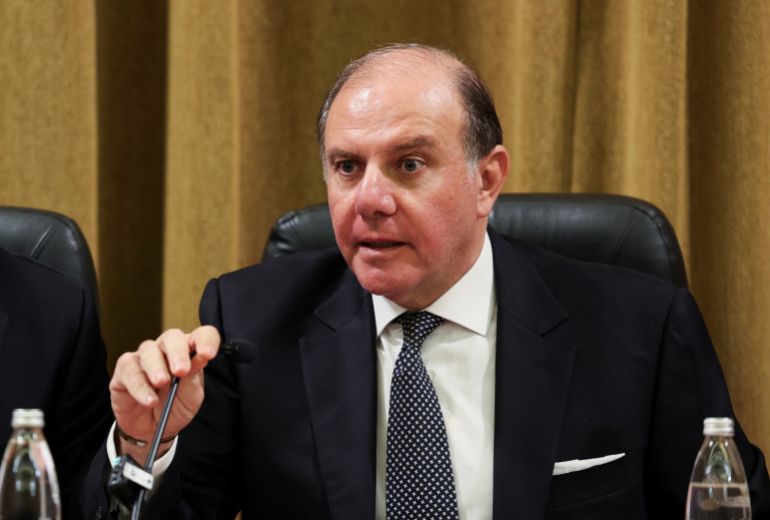
The Governor of the Central Bank of Lebanon expressed reservations about the draft law, stating in a release last Tuesday that “the proposed timeline for paying the cash portion of deposits is somewhat ambitious.”
He called for the Council of Ministers to “subject the draft law to a thorough, comprehensive, and constructive review aimed at introducing necessary improvements and safeguards to ensure fairness, credibility, and practical applicability before referring it to parliament.”
He emphasized that the draft law “needs further clarification and reinforcement with state commitments.”
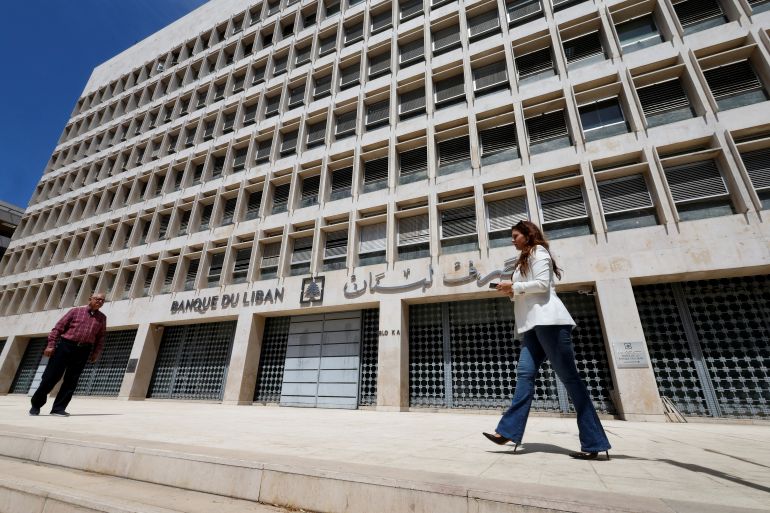
The law represents a long-awaited essential step for restructuring Lebanon’s debt since the economic crisis that hit in the fall of 2019. It is a cornerstone of financial and economic reforms. The international community demands its approval as a prerequisite for providing financial support to Lebanon.
A Law of Accountability
It was emphasized that the draft law includes “accountability for the first time,” explaining that “anyone who moved their money before the 2019 financial collapse by exploiting their position or influence, and anyone who benefited from excessive profits or bonuses will be held accountable and required to pay compensation of up to 30% of these amounts.”
It was clarified that the law, which faces objections from banking
























































































































































































































































































































































































































































































































































































































































































































































