Argentine football star and Inter Miami captain Lionel Messi has topped the list of the best athletes of the 21st century, outperforming his rivals from various sports, according to a ranking prepared by a Canadian newspaper.
The ranking, which included the top 25 athletes and former stars who left their mark over the past two decades, featured prominent global names. NFL star Tom Brady, a seven-time champion, took second place. American former swimmer Michael Phelps, holder of the record for most Olympic medals with 28, came in third, followed by tennis player Serena Williams, Jamaican sprinter Usain Bolt, and American basketball star LeBron James.
Portuguese star Cristiano Ronaldo, Messi’s eternal rival, placed tenth.
Why Messi?
The Canadian newspaper selected Messi as the best athlete of the 21st century based on his leadership in guiding Argentina to victory in the 2022 World Cup in Qatar, a title he will defend if he decides to participate in the 2026 tournament.
On December 6, 2025, Messi led Inter Miami to win its first Major League Soccer championship.
In addition, Messi won the Golden Boot and the Player of the Season award twice consecutively and will continue with the club until 2028.
His domestic and continental achievements with Barcelona and Paris Saint-Germain include 10 La Liga titles and 4 UEFA Champions League titles.
The ranking of the best athletes is as follows:
Lionel Messi (Football – Argentina).
Tom Brady (American Football – United States).
Michael Phelps (Swimming – United States).
Serena Williams (Tennis – United States).
Usain Bolt (Athletics – Jamaica).
LeBron James (Basketball – United States).
Novak Djokovic (Tennis – Serbia).
Simone Biles (Gymnastics – United States).
Kobe Bryant (Basketball – United States).
Cristiano Ronaldo (Football – Portugal).
The list also included legends such as former German Formula 1 driver Michael Schumacher, Spanish tennis player Rafael Nadal, his Swiss rival Roger Federer, and current names like American basketball player Stephen Curry, British racing driver Lewis Hamilton, and American football player Patrick Mahomes.
This ranking once again confirms Messi’s global status as one of the greatest athletes of the modern era, surpassing the most prominent stars in football and other sports.
Ft. Lauderdale
Fort. Lauderdale is a major city in Florida, known for its extensive canal system and beaches. It was established as a military fort during the Second Seminole War in 1838 and grew significantly after the Florida East Coast Railway arrived in the 1890s, evolving into a popular tourist destination.
Florida
Florida is a southeastern U.S. state known for its extensive coastline, theme parks, and unique Everglades ecosystem. It was first colonized by the Spanish in the 16th century, became a U.S. territory in 1821, and was admitted as the 27th state in 1845. Its history is deeply shaped by Spanish influence, the Seminole Wars, and later 20th-century tourism and space industry development.
USA
The United States of America is a federal republic founded in 1776 after declaring independence from Great Britain. Its history is marked by westward expansion, industrialization, and its emergence as a global superpower in the 20th century. The nation is defined by its diverse population, democratic institutions, and significant cultural influence worldwide.
Chase Stadium
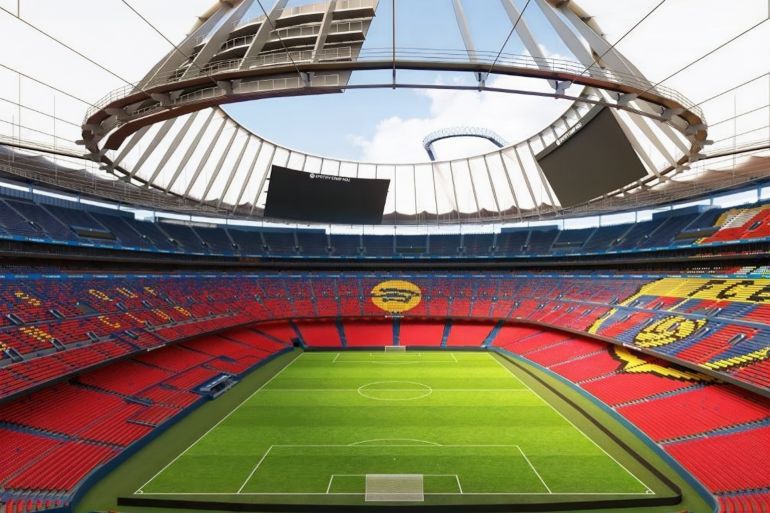
Chase Stadium is a baseball park located in Miami, Florida, and is the home of the Miami Marlins Major League Baseball team. It opened in 2012 as Marlins Park and was renamed in 2023 following a sponsorship agreement, notable for its retractable roof and vibrant, modern design.
Argentina
Argentina is a South American nation with a rich cultural heritage shaped by indigenous traditions, Spanish colonization, and later waves of European immigration. Its history includes declaring independence from Spain in 1816 and periods of political upheaval, leading to its modern identity as a major producer of arts, literature, and tango music.
Canada
Canada is a country in North America formed through the union of British and French colonial territories, becoming a self-governing dominion in 1867. It is known for its vast natural landscapes, multicultural society, and a historical development deeply influenced by Indigenous peoples, colonization, and subsequent waves of immigration.
Qatar
Qatar is a sovereign country located on the northeastern coast of the Arabian Peninsula, historically shaped by its Bedouin heritage and maritime traditions like pearl diving. It transformed dramatically following the discovery of vast oil and natural gas reserves in the mid-20th century, which propelled it into a modern, wealthy state. Today, it is known for its futuristic capital, Doha, and as a major global hub for diplomacy, business, and culture.
Barcelona
Barcelona is a historic Mediterranean port city in northeastern Spain, renowned for its unique Catalan culture and architecture. Its history stretches from a Roman colony to a medieval powerhouse, with its modern identity heavily shaped by Antoni Gaudí’s iconic modernist landmarks like the Sagrada Família.
Paris Saint-Germain
Paris Saint-Germain is a professional football club based in Paris, France, founded in 1970. It has become one of France’s most successful clubs, winning numerous domestic titles and establishing itself as a major force in European football.
La Liga
La Liga is the top professional football division in Spain, founded in 1929. It is one of the world’s most prestigious football leagues, historically dominated by clubs such as Real Madrid and FC Barcelona.
UEFA Champions League
The UEFA Champions League is an annual club football competition organized by the Union of European Football Associations (UEFA). It was first introduced in the 1955–56 season as the European Champion Clubs’ Cup, evolving into its current format in 1992 to include a round-robin group stage. It is widely considered the most prestigious club tournament in European football.
United States
The United States is a federal republic founded in 1776 after declaring independence from Great Britain, with its modern government established by the Constitution in 1789. Its history is marked by westward expansion, industrialization, and its emergence as a global superpower in the 20th century. The nation is defined by its diverse cultural heritage, shaped by immigration and a blend of indigenous, European, African, and other global influences.
Jamaica
Jamaica is an island nation in the Caribbean, originally inhabited by the Taíno people before becoming a Spanish colony in 1494 and later a British colony in 1655. It gained independence from the United Kingdom in 1962 and is globally renowned for its influential cultural exports, particularly reggae music and the Rastafari movement.
Serbia
Serbia is a country in Southeast Europe with a rich history dating back to the Roman Empire, later forming a powerful medieval kingdom before becoming a core part of Yugoslavia in the 20th century. Its cultural sites include medieval monasteries like Studenica, a UNESCO World Heritage Site, and the historic Belgrade Fortress at the confluence of the Danube and Sava rivers.
Portugal
Portugal is a country in southwestern Europe on the Iberian Peninsula, with a history deeply shaped by its Age of Discovery in the 15th and 16th centuries when its explorers established a vast maritime empire. Its rich cultural heritage is reflected in landmarks like the Jerónimos Monastery in Lisbon and the historic center of Porto, both UNESCO World Heritage sites.
Germany
Germany is a country in Central Europe with a complex history, having been a collection of states for centuries before unifying in 1871. It was a central power in both World Wars, and its post-World War II division into East and West Germany symbolized the Cold War, before reunifying in 1990. Today, it is a leading economic and political force in the European Union, known for its rich cultural heritage in philosophy, music, and science.
Spain
Spain is a country in southwestern Europe with a rich and diverse cultural history shaped by Roman, Visigothic, and Moorish rule, culminating in the unification of the Christian kingdoms in the late 15th century. Its global influence expanded dramatically during the Spanish Empire, and today it is renowned for its distinct regional identities, artistic heritage, and landmarks ranging from ancient Roman aqueducts to modernist architecture.
Switzerland
Switzerland is a landlocked European country known for its long history of neutrality, dating back to the 1815 Congress of Vienna. It is famed for its Alpine landscapes, political stability, and its unique system of direct democracy and federalism.
Great Britain
Great Britain is an island comprising the countries of England, Scotland, and Wales, and its history is deeply intertwined with the formation of the United Kingdom. It was the core of the British Empire and a major centre of the Industrial Revolution, profoundly influencing global politics, economics, and culture.