Nature is rich with colors in every season, but most of these colors appear muted and non-shiny, while only a very few shine, such as buttercup petals or the metallic sheen on the wings of some butterflies.
This disparity caught the attention of biologists, who tried to answer two fundamental questions: Why is shininess so rare? And do insects see this shine in the same way we do?
In a study published on November 26th in the journal “Science Advances,” researchers conducted a clever experiment using artificial flowers to test bumblebee behavior. The conclusion they reached was clear: shiny color attracts from afar, but confuses up close.

The Nature of Shiny Colors
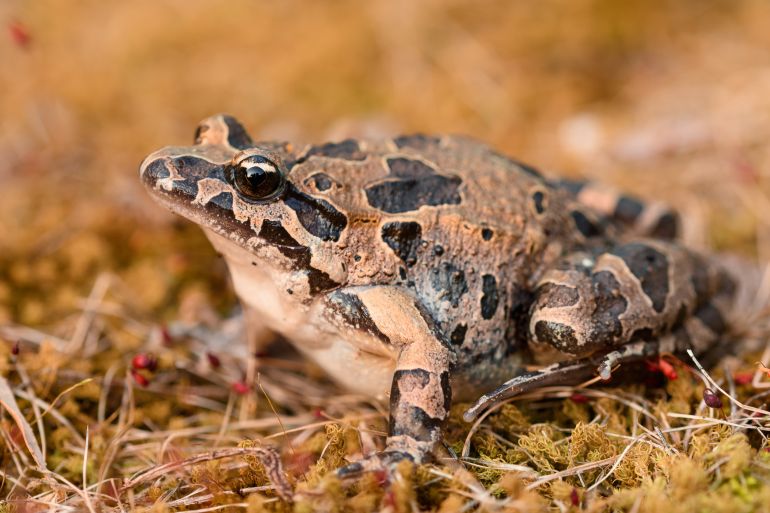
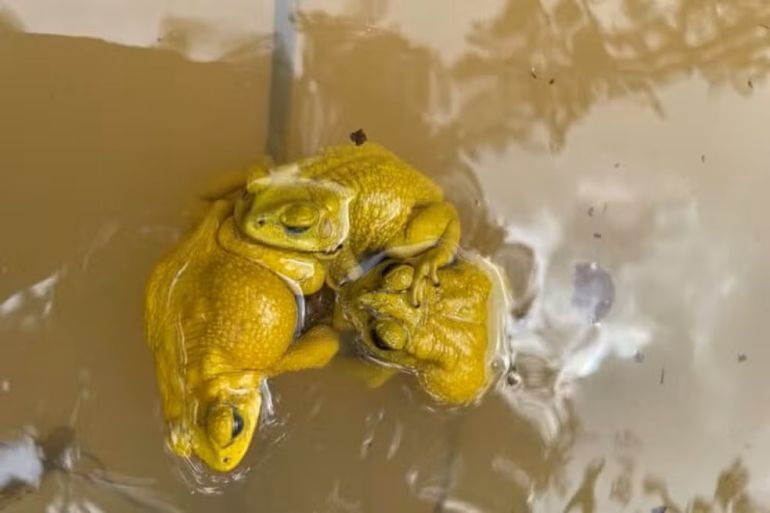
Most colors of living organisms appear roughly the same from any angle we look: the feathers of a great tit, chrysanthemum petals, or frog skin, for example.
This consistency in appearance is not a trivial detail; it is important because many colors function as signals in the biological world, such as attracting pollinators or catching the attention of a mating partner. The more stable and clear the signal is in space and time, the more effective it is.
Nature tends, in most cases, towards muted, clear colors whose appearance does not change much with the movement of light or the observer.
Nevertheless, some striking examples of shiny colors appear in nature, like the gloss of buttercup petals or the metallic blue of some butterflies’ wings.
These colors are known as dynamic because they do not look the same from every angle; their degree of shininess and the direction of the gloss change depending on the viewing angle, light level, and time of day, according to the study.
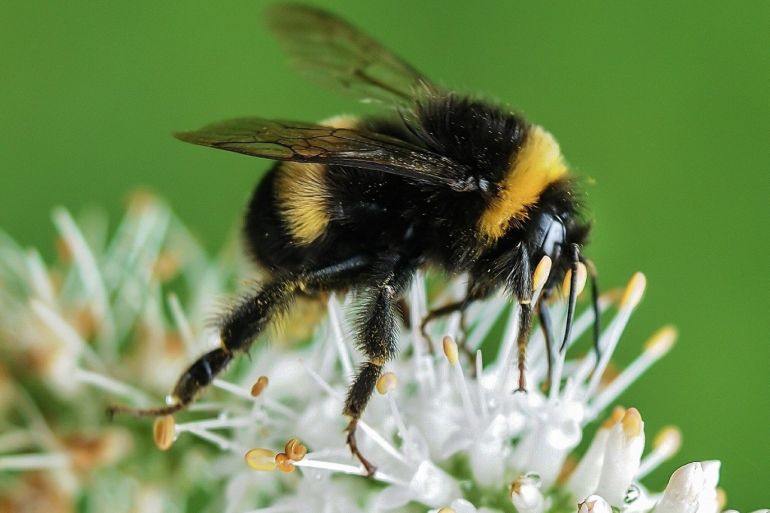
Because this type of color might affect how pollinators interact with flowers, the researchers designed a direct experiment: they placed a set of artificial flowers inside wide cages—some with muted, constant colors and some shiny, reflecting light at different angles—then released bumblebees to observe their behavior and measure the distance at which they could spot the flowers, as well as their accuracy in distinguishing between them when approaching.
The results showed that shiny colors work like small beacons for bees, making them easy to spot from long distances, just as we see a light flashing on the horizon.
However, the picture changes completely upon approach. The gloss that was an advantage at a distance becomes an obstacle at the crucial moment, as it becomes difficult for the bee to see the fine details of the flower and quickly determine the nectar’s location.
This effect is likened to trying to read a glossy magazine under strong sunlight: the reflections confuse the eye and blur the letters. This is precisely where the visual trade-off discussed in the study becomes apparent: strong attractiveness from afar, countered by a lack of clarity at the distance required for precise discrimination.

Practical Applications
This explanation helps in understanding why shininess is rare among biological signals in nature. A good signal must be clear and consistent from every angle and under different lighting conditions because it is used in sensitive moments, such as a pollinator landing on a flower or choosing a mating partner.
Because shininess—by its variable nature—can confuse the animal at the moment when the signal should be clearest, most organisms tend towards stable, muted colors that ensure greater accuracy in communication.
The research indicates that the results have a practical side of no less importance. Understanding insects’ attraction