We have grown accustomed to viewing the world as a complete structure: clear particles, time flowing in a straight line, space embracing everything in silence, and our role as observers merely recording what happens. But what if this picture, with all its comforting simplicity, is misleading?
At the heart of modern physics, quantum theory reveals a reality stranger than we imagine: a reality where particles are not the foundation, and the observer holds no special privilege. Instead, phenomena arise from a deep network of quantum relationships. In this report, we embark on a quiet journey through these ideas to rethink what we consider obvious, starting from measurement and observation, to the nature of particles, and even the very meaning of time and space.
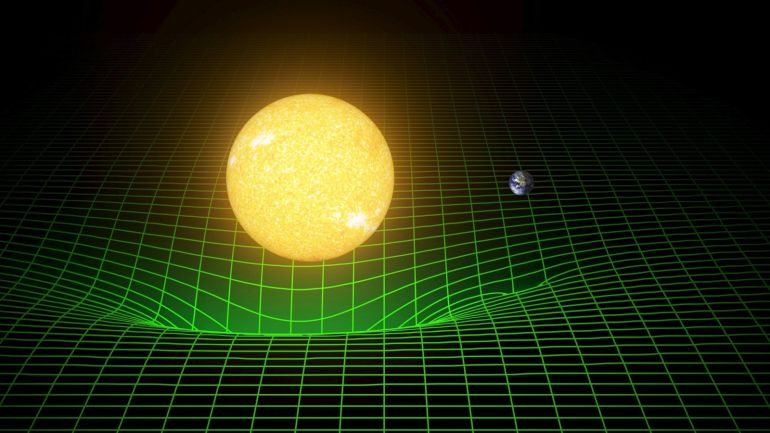
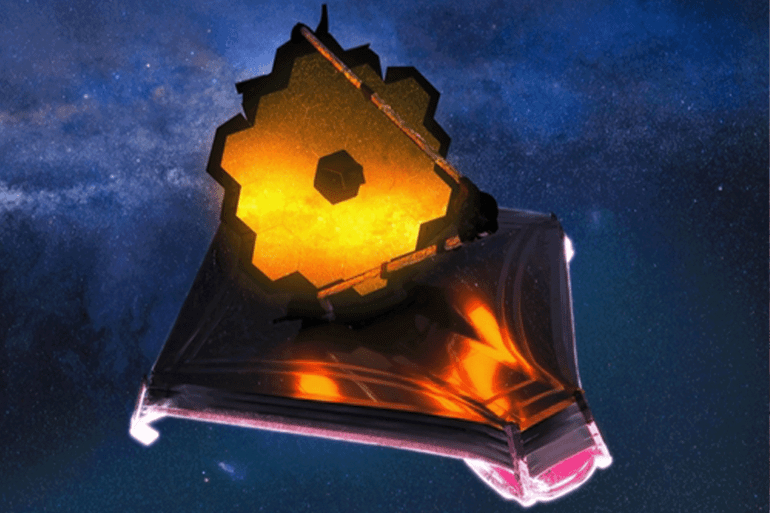
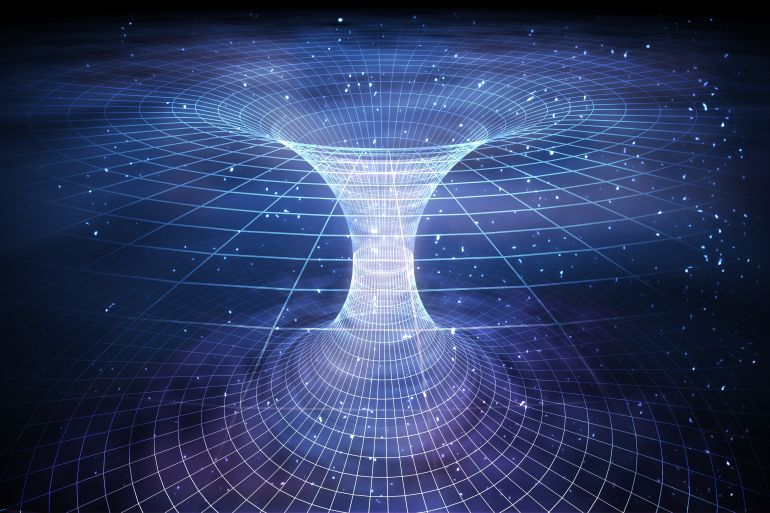
General relativity is one of the pillars of modern physics (Reuters)
The Translation Text
Many point out that the birth of quantum mechanics began on that small, treeless German island, Heligoland, which a young Werner Heisenberg visited in the summer of 1925. There, he outlined the basic features of what would later become one of the brightest and most successful frameworks for interpreting reality. The core of his idea revolved around discovering what the path might lead to when focusing only on what observers would find when measuring particles.
That moment was the spark that ignited something of true genius, yet it also perplexed physicists for an entire century. This confusion that swept through scientists’ minds stems from questions about the nature of the observer, the boundary that makes the act of looking itself an “observation,” and whether it is conceivable that reality itself is suspended on the moment we direct our gaze toward it!?
In my opinion, the time has come to move beyond this metaphysical absurdity. Throughout my career, I have been absorbed in thinking about quantum theory, until I became convinced that we do not need the concept of an “observer,” as it is illogical to rely on its existence. In any case, I have arrived at a more consistent and logical method that serves as a guide for describing the quantum world, which I wish to share with you, along with 3 decisive experiments that could prove my point of view.
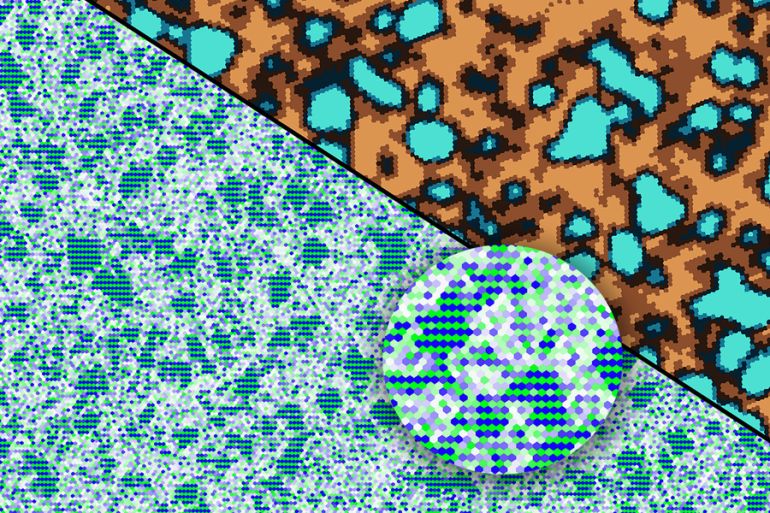
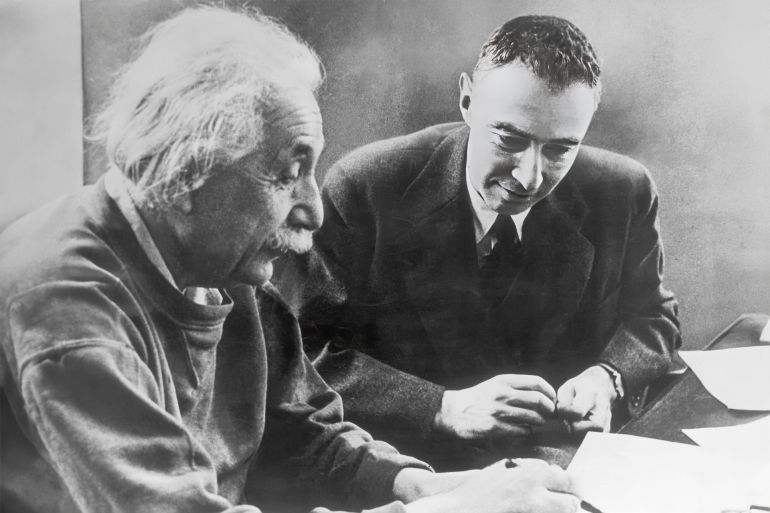
General relativity is one of the pillars of modern physics, while quantum theory represents the other pillar (Cornell University)
No Observer or Observed
Although this new framework for understanding the quantum world may have an aura of logic in my view, it takes us to unfamiliar territory. Not only is the observer absent from the scene, but particles themselves do not exist. As for time and space, we will return to discuss them later. Undoubtedly, we are venturing into deep waters, but diving into them is worthwhile, as perhaps exploring their depths will guide us to what may lie behind quantum theory in its known form.
Let’s begin with a quick tour of modern physics and the complex network of problems fueling it. Observers did not suddenly appear with quantum mechanics; they have been a fundamental pillar since long ago, even in Einstein’s formulation of special and general relativity. General relativity sees time and space merging into a single fabric, and the curvature of this fabric is what generates
Heligoland
Heligoland is a small archipelago in the North Sea, historically controlled by Denmark and then Britain before being ceded to Germany in 1890. It is known for its striking red sandstone cliffs and served as a major naval base, with its fortifications heavily bombed during World War II. Today, it is a car-free tourist destination and a symbol of German post-war reconstruction and peaceful resort culture.
German island
The German island of Rügen is the largest island in Germany, located in the Baltic Sea. Historically, it was a core territory of the Slavic Rani tribe before coming under Danish, Swedish, and eventually Prussian rule, with its iconic white chalk cliffs becoming a major tourist attraction in the 19th century.
Getty
The Getty refers to the J. Paul Getty Museum, which operates two sites in Los Angeles: the Getty Center and the Getty Villa. The Getty Center, opened in 1997, houses European art and is known for its striking architecture and gardens, while the Getty Villa in Pacific Palisades, which opened in 1974 and was renovated in 2006, is dedicated to ancient Greek, Roman, and Etruscan antiquities. The institution was established from the legacy of oil tycoon J. Paul Getty.
Reuters
Reuters is a global news agency founded in London in 1851 by Paul Julius Reuter, originally using telegraph technology to transmit financial information across Europe. It has since grown into one of the world’s largest international multimedia news providers, known for its commitment to speed, accuracy, and impartiality in reporting.
Washington
Washington, D.C., is the capital city of the United States, founded in 1790 following the ratification of the U.S. Constitution. It was established as a federal district to serve as the nation’s permanent seat of government, distinct from any state. The city is home to iconic landmarks like the White House, the U.S. Capitol, and the Washington Monument, which symbolize American history and governance.
Caltech
Caltech, formally the California Institute of Technology, is a world-renowned private research university founded in Pasadena, California, in 1891. It is historically distinguished for its strengths in science and engineering, having played a central role in the development of fields like seismology, aerospace, and quantum physics, and it operates major facilities like the Jet Propulsion Laboratory for NASA.
MIT
The Massachusetts Institute of Technology (MIT) is a world-renowned private research university founded in 1861 in Cambridge, Massachusetts, with a core mission to advance knowledge in science and technology. Its history is marked by pioneering contributions to fields like computing, engineering, and economics, evolving from its industrial-era roots into a global leader in innovation and interdisciplinary education.
LIGO Laboratory
The LIGO Laboratory, or Laser Interferometer Gravitational-Wave Observatory, is a large-scale physics experiment designed to detect cosmic gravitational waves. It made history in 2015 by making the first direct observation of these ripples in spacetime, a century after Albert Einstein predicted their existence in his general theory of relativity.
Cornell University
Cornell University is a private Ivy League research university in Ithaca, New York, founded in 1865 by Ezra Cornell and Andrew Dickson White. It was established with the principle of being an institution where “any person can find instruction in any study,” making it coeducational and nonsectarian from its inception.