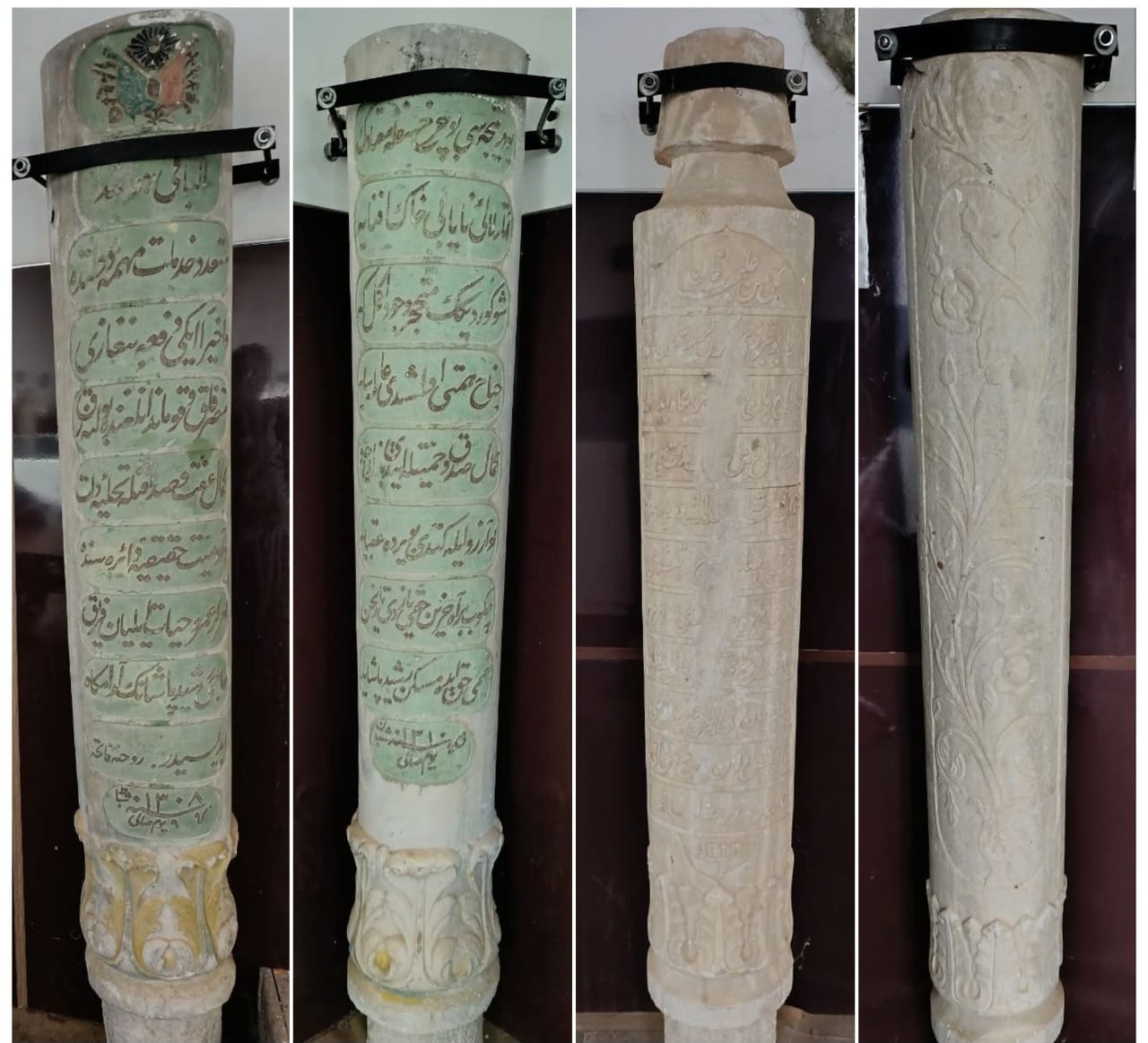
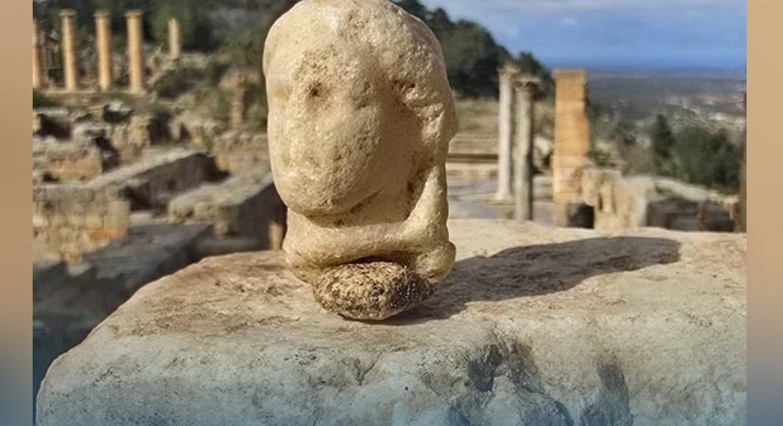
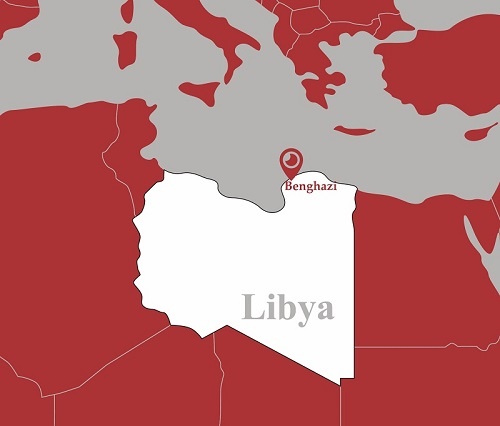
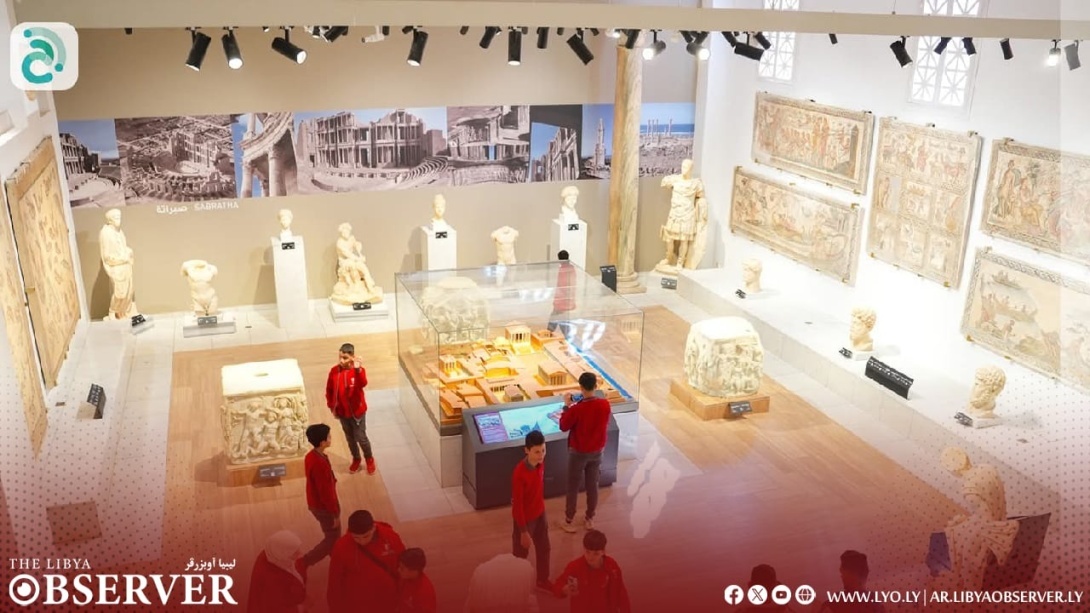
Benghazi, December 18, 2025 – In the corridors of the Benghazi Antiquities Monitoring office stand Ottoman-era tombstones carved decades ago, standing today as silent witnesses to a rich historical period the city passed through.
The marble columns, adorned with turbans, fezzes, and intricate symbols, were not merely funeral markers but visual documents encapsulating the social and professional status of their owners, preserving the features of a society that lived on this land decades ago.
Benghazi was, in a previous period, an Ottoman province like other provinces of the Ottoman Empire, which was clearly reflected in the shapes of the tombstones in its old cemeteries, such as the Sidi Khreibish, Al-Shabi, and Al-Sharif cemeteries.
These cemeteries contained a large number of tombstones written in the old Ottoman script, commemorating Ottoman figures who resided in the city, died, and were buried there, making them an important source for studying the social and administrative history of Benghazi during that era.
The Language of Turbans and Fezzes
Ottoman tombstones are distinguished by the variety of turban and headdress shapes, each with a clear significance in Ottoman culture.
The large, ribbed turban was designated for senior statesmen and scholars, while the medium-sized turban indicated judges, imams, and students of knowledge. The turbans of Sufis differed according to Sufi orders, such as the Mevlevi and Qadiri, and bore distinctive floral and plant symbols.
Tall conical hats appeared on the graves of senior statesmen, while military helmets were placed on the graves of Janissary soldiers. In later periods, the use of fezzes associated with professional and social ranks became common, alongside the Burmese turban with its multiple wraps, which was designated for ministers and pashas.
Women’s Tombstones… The Symbolism of Flowers
Women’s tombstones were more delicate in their symbols, adorned with flowers and wreaths. A full rose indicates a mature woman, while a cut rose symbolizes the death of a young girl or woman, in a visual language that abbreviates age and fate.
Symbols of Professions and Social Status
The carved meanings were not limited to turbans alone but included precise symbols reflecting the deceased’s profession and social role. Ships and anchors indicated sailors and those in maritime professions, the feather symbolized writers and employees, alongside the sword and cannon which expressed military personnel and rank holders.
The Truth About Rashid Pasha’s Tombstones
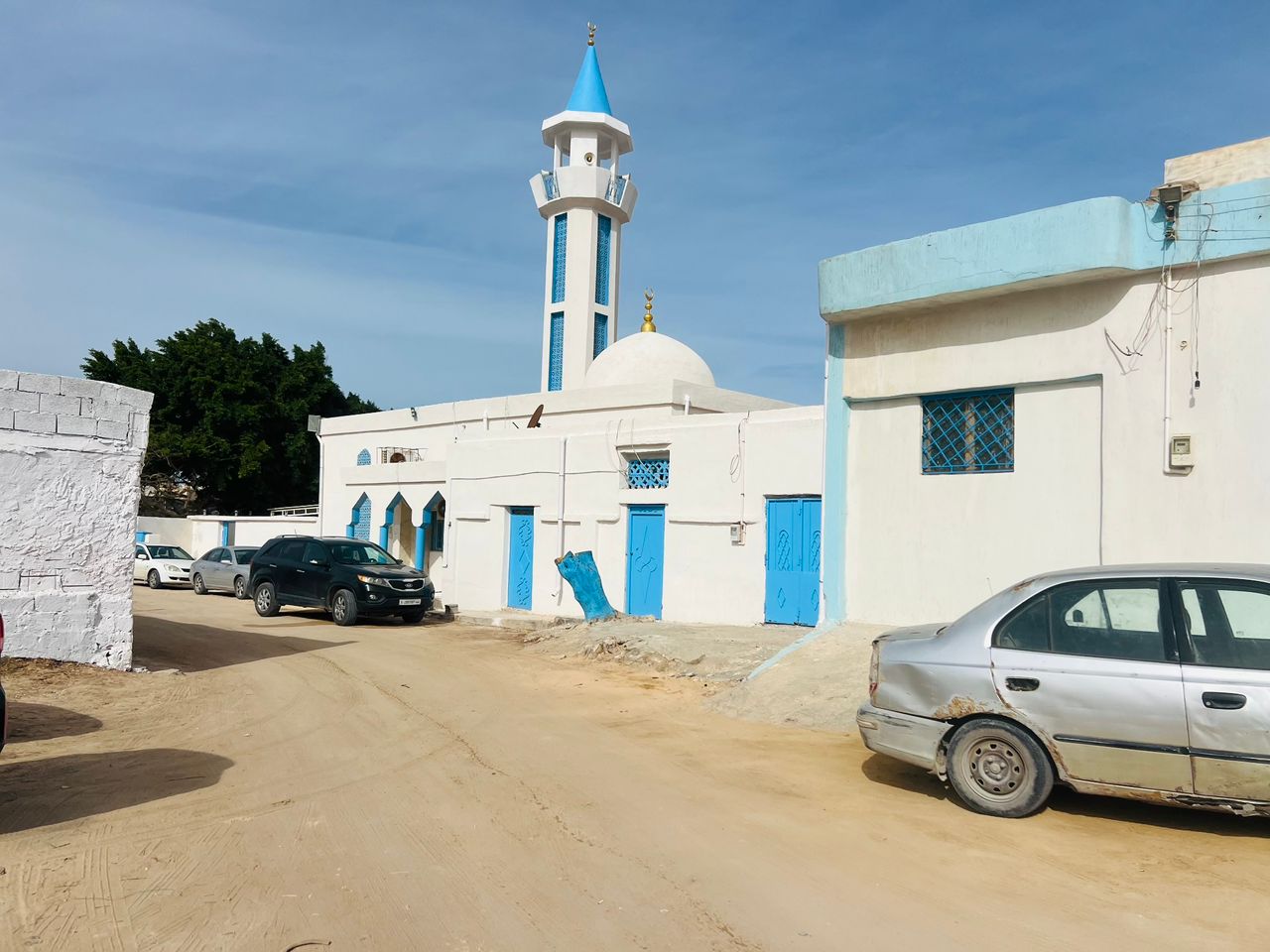
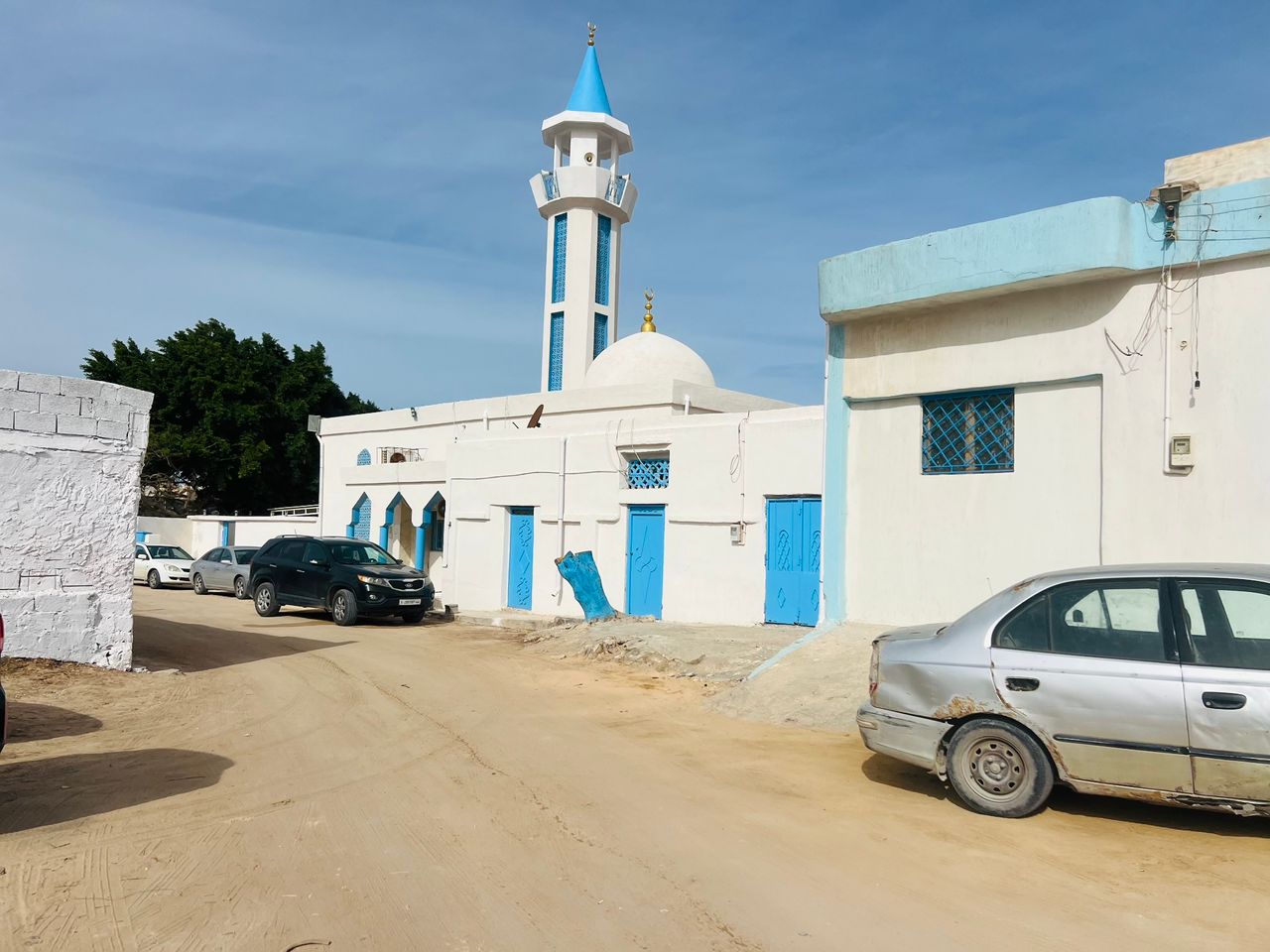
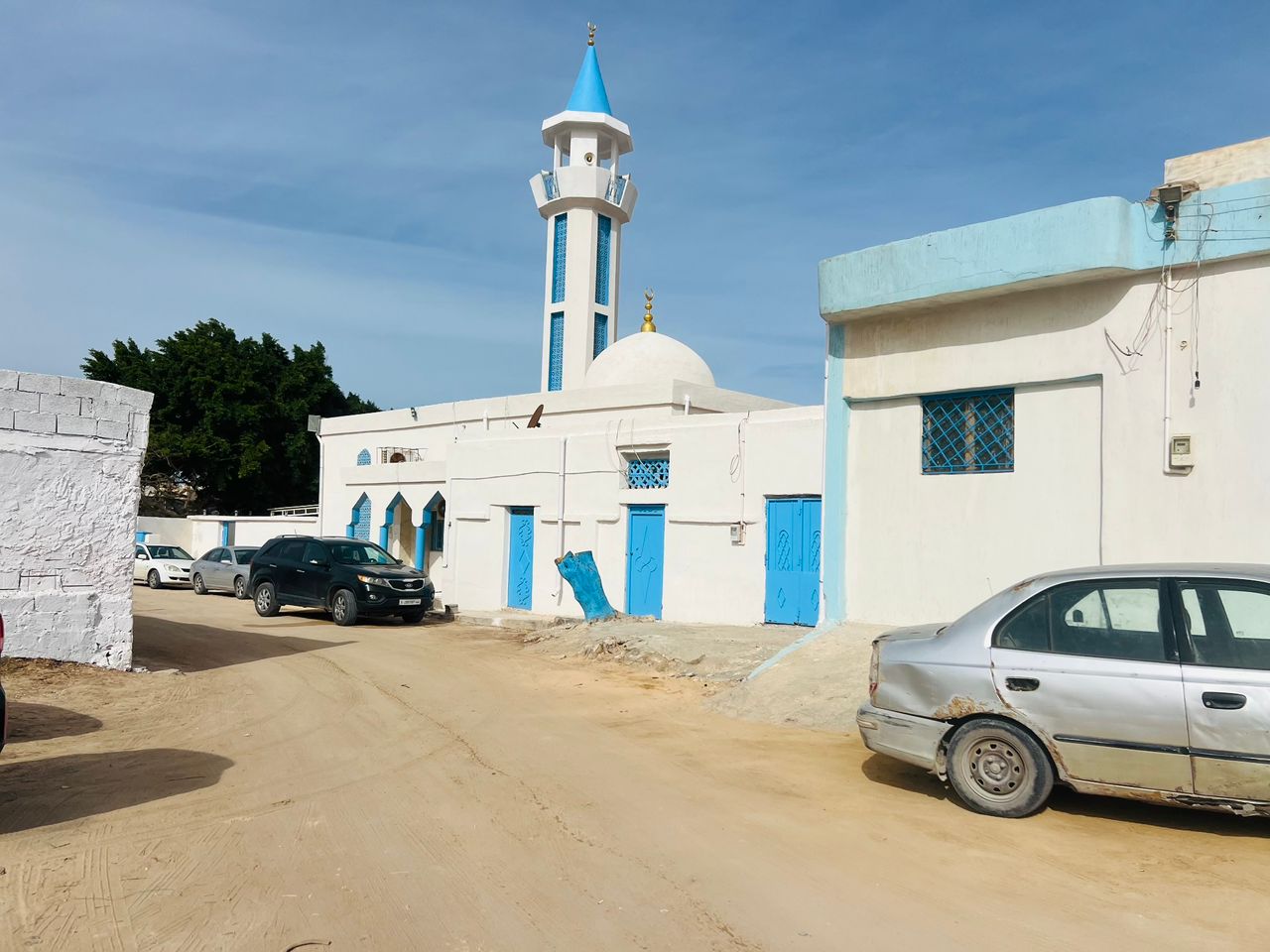
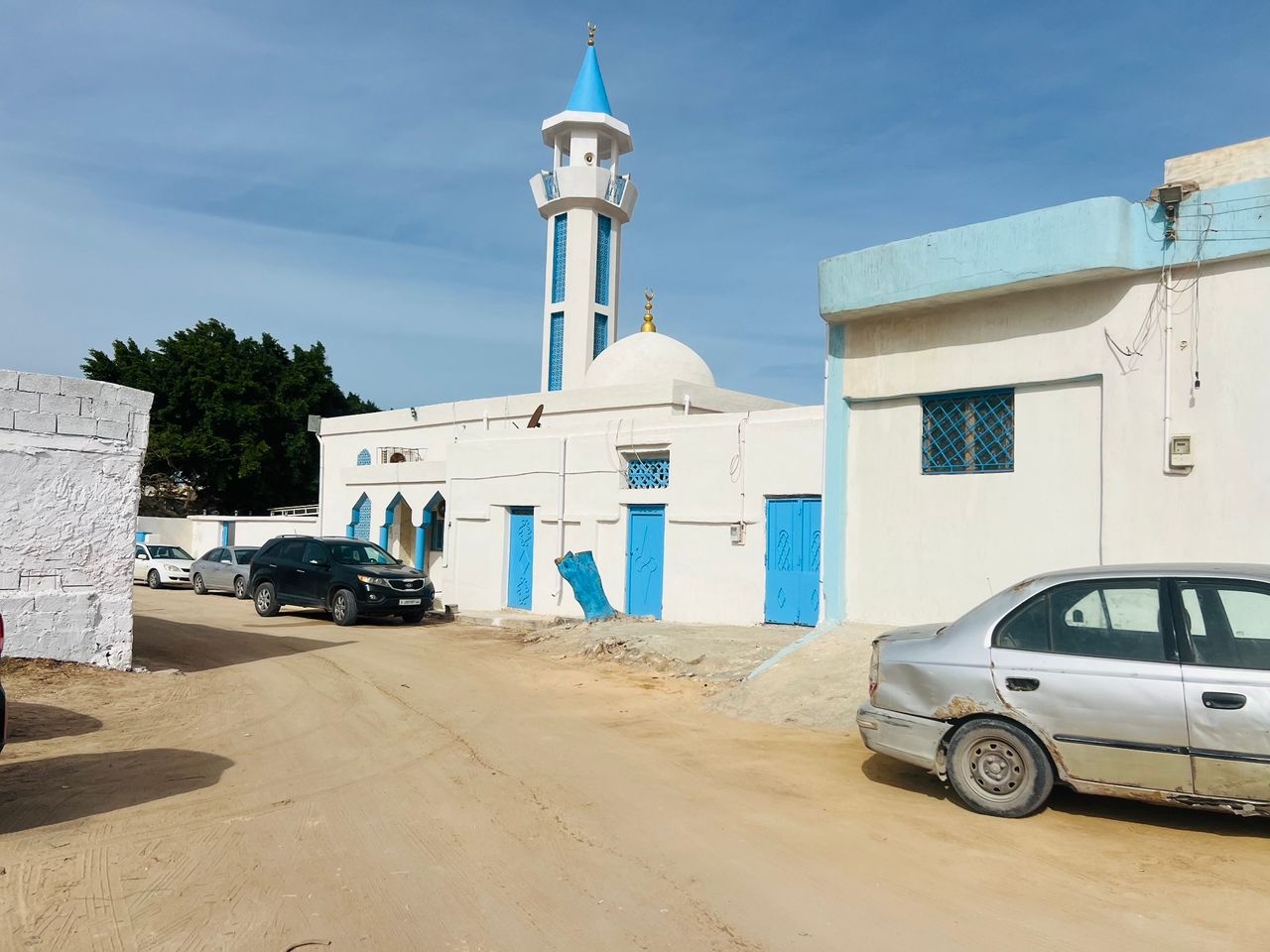
Regarding the controversy associated with the two tombstones attributed to Rashid Pasha, the reference here is to Rashid Pasha, the governor of Benghazi from 1889 to 1893, not Mustafa Rashid Pasha, the Ottoman Grand Vizier. Rashid Pasha, the governor of Benghazi, died in the city and was buried in the mosque he built, currently known as Osman Mosque.
His body remained buried there until the grave was vandalized in 2012, after which the two tombstones were moved to the Benghazi Antiquities Monitoring office for preservation and protection. It was emphasized that these two tombstones have no relation to Mustafa Rashid Pasha, who is buried in Istanbul, and that the confusion on this matter is due to the similarity of names.
A Memory Carved in Stone
Between the present and the past, the Ottoman tombstones in Benghazi remain a memory carved in stone, preserving the stories of people who passed through here and left their mark on the city’s history. Every engraved turban is a line of history, every flower a life story, and every symbol a silent document that completes the features of an era whose traces are still vibrant in Benghazi’s memory.
Benghazi
Benghazi is a major city in eastern Libya, historically significant as a center of trade and culture since its founding as the ancient Greek colony of Euesperides. It played a pivotal role in Libya’s modern history, serving as the provisional capital after the 2011 revolution and being the site of a major 2012 attack on a U.S. diplomatic compound.
Ottoman Empire
The Ottoman Empire was a vast Islamic state founded in the late 13th century by Osman I in Anatolia, which grew to control large territories across Southeast Europe, Western Asia, and North Africa. It reached its peak under Suleiman the Magnificent in the 16th century, serving as a major political and cultural center for over six centuries before its dissolution after World War I in 1922.
Sidi Khreibish
Sidi Khreibish is a historic mosque and mausoleum located in the medina of Tripoli, Libya, dating back to the Ottoman period. It is named after a local holy man and serves as an important religious and architectural landmark, reflecting the city’s Islamic heritage and traditional craftsmanship.
Al-Shabi
Al-Shabi refers to the Tunisian poet Aboul-Qacem Echebbi, known for his influential modernist Arabic poetry in the early 20th century. He is celebrated for his nationalist themes and his work “The Will to Live,” part of which became the lyrics of the Tunisian national anthem. Echebbi’s legacy is honored in Tunisia through monuments, cultural references, and the prominent Al-Shabi Avenue in Tunis.
Al-Sharif
Al-Sharif is a title historically meaning “noble” or “honorable,” often used to denote descendants of the Prophet Muhammad through his grandson Hasan. It became a hereditary title for rulers in regions like Mecca and Medina, with the Hashemite dynasty being prominent bearers. This lineage played a significant role in the political and religious leadership of the Hejaz region for centuries.
Mevlevi
The Mevlevi, also known as the Whirling Dervishes, are a Sufi order founded in 13th-century Konya by the followers of the poet and mystic Jalal ad-Din Muhammad Rumi. Their practice of *sema*, a spiritual ceremony of whirling dance and music, is a form of active meditation intended to reach a state of divine union. The order and its traditions were historically significant across the Ottoman Empire and remain a powerful symbol of Rumi’s teachings of love and tolerance.
Qadiri
The Qadiri is a Sufi order (tariqa) founded in the 12th century by the Persian mystic Abdul Qadir Gilani in Baghdad. It is one of the oldest and most widespread Sufi orders, known for its emphasis on piety, charity, and tolerance, and it has played a significant role in spreading Islam, particularly in Africa and Asia.
Janissary
The Janissaries were an elite infantry corps of the Ottoman Empire, originally formed in the 14th century from Christian youths conscripted through the *devşirme* system. They served as the Sultan’s household troops and were a formidable military force for centuries until their increasing political power led to their violent suppression and disbandment in 1826.
Rashid Pasha
Rashid Pasha is a major street in downtown Beirut, Lebanon, historically known as the city’s banking and financial hub. It was named in the late 19th century after Mehmed Rashid Pasha, an Ottoman reformist and Grand Vizier. The area remains a central commercial artery, though its prominence has fluctuated with Lebanon’s economic and political changes.
Mustafa Rashid Pasha
Mustafa Rashid Pasha was a prominent Ottoman statesman who served as Grand Vizier multiple times in the mid-19th century. He is best known for his role in the Tanzimat reforms, a period of modernization and reorganization of the Ottoman Empire aimed at strengthening central authority and integrating European-style legal and administrative practices.
Osman Mosque
The Osman Mosque, located in the city of Rustavi, Georgia, is a modern mosque completed in 2011. It was built to serve the local Muslim community and is named after the founder of the Ottoman Empire, Osman I.
Istanbul
Istanbul is a major city in Turkey that straddles the Bosporus Strait, historically serving as the capital of the Byzantine and Ottoman Empires under the names Constantinople and Byzantium. Its rich history is visible in iconic sites like the Hagia Sophia, a former cathedral and mosque, and the Topkapı Palace, the former residence of Ottoman sultans.