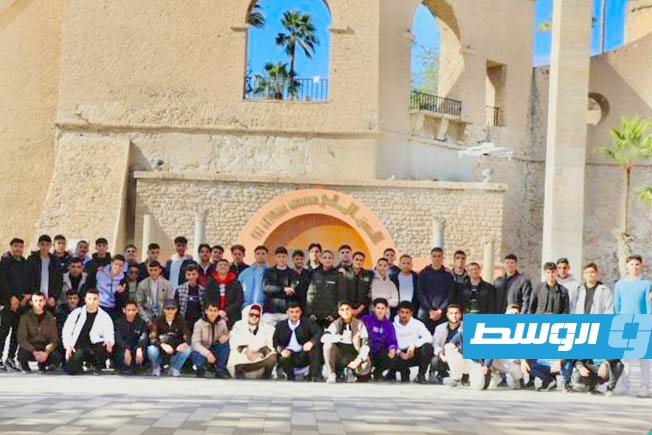
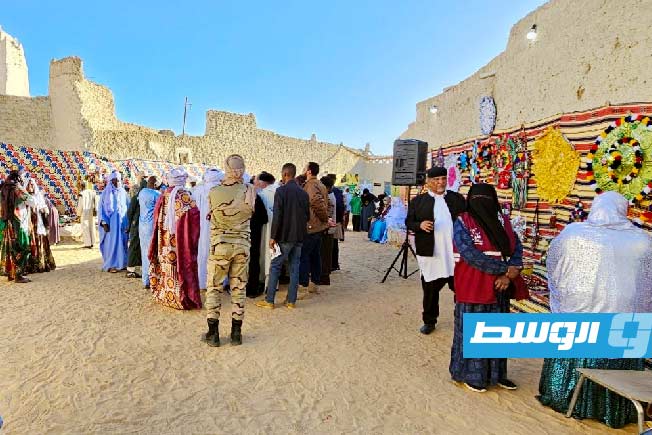
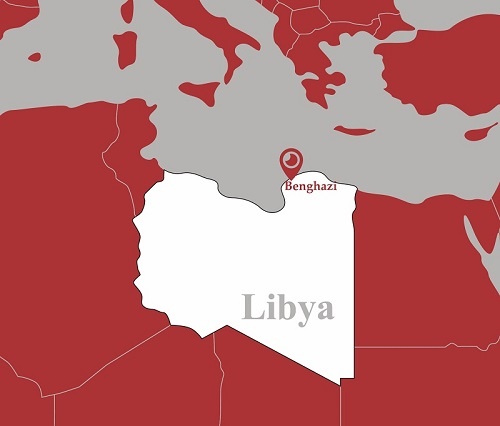
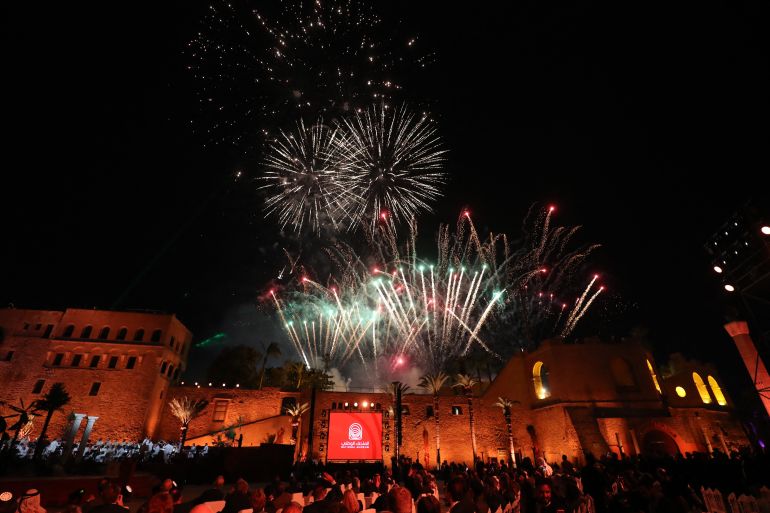
Benghazi, December 24, 2025 – The seventy-fourth anniversary of Libya’s independence arrives, evoking one of the most deeply ingrained moments in the national memory. On the morning of December 24, 1951, from the balcony of the Al-Manar Palace in the city of Benghazi, King Idris al-Senussi declared the birth of the independent Libyan state, following long decades of occupation, suffering, and struggle.
On that winter morning, the palace square was crowded with Libyans wearied by long anticipation, their hopes pinned on a long-awaited moment. The declaration was not merely a political statement, but the end of a colonial era and the beginning of a new age, establishing Libya’s sovereignty and unity on the world map.
It has been emphasized that the declaration of independence was not a fleeting, ceremonial event, but the culmination of a long struggle for which Libyans paid with blood, displacement, and patience.
The roots of the story trace back to the Italian invasion of Libya on October 5, 1911. Libyans confronted the occupation with a fierce national resistance that lasted nearly thirty years, witnessing intense battles across various regions of the country.
The banner of jihad was carried in its early days by the leader Ahmed al-Sharif al-Senussi, then taken up by the Sheikh of the Martyrs, Omar al-Mukhtar, alongside an elite group of national leaders, including Suleiman al-Baruni, Ahmed al-Mrayed, Abdul Nabi Belkhair, Ramadan al-Swehli, Ahmed Saif al-Nasr, and other symbols of resistance who faced the colonial machine with determination and sacrifice.
The Libyan struggle was not confined to armed combat but extended to political and intellectual work through a series of national conferences aimed at solidifying unity and defining the national stance. Among the most prominent were the Al-Aziziya Conference in 1912, the First Misrata Conference in 1918, the Gharyan Conference in 1920, the Sirte Conference in 1922, in addition to the Victoria Conference in Alexandria in 1939, the Cairo meeting in 1940, then the Second Misrata Conference in 1949, and the Tajura Conference in 1950.
The martyrdom of Sheikh Omar al-Mukhtar in 1931 marked a painful turning point in the course of the resistance, as the mujahideen scattered. This prompted Prince Idris al-Senussi and Libyan leaders abroad to intensify political activity, especially with the outbreak of World War II.
Libyans allied with the Allied forces and contributed effectively to the North African battles, which ended with the Allied victory in 1943, notably the Battle of El Alamein, which shifted the balance of power in the region and paved the way for a new phase in the Libyan cause.
The post-war period witnessed the emergence of Libyan political parties and bodies demanding independence and the unity of the national territory. Despite their differences over the form of government, these forces unanimously agreed on one goal: the independence of Libya.
These efforts culminated in bringing the Libyan issue before the Arab League and the United Nations, resulting in the issuance of International Resolution No. (289) on November 21, 1949, which stipulated Libya’s independence by a deadline no later than January 1, 1952.
Libyans hastened to implement the international resolution. The Committee of Twenty-One was formed, followed by the National Constituent Assembly, from which the Constitution Drafting Committee emerged. The Libyan constitution was considered at the time one of the finest federal constitutions and formed the legal foundation for the establishment of the state.
Completing these requirements paved the way for the immortal historical moment when Libya’s independence and sovereignty were declared on December 24, 1951.
It has been stressed that independence was not a grant, but the fruit of Libyan sacrifices and their will, calling for the commemoration of this anniversary to strengthen national unity and protect the sovereignty of the country.
Benghazi
Benghazi is a major city in eastern Libya, historically significant as a center of trade and culture since its founding as the Greek colony of Euesperides. It played a pivotal role in the 2011 Libyan Civil War as a key base for the uprising against Muammar Gaddafi.
Al-Manar Palace
Al-Manar Palace is a historic royal residence located in Tunis, Tunisia, originally constructed in the 18th century under the Husainid dynasty. It served as a summer palace for the rulers and is noted for its blend of Moorish and Ottoman architectural styles. Today, it functions as a museum showcasing traditional Tunisian arts and crafts.
Libya
Libya is a North African country with a rich history rooted in ancient civilizations like the Phoenicians and Romans, followed by centuries of Arab and Ottoman influence. In the modern era, it was an Italian colony before gaining independence in 1951, later becoming known for Muammar Gaddafi’s lengthy rule from 1969 until the 2011 revolution. Its cultural sites include the well-preserved Roman ruins of Leptis Magna, a UNESCO World Heritage site.
Italy
Italy is a country in Southern Europe with a rich cultural history that dates back to ancient times, being the heart of the Roman Empire and later the birthplace of the Renaissance. Its cultural heritage is globally influential, encompassing iconic art, architecture, cuisine, and numerous UNESCO World Heritage sites.
Ahmed al-Sharif al-Senussi
Ahmed al-Sharif al-Senussi was a prominent political and religious leader of the Senussi order in Libya during the early 20th century. He led resistance against Italian colonial forces following World War I before eventually going into exile. His leadership was pivotal in maintaining the Senussi movement, which later formed the foundation of the modern Libyan state under his cousin, King Idris I.
Omar al-Mukhtar
Omar al-Mukhtar was a Libyan resistance leader and national hero who led an armed campaign against the Italian colonization of Libya for nearly two decades until his capture and execution in 1931. His legacy as “The Lion of the Desert” remains a powerful symbol of anti-colonial struggle and resilience in Libya and the wider Arab world.
Suleiman al-Baruni
Suleiman al-Baruni was a prominent Ibadi scholar, poet, and political leader from the Nafusa Mountains in modern-day Libya. He is best known for establishing the short-lived “Tripolitanian Republic” in 1918-1919, advocating for Amazigh (Berber) rights and autonomy in the face of Italian colonial expansion. Today, he is remembered as a key national figure in Libya and a symbol of Amazigh cultural and political identity.
Ahmed al-Mrayed
Ahmed al-Mrayed is a prominent cultural and historical site in Bahrain, specifically a large, traditional house (bayt) located in the village of Karbabad. It is historically significant as the former residence of the pearl merchant Ahmed bin Hussain al-Mrayed, reflecting the architecture and wealth of Bahrain’s pre-oil pearling era in the 19th and early 20th centuries. The building has been restored and now serves as a museum and cultural center showcasing that important period in the nation’s history.
Abdul Nabi Belkhair
Abdul Nabi Belkhair is a cultural and religious site located in Algeria, specifically a mosque and mausoleum complex in the city of Tlemcen. It is named after the 14th-century Sufi saint and scholar Sidi Abdul Nabi Belkhair, who is buried there, and the site reflects the region’s rich Islamic architectural and spiritual heritage.
Ramadan al-Swehli
Ramadan al-Swehli was a prominent Libyan political and military leader who played a key role in the resistance against Italian colonization in the early 20th century. He is particularly remembered for his efforts in the 1911-1912 war and for later co-founding the Tripolitanian Republic in 1918, an early attempt at establishing an independent state. Today, his legacy is honored in Libya, with major landmarks like Martyr’s Square in Tripoli having previously borne his name.
Ahmed Saif al-Nasr
Ahmed Saif al-Nasr is a prominent Libyan tribal and political figure, best known for his leadership of the Awlad Suleiman tribe and his role as a member of the General National Congress following the 2011 revolution. His history is deeply tied to the political and tribal dynamics of the Fezzan region in southwestern Libya.
Al-Aziziya Conference
The Al-Aziziya Conference was a significant political meeting held in 1922 in the city of Al-Aziziya, Libya, where key Senussi leaders and tribal representatives gathered. It resulted in the proclamation of Idris al-Senussi as the Emir of Cyrenaica, a crucial step toward the eventual unification and independence of Libya.
Misrata
Misrata is a major port city on the Mediterranean coast of northwestern Libya, historically known as a key trading and commercial center since ancient times. It played a pivotal and fiercely defended role during the 2011 Libyan Civil War, serving as a stronghold for anti-Gaddafi forces. Today, it remains one of Libya’s most important economic hubs, known for its industry and commerce.
Gharyan Conference
The Gharyan Conference was a 1920 meeting of Libyan tribal leaders and notables in the city of Gharyan, which resulted in the declaration of Idris al-Sanusi as the Emir of Cyrenaica. This event was a pivotal moment in unifying resistance against Italian colonial forces during the Italo-Senussi War.
Sirte Conference
The Sirte Conference was a 1999 meeting of the Organization of African Unity (OAU) held in Sirte, Libya, which resulted in the Sirte Declaration. This pivotal declaration called for the establishment of the African Union to replace the OAU, aiming to accelerate socio-economic integration and increase political cooperation across the continent.
Victoria Conference
The Victoria Conference refers to a series of meetings held in Victoria, British Columbia, in 1868 to discuss the terms of British Columbia’s entry into Canadian Confederation. These crucial negotiations, involving delegates from the colony and the Canadian government, led to the agreement that paved the way for British Columbia to become Canada’s sixth province in 1871.
Alexandria
Alexandria is a major port city on Egypt’s Mediterranean coast, founded by Alexander the Great in 331 BCE. It was renowned in antiquity for its legendary Lighthouse of Alexandria, one of the Seven Wonders of the Ancient World, and its Great Library, which was a center of Hellenistic scholarship.
Cairo
Cairo is the sprawling capital of Egypt, founded in 969 CE by the Fatimid dynasty. It is renowned for its rich history, serving as a center of the Islamic world and home to iconic landmarks like the Pyramids of Giza on its outskirts and the historic Islamic Cairo district with its ancient mosques and bazaars.
Tajura Conference
The Tajura Conference was a 1981 meeting in Tajura, Libya, where various Chadian factions signed a peace agreement aimed at ending the Chadian Civil War. It was organized under the auspices of the Libyan leader Muammar Gaddafi, who sought to increase his influence in the region, but the resulting unity government quickly collapsed, leading to a resumption of conflict.
World War II
World War II was a global conflict from 1939 to 1945, involving most of the world’s nations and resulting in unprecedented destruction and loss of life. It was primarily fought between the Axis powers, led by Germany, Italy, and Japan, and the Allied powers, including the United Kingdom, the United States, the Soviet Union, and China. The war concluded with the defeat of the Axis powers and had profound consequences, including the Holocaust, the use of atomic weapons, and the reshaping of the international order.
North Africa
North Africa is a region encompassing countries such as Egypt, Libya, Tunisia, Algeria, and Morocco, historically defined by the Mediterranean Sea to the north and the Sahara Desert to the south. It has a rich and layered history, being home to ancient civilizations like the Egyptians and Phoenicians, later forming part of the Roman Empire, and then becoming a major center of Arab and Islamic culture following conquests in the 7th century.
Battle of El Alamein
The Battle of El Alamein was a pivotal World War II confrontation in North Africa, fought in late 1942 near the Egyptian town of El Alamein. The Allied victory, led by British Field Marshal Bernard Montgomery over German-Italian forces commanded by Erwin Rommel, halted the Axis advance into Egypt and marked a major turning point in the war.
Arab League
The Arab League is a regional organization founded in 1945 to promote cooperation and coordination among Arab states. Its original members were Egypt, Iraq, Jordan, Lebanon, Saudi Arabia, and Syria, with its founding driven by post-colonial Arab unity and common political goals.
United Nations
The United Nations is an international organization founded in 1945 after World War II to promote peace, security, and cooperation among nations. It replaced the League of Nations and is headquartered in New York City, with its charter signed by 51 original member countries. Today, it comprises 193 member states and addresses global issues through bodies like the General Assembly and Security Council.