In winter, many drivers face recurring problems inside the car cabin, most notably condensation on the windows, frost formation, and unpleasant musty odors, resulting from moisture accumulation that seeps in from clothing, shoes, and even the surrounding environment.
There are several effective and easy ways to reduce humidity and keep the car cabin dry and clean:
1. Ventilate the car properly to quickly reduce humidity
Experts recommend opening all car doors briefly, provided the outside air is drier than the air inside the car. However, this method becomes ineffective during rain or heavy fog.
2. Run the heater and air conditioner together
Running the heater and air conditioner simultaneously is one of the most effective solutions, as the air conditioner’s compressor draws out moisture and expels it from the cabin.
In cars with automatic climate control, you can select the defrost setting, which automatically activates maximum warm airflow directed towards the windshield.
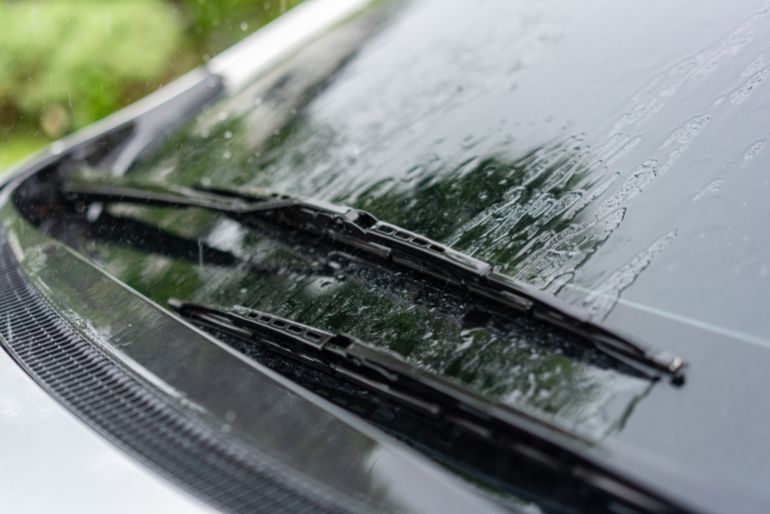
Leaves and dirt should be regularly removed from the area between the hood and the windshield. (Getty Images)
3. Combat moisture from clothing and floor mats
Moisture often seeps into clothing, shoes, and fabric floor mats, leading to water evaporating onto the windows later. You can combat this by:
Use rubber floor mats that do not absorb moisture and are easy to clean.
Immediately remove wet mats and items from the car to avoid bad odors and mold.
Make sure to remove snow and mud from clothing and shoes before entering the car.
Place wet items, such as hats and jackets, in the trunk to prevent moisture from spreading.
4. Regularly check for potential leaks
The sealing elements around doors and windows can lose their effectiveness over time, leading to water accumulation within insulation materials and mold growth. Therefore, it is recommended to:
Use seal care products to prevent leaks. If any problem appears, go immediately to a specialized repair shop.
Regularly remove leaves and dirt from the area between the hood and the windshield and from drainage openings, to avoid system blockages and water leaking into the cabin.
By following these tips, any driver can keep the car cabin dry and free of fog and mold during winter, while protecting the windshield and ensuring a safe and comfortable journey even on the coldest days.
car
The car, as a personal transportation vehicle, was pioneered in the late 19th century with Karl Benz’s 1885 Motorwagen. Its mass production, revolutionized by Henry Ford’s Model T in 1908, transformed global society, economies, and landscapes by enabling unprecedented individual mobility.
windshield
A windshield, also known as a windscreen, is a pane of safety glass at the front of a vehicle designed to protect occupants from wind and debris. Its modern form was developed in the early 20th century, evolving from simple glass plates to laminated safety glass, which was invented in 1903 and became standard after proving its shatter-resistant benefits.
car doors
“Car doors” are not a specific place or cultural site, but a common automotive component. Their history is tied to the evolution of the automobile, with early vehicles often lacking doors before they became standardized for safety and comfort in the early 20th century.
heater
“Heater” is not a recognized place or cultural site. The term typically refers to a device for warming a space or liquid, not a location with historical significance.
air conditioner
An air conditioner is a modern appliance designed to cool and dehumidify indoor air, with its origins tracing back to 1902 when Willis Carrier invented the first electrical system to control humidity for a printing plant. This invention evolved from industrial climate control into widespread residential and commercial use, fundamentally changing architecture, work habits, and comfort in hot climates globally.
automatic climate control
“Automatic climate control” is not a specific place or cultural site, but a technology system used in buildings and vehicles to regulate temperature and humidity automatically. Its development began in the early 20th century, with significant advancements like the first automated systems for buildings in the 1930s and for automobiles in the 1960s.
windshield wipers
Windshield wipers are a practical automotive invention, not a cultural site. They were patented in 1903 by Mary Anderson, who devised the first manually operated, windshield-cleaning device to improve driving visibility in adverse weather.
hood
The term “hood” is a colloquial abbreviation for “neighborhood,” often specifically referring to urban, historically marginalized communities. Many such neighborhoods in the United States were shaped by systemic practices like redlining and racial segregation, leading to distinct local cultures and socioeconomic challenges.
windshield
A windshield, also known as a windscreen, is a pane of safety glass at the front of a vehicle designed to protect occupants from wind and debris. Its modern form was popularized in the early 20th century, evolving from early automobiles that often had no frontal protection or used materials like plain glass or celluloid, which were prone to shattering. The invention of laminated safety glass by Édouard Bénédictus in 1903, which held together when cracked, was a major historical development for automotive safety.
floor mats
Floor mats are functional textiles or materials placed on floors to provide protection, comfort, or decoration. Historically, their use dates back centuries, evolving from simple woven rushes and animal hides to the mass-produced rubber, carpet, and vinyl mats common today. They serve practical purposes in homes, vehicles, and buildings, while also reflecting cultural styles and craftsmanship in their designs.
rubber floor mats
Rubber floor mats are a practical automotive accessory designed to protect vehicle interiors from dirt, moisture, and wear. Their history is tied to the mass production of automobiles in the 20th century, with companies innovating durable, easy-to-clean materials for everyday use.
trunk
“Trunk” likely refers to the Elephant’s Trunk Hill (Xiangbishan), a famous limestone hill in Guilin, China, naturally shaped like an elephant drinking from the Li River. It is a classic symbol of Guilin’s landscape and has been celebrated in Chinese poetry and art for centuries. The site features the Water-Moon Cave at its base and has been a popular tourist destination since ancient times.
doors
The term “doors” broadly refers to the movable barriers used as entrances to buildings, rooms, and vehicles, with a history dating back to ancient civilizations. Culturally, doors often symbolize transition, opportunity, and privacy, and have been significant artistic and architectural features in structures from Egyptian tombs to Gothic cathedrals.
windows
“Windows” as a cultural concept refers to the architectural elements that allow light and air into a building, with their design and technology evolving significantly throughout history from simple openings to complex glazed structures. Culturally, windows have served as powerful symbols in art and literature, often representing opportunity, perspective, or the separation between public and private life. Their functional history spans from ancient Roman glass windows to the stained glass of Gothic cathedrals and the large curtain walls of modern skyscrapers.
insulation materials
Insulation materials are not a specific place or cultural site, but a category of products used to reduce heat transfer in buildings and industrial applications. Historically, natural materials like straw, mud, and animal hair were used for insulation, with modern synthetic and mineral wool materials developing significantly during the 20th century to improve energy efficiency.
repair shop
A repair shop is a commercial establishment where broken or malfunctioning items, such as electronics, appliances, or vehicles, are fixed by skilled technicians. Historically, such shops became common with the rise of consumer goods in the Industrial Revolution, evolving from individual artisans to specialized service centers. They remain essential for maintenance, restoration, and extending the lifespan of products.
drainage openings
Drainage openings, often called gutters or drains, are functional architectural features designed to channel water away from structures. Historically, simple versions have existed since ancient civilizations, such as the Indus Valley and Roman Empire, to manage rainwater and prevent flooding. Their design has evolved from basic stone channels to complex modern systems integrated into urban infrastructure.